Kidzapalooza attendees enjoyed an astronomy event at O’Higgins Park
Over the course of three days, CATA introduced children and families to astronomy through solar observation, immersive experiences, augmented reality, contests, and interactive activities in partnership with collaborating institutions.
The Center for Astrophysics and Associated Technologies (CATA) – an ANID Basal Center – concluded its participation in Kidzapalooza at Lollapalooza Chile 2026, solidifying its presence for the second consecutive year in this space dedicated to children and families within one of the country’s most popular music and cultural festivals.
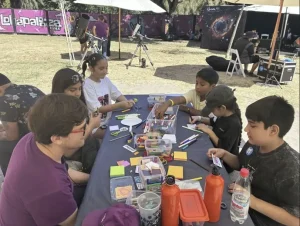
On March 13, 14, and 15 at O’Higgins Park, the Center organized an area that combined science, technology, and interactive experiences to introduce astronomy to children, families, and the general public attending the event, which was supported by the science outreach organizations Telescopios Chile, Alfilmedia3D, Astro Ruta, and InvadeLab.
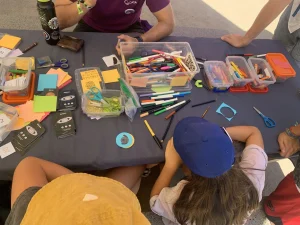
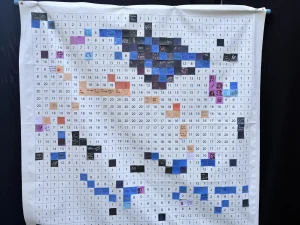
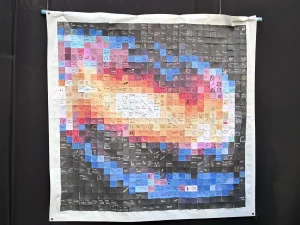
The proposal drew on various initiatives developed by the collaborating institutions. A central focus of CATA’s participation was the creation of opportunities that fostered direct interaction with the public. In this context, the 150×150-pixel astronomical pixel art activity stood out—a collective project built from attendees’ answers to the question “What would you take to space?” Through this activity, children and families not only shared their ideas but also actively contributed to revealing an astronomical image, transforming their answers into part of a shared work of art.
In addition, there was a pin machine where visitors could choose one of CATA’s designs or create their own pin inspired by the universe. A contest titled “How Much Do You Know About Astronomy?” was also held, in which participants answered questions about the field and received prizes for their answers.
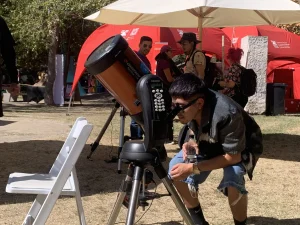
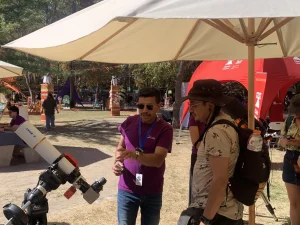
The initiative was further enhanced by contributions from partner organizations. Telescopios Chile and Alfilmedia3D organized solar observation activities, allowing participants to analyze details of the Sun’s surface—such as sunspots and solar flares—in real time using state-of-the-art digital telescopes.
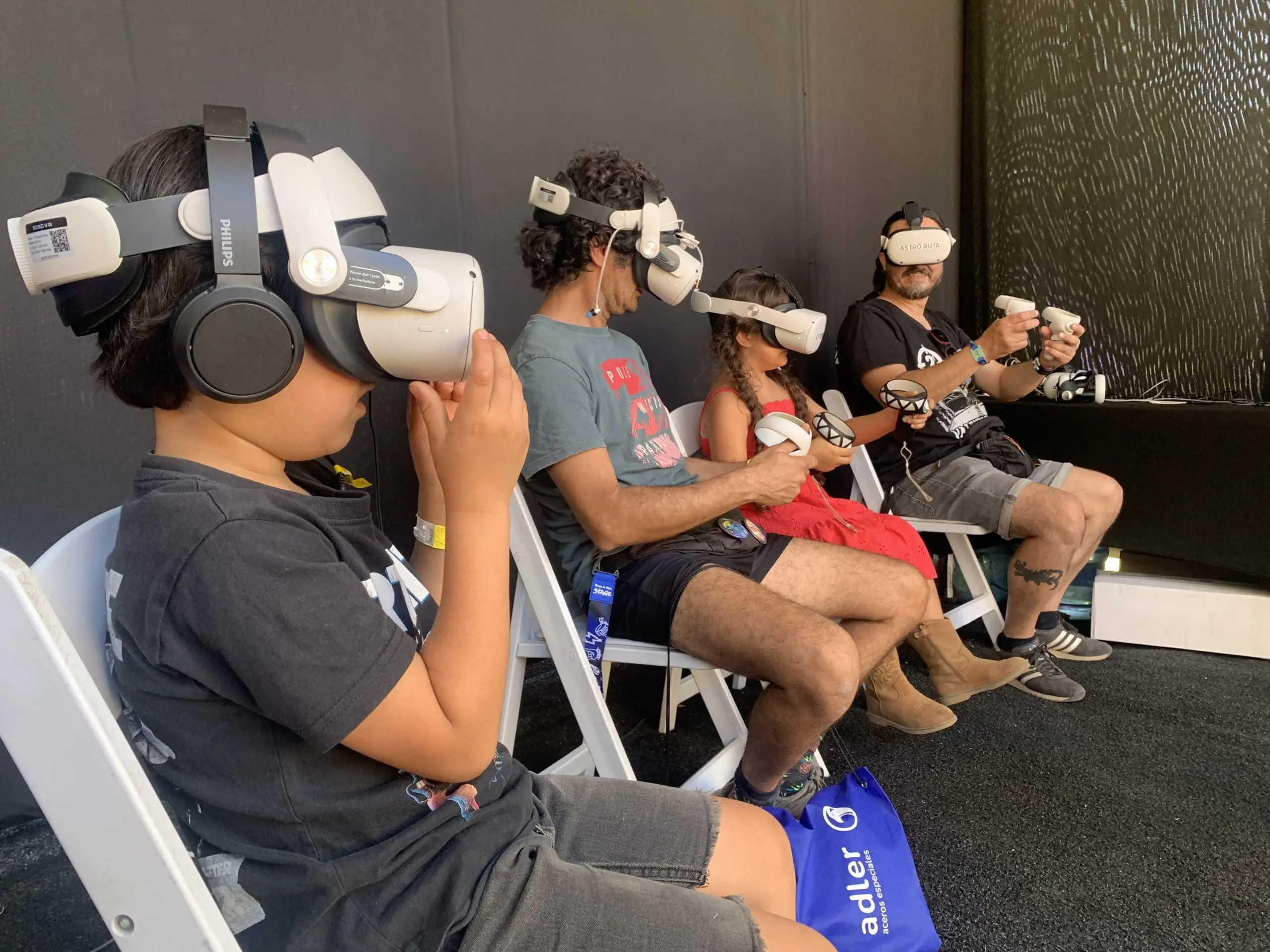
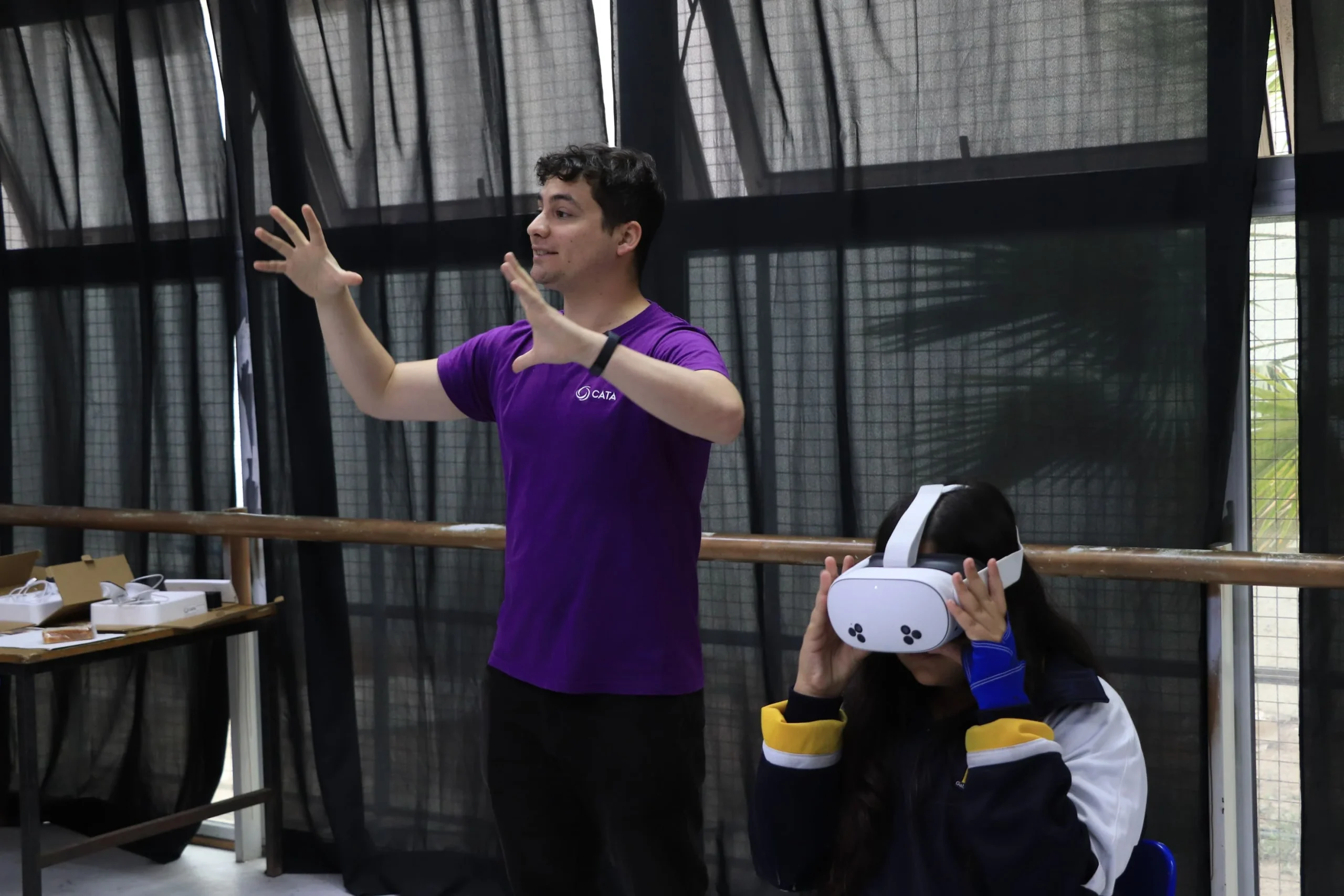
Virtual reality experiences were also one of the main attractions at the CATA exhibit, where the Center presented images of Saturn, the Moon, nebulae, and black holes. This was complemented by Astro Ruta’s offerings, which included content related to spacewalks and immersive space tours. For its part, InvadeLab showcased content on the history of astronomy in Chile, as well as an augmented reality experience of the Solar System through maps of the planets and the Sun.
“We have a very positive assessment of these three days, as we more than achieved our goal of making astronomy accessible to everyone, regardless of any barriers that may exist. We were able to surprise, educate, and spark the curiosity of children in a very simple way—by observing the Sun through our telescopes,” said Claudio Rojas, director of Alfilmedia3D.
Regarding the collaborative effort, Rojas noted that “it was a very enriching experience, because all of our institutions share the goal of promoting astronomy and combining our initiatives to make them available to the public. We hope to continue collaborating with CATA on future activities.”
For his part, Felipe Cerda, director of Astro Ruta, stated that “the response has been very positive, as there was a great deal of interest from the public, especially from children and families. Virtual reality sparked a lot of wonder and curiosity, allowing many people to experience space in an intimate and immersive way.”
Cerda added that “the collaboration with CATA came about very naturally, complementing the scientific approach with the interactive experiences we offer through Astro Ruta. There is great potential for continuing to develop new initiatives that bring astronomy to the public in an entertaining and meaningful way.”
Santiago Prat, General Manager of CATA, noted that “participating in events like Kidzapalooza brings astronomy to audiences who often do not take part in traditional scientific activities. As a Center, we particularly value these opportunities because they allow us to share knowledge in a playful, participatory, and accessible way, sparking the interest of children and families in science and the fundamental questions about the origin and evolution of the Universe.”
CATA’s participation in Kidzapalooza was also part of the activities for Astronomy Day, an annual event held on the autumn equinox since 2014 that promotes the connection between science and society through initiatives open to the public nationwide.
Outstanding news
Recent news
-
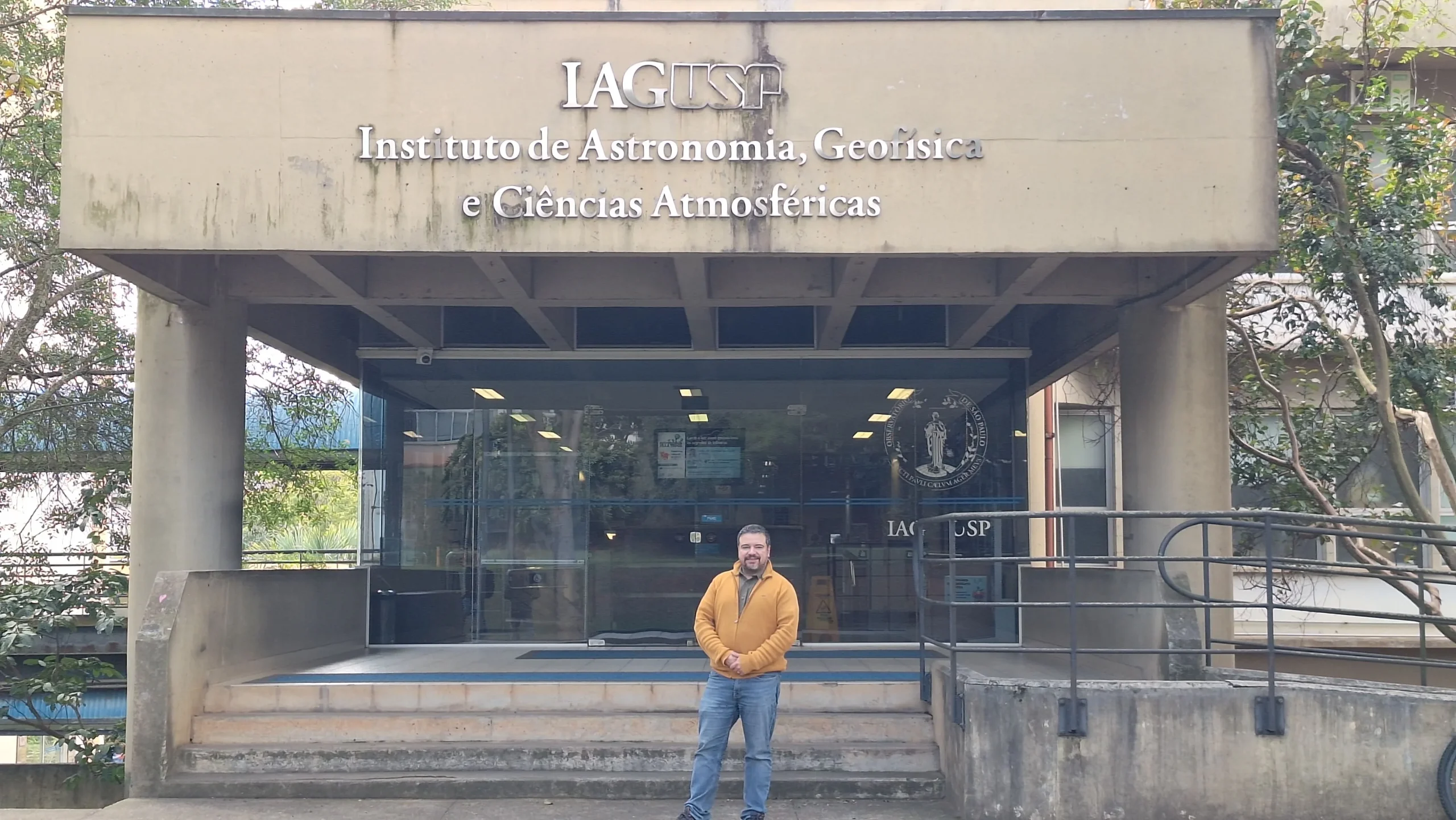 Publicado el: 01/10/2026CATA Associate Researcher concludes research stay at the University of São Paulo thanks to a Brazilian fellowship
 -
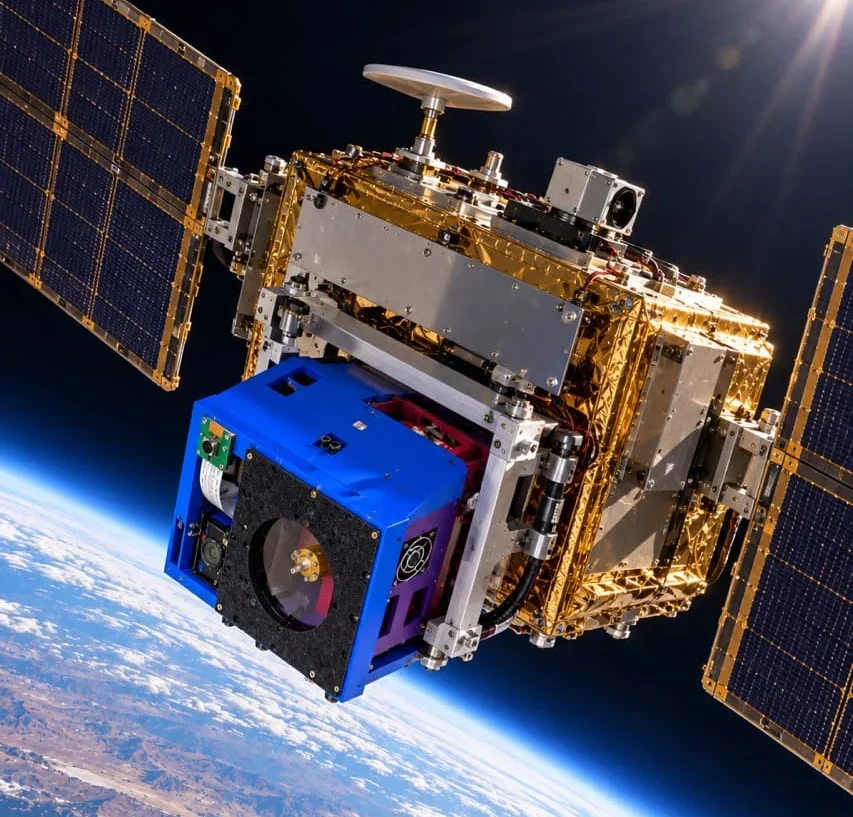 Publicado el: 29/09/2026Chilean technology aims to improve the accuracy of telescopes studying the origin of the Universe
 -
 Publicado el: 25/09/2026CATA Associate Researcher named Director of the Las Campanas Observatory
 -
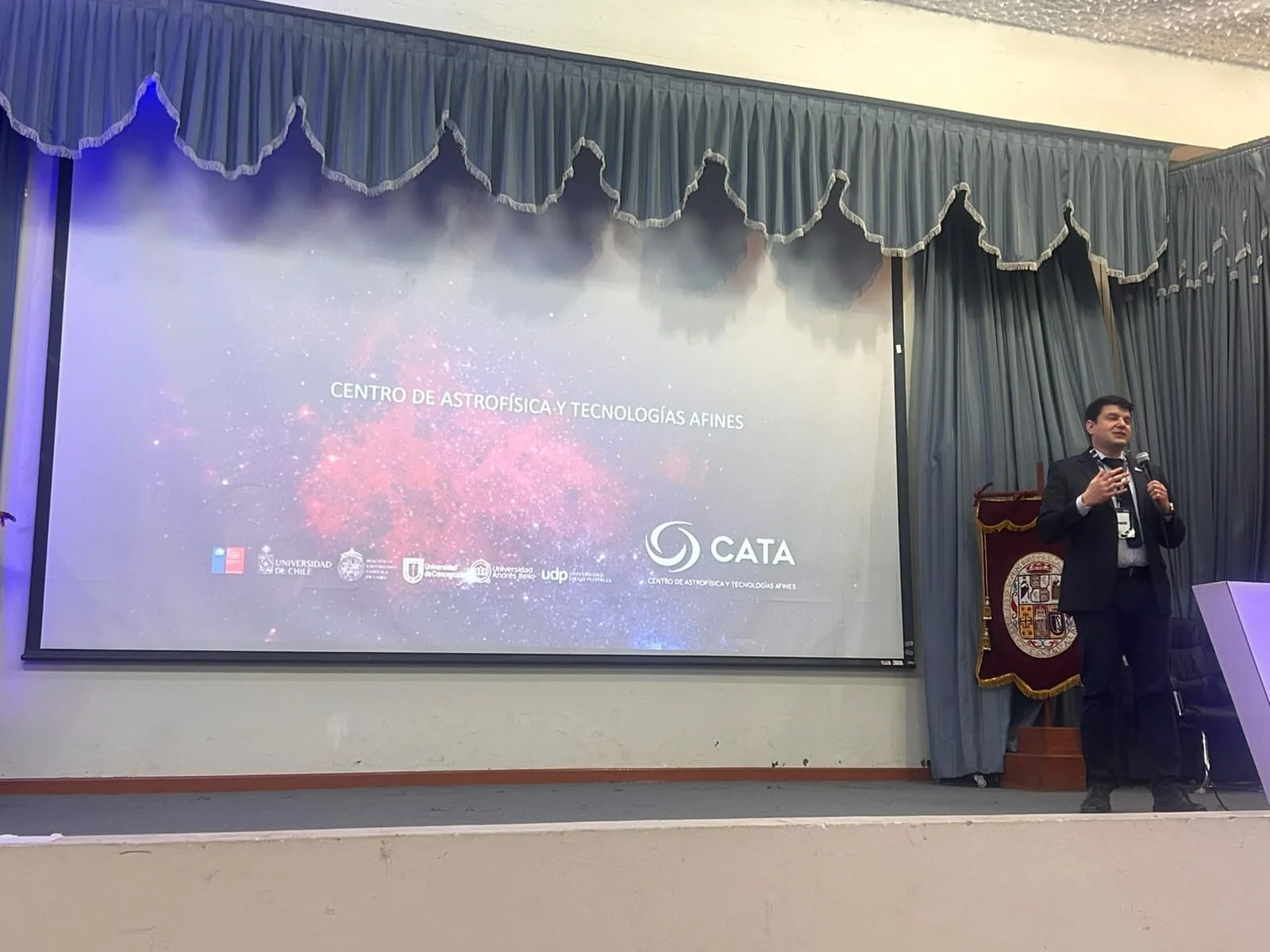 Publicado el: 23/09/2026CATA’s General Manager presented the Center’s technology transfer model at an international meeting in Peru
 -
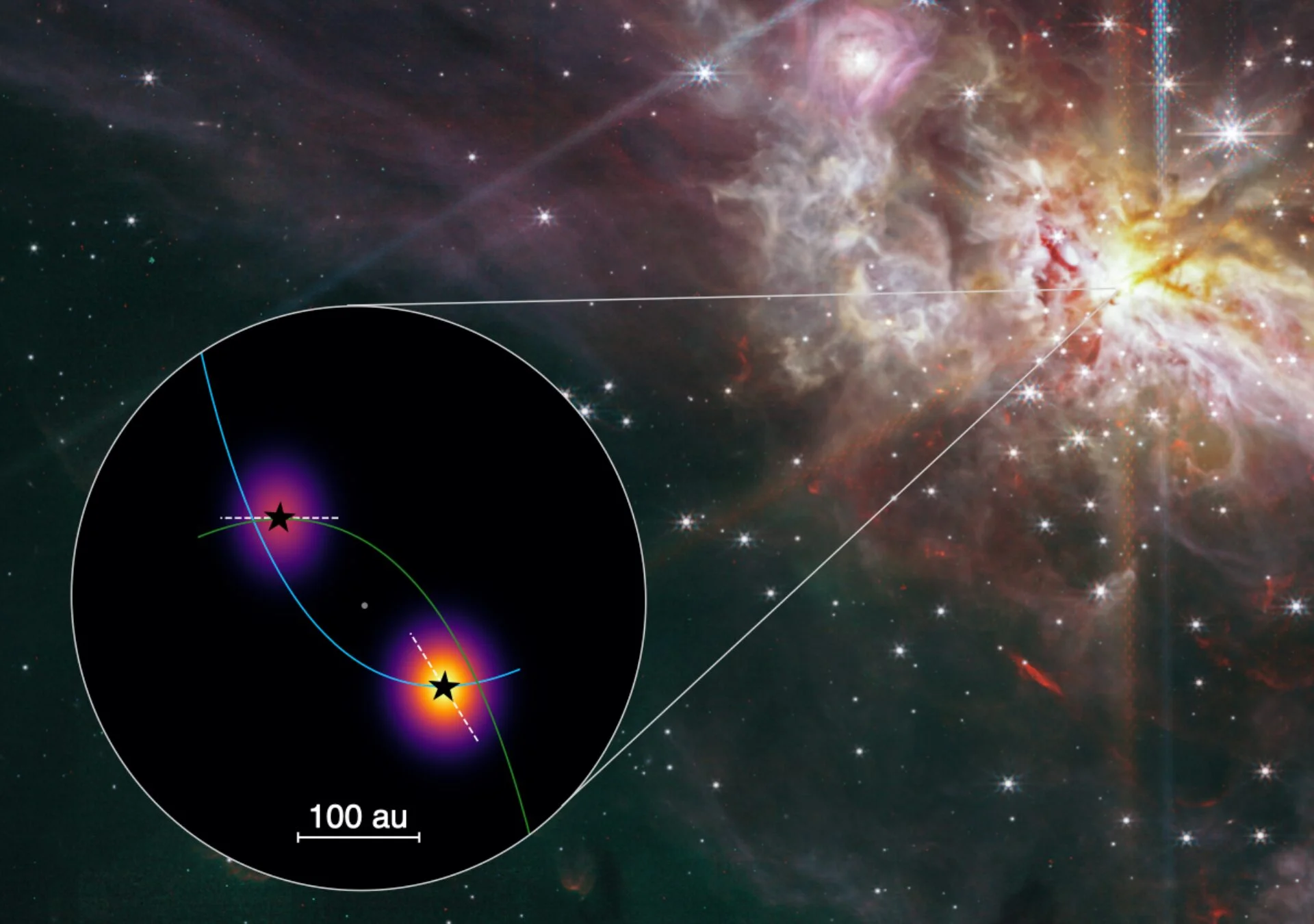 Publicado el: 08/09/2026The wedding dance of massive stars: Astronomer from CATA and the Universidad de Chile contributes to historic discovery
Categories list
- Acknowledgments 28
- Astrobiology 12
- AstroCluster 1
- Black holes 21
- Corporativo 73
- Cosmology 10
- Descubrimientos 28
- Disclosure 91
- Exoplanets 18
- Extension 14
- Galaxies 28
- Galaxies formation 10
- Inter y Transdisciplina 5
- Local Universe 22
- Publications 9
- Sin categorizar 34
- Solar System 30
- Stellar formation 12
- Technology 32
- Technology Transfer 33