Astronomy will be part of Kidzapalooza 2026
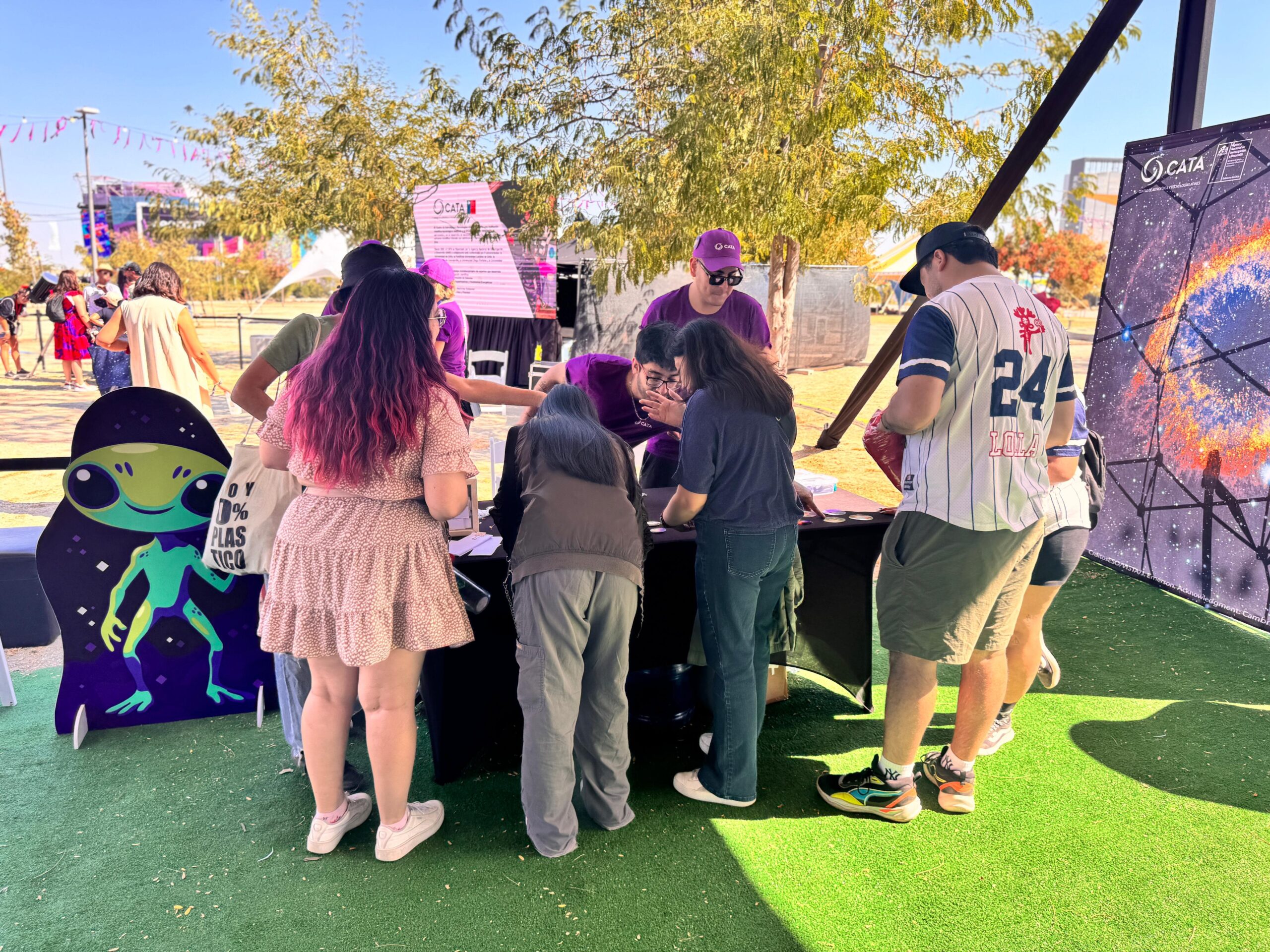
During the three days of the event, CATA, in partnership with four scientific outreach institutions, will offer a space for astronomical experiences and knowledge in the Kidzapalooza section of the festival.
The Center for Astrophysics and Associated Technologies – CATA (ANID Basal Center) will participate for the second consecutive year in a new edition of “Kidzapalooza at Lollapalooza Chile 2026,” one of the world’s most important music and culture festivals.
Following its presence in 2025 at the LollaCreative space, this year the Center will bring astronomy to Kidzapalooza alongside four institutions dedicated to scientific and astronomical outreach, with immersive experiences designed to bring knowledge of the universe closer to children, families, and the general public. The activity will take place on March 13, 14, and 15 at O’Higgins Park, between 1:00 p.m. and 7:30 p.m.
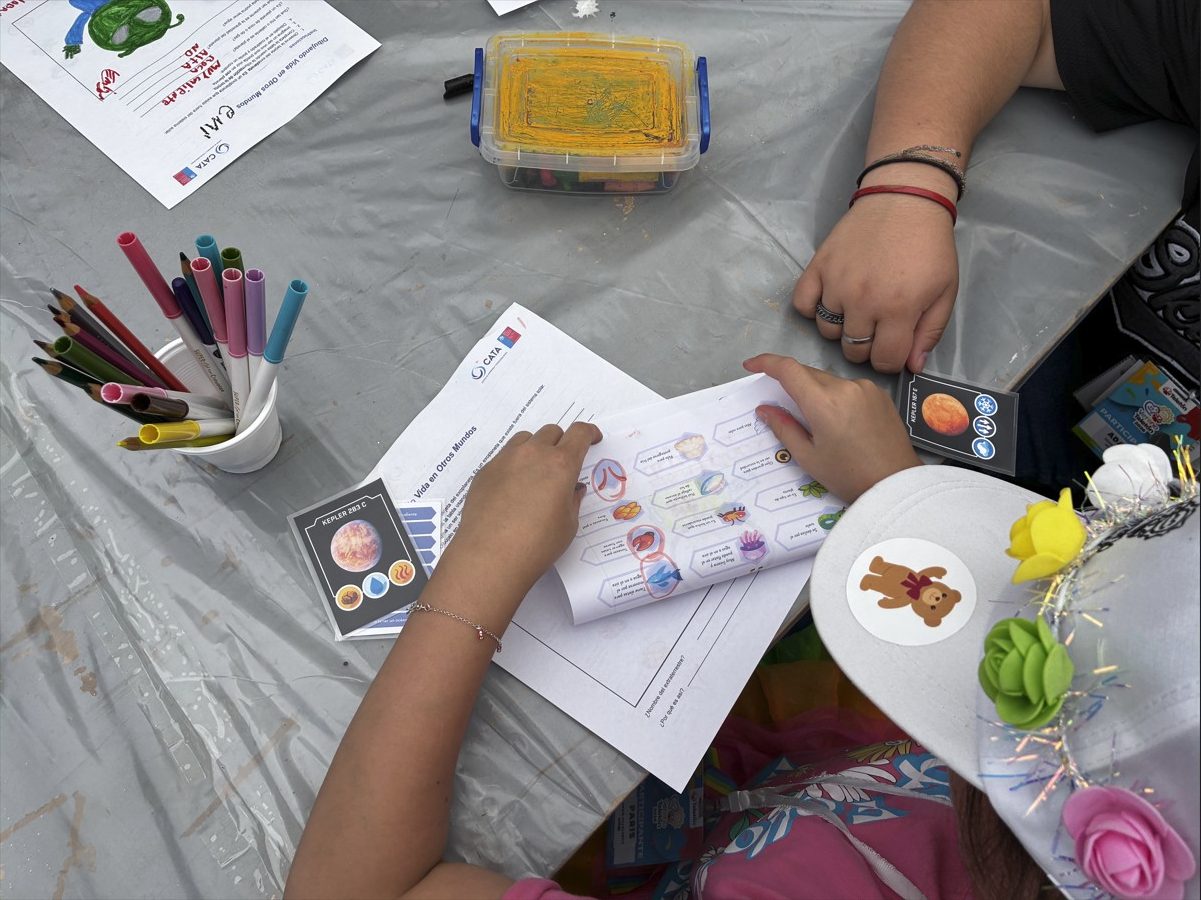
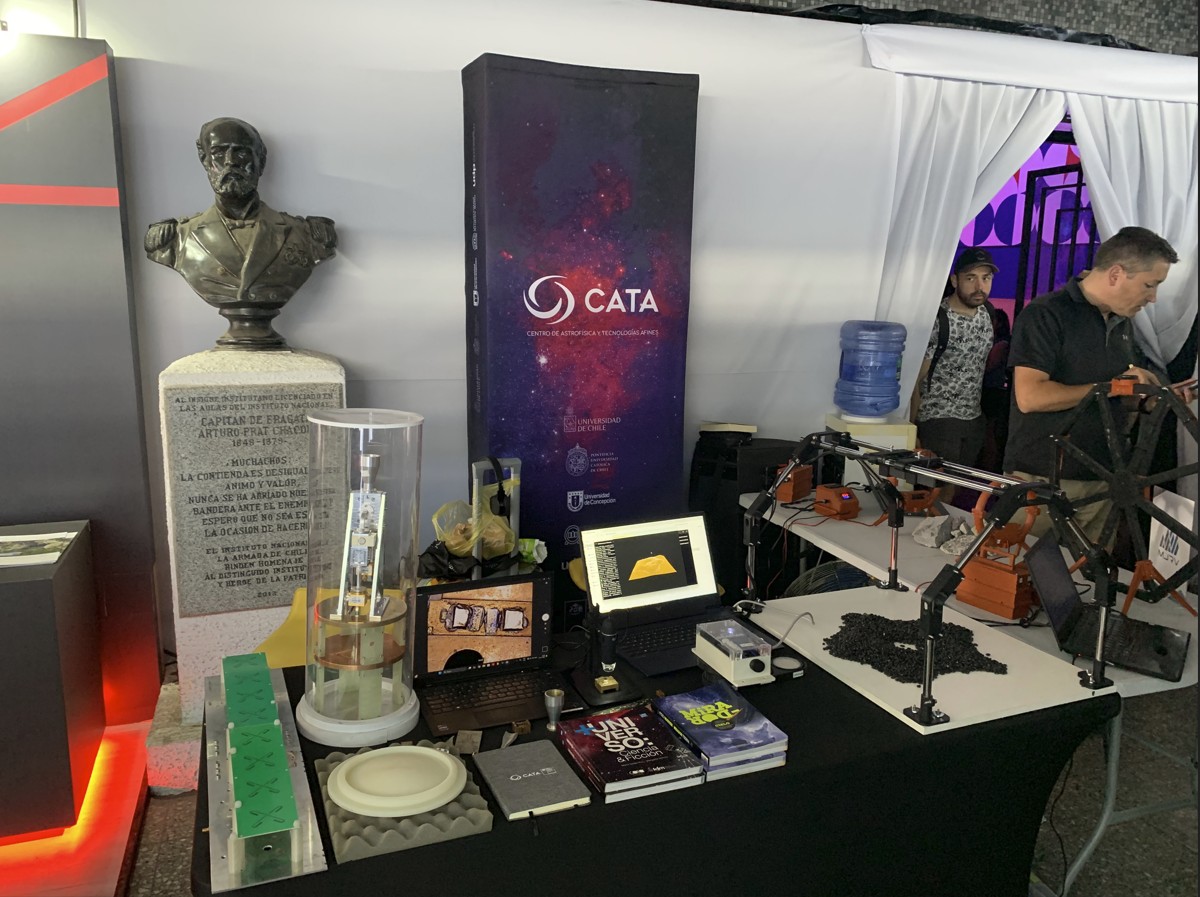
During the three days of the festival, CATA will offer immersive virtual reality experiences with three-dimensional visualizations of the universe, including nebulae, black holes, and the Moon, as well as a guided tour of deep space. The program will be complemented by the board games “Planetary Chaos” and “Memorice,” the latter co-created with students from Gabriela Mistral University (UGM). There will also be an “astronomical pixel art” activity, designed to encourage children to explore their creativity; this work will form part of the activation designed especially for young audiences. Finally, there will be an exhibition of 3D-printed models of black holes and the Big Bang, created by industrial design students from Duoc UC and UGM.
In addition, astronomers from the Center will be available to answer questions and talk directly with the public about stars, exoplanets, galaxies, and other topics related to the universe.
Science and music are part of culture, and large-scale events such as Lollapalooza allow us to demonstrate that astronomical knowledge can connect with broad and diverse audiences. At CATA, as a center of excellence, we actively promote scientific outreach and engagement with society, because we understand that astronomy is part of the country’s scientific heritage. This is an opportunity to expand that access and create new experiences that bring together astronomical research and the public, encouraging curiosity in our children,” explains Santiago Prat, General Manager of CATA.
In addition, the Center will benefit from the collaborative work of four institutions dedicated to astronomy outreach and technology. These include Telescopios Chile and Alfilmedia3D, which will offer solar observation sessions with state-of-the-art binoculars and digital telescopes, allowing visitors to observe the Sun live and see details such as its surface, sunspots, and solar flares.
“Through solar observation, we want to open a window to the cosmos so that families at Kidzapalooza can marvel at the sunspots and details of the surface of the ‘king star’. We deeply value participating for the second consecutive year in the festival alongside CATA, sharing fundamental values such as the dissemination of knowledge, research, and encouraging more people to get involved in astronomy,” said Roberto Durán, Marketing Manager at Telescopios Chile.
On the other hand, organizations such as Astro Ruta and InvadeLab will be present with immersive experiences through virtual and augmented reality lenses, inviting visitors to explore different corners of the universe. Astro Ruta will offer a Space Walk experience, where the public can feel like a real astronaut in space. For its part, InvadeLab will present a proposal focused on the history of space exploration and an augmented reality display of the Solar System, using interactive lecterns that will allow visitors to visualize the planets in our cosmic neighborhood.
“We hope that attendees will be amazed by the immersive technologies we will be bringing. Participating for the second consecutive year is a unique opportunity to raise awareness in a massive, family-friendly space, reaching children of different ages, sparking their curiosity, and showing them that science can be found everywhere. The collaboration with CATA and other institutions strengthens our network and amplifies the impact we can achieve,” says Fernando González, CEO of InvadeLab.
The participation is also part of the celebrations for Astronomy Day, a commemoration established in 2014 that takes place every fall equinox and mobilizes the astronomical community throughout the country. This date has become a national milestone that highlights Chile’s strategic role in the exploration of the universe and promotes astronomy as a fundamental part of our scientific, cultural, and educational heritage.
Through open activities, outreach events, and meetings with the public, Astronomy Day not only highlights the excellent research being carried out in the country, but also strengthens the link between science and society, inspiring new generations and reaffirming Chile’s astronomical identity.
Outstanding news
Recent news
-
Publicado el: 09/03/2026Astronomy will be part of Kidzapalooza 2026
-
 Publicado el: 17/02/2026The National Congress Library highlights CATA researchers in its second edition of Chilean Women Scientists
 -
 Publicado el: 11/02/2026Science with a woman’s face: gaps, vocations, and pending challenges
 -
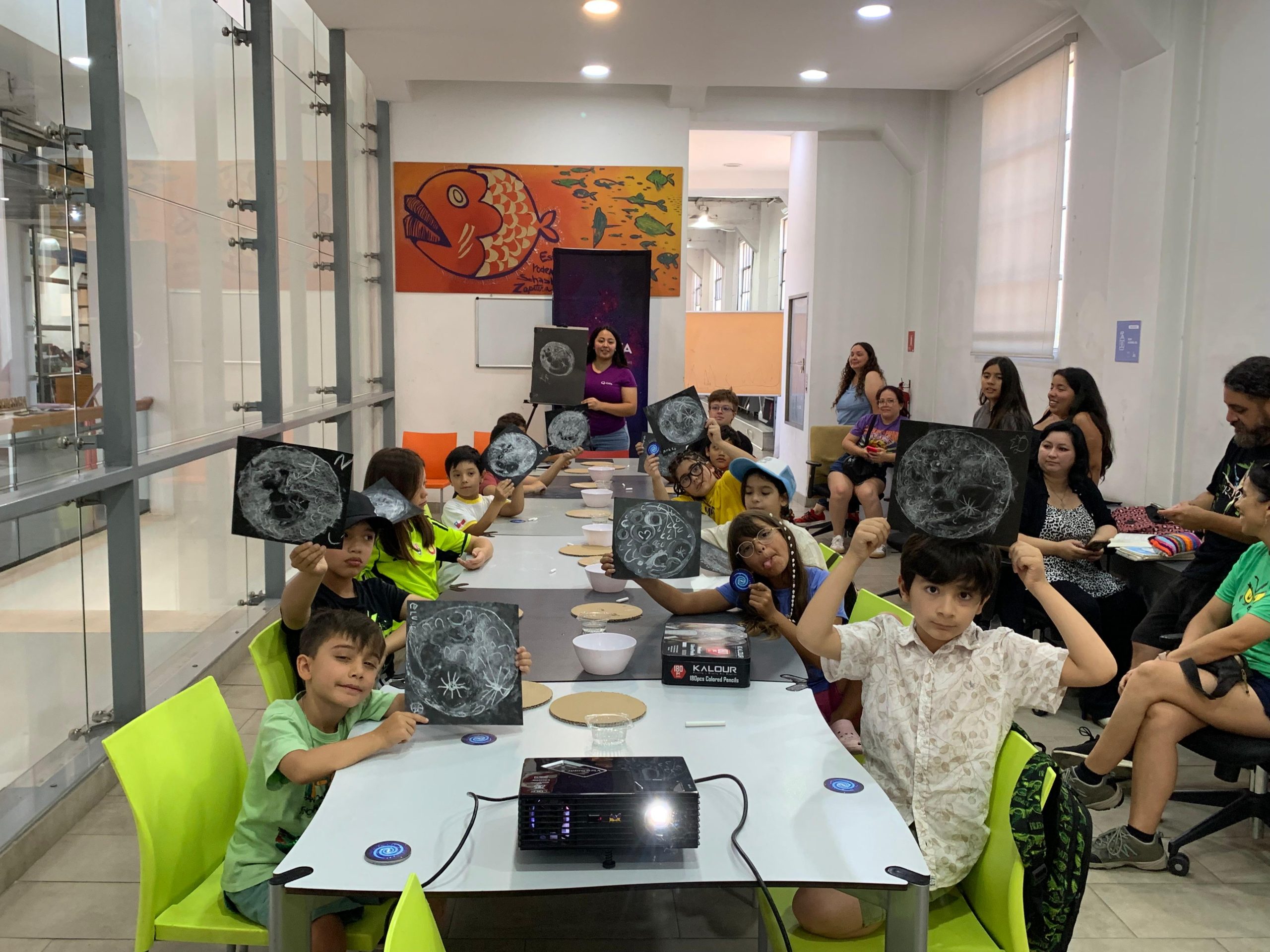 Publicado el: 09/02/2026Astronomy Day was held at the Santiago Library
 -
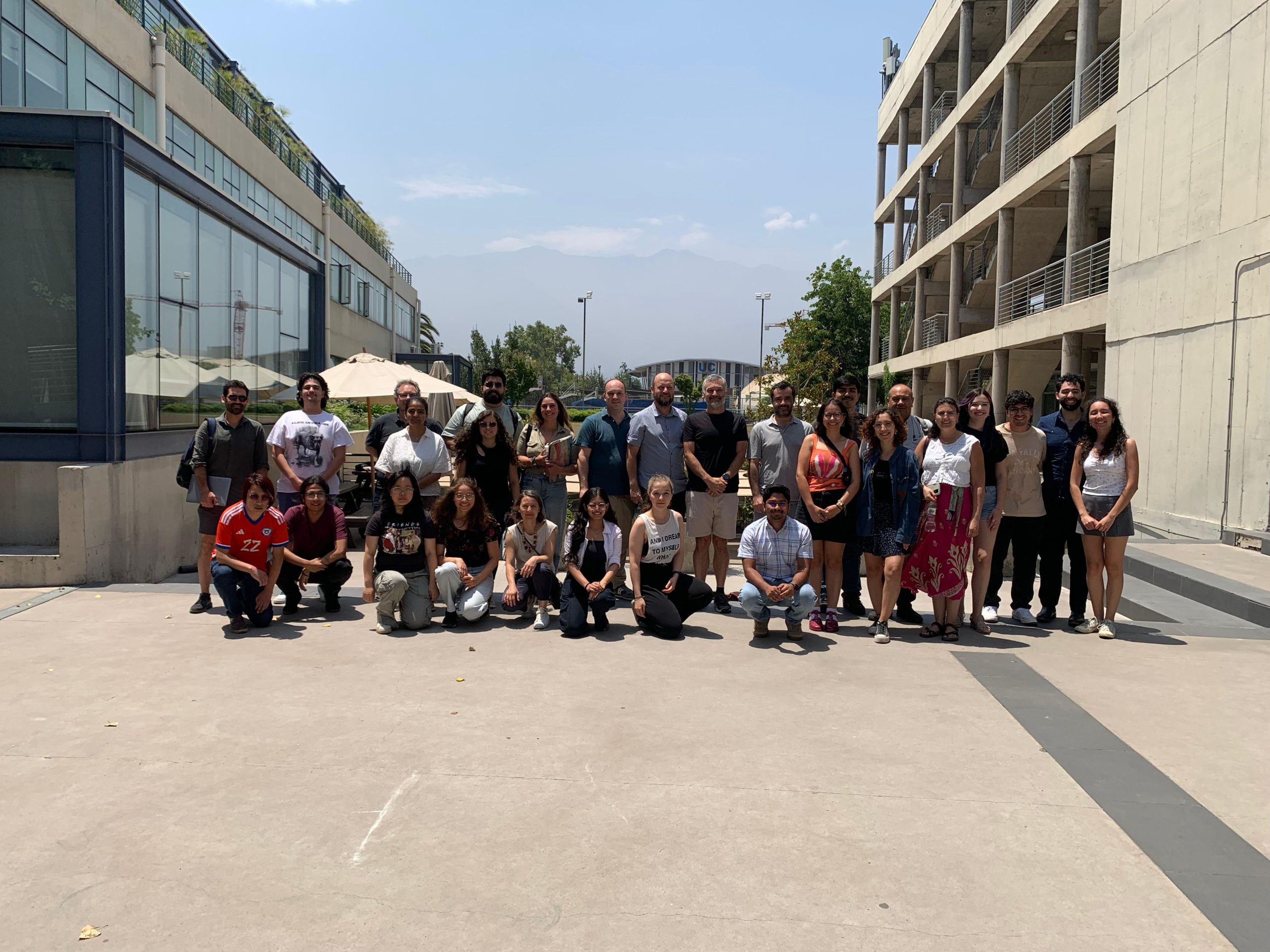 Publicado el: 30/01/2026Looking ahead to the next five years: Galaxies Area meets to share progress and strengthen research
Categories list
- Acknowledgments 24
- Astrobiology 8
- AstroCluster 1
- Black holes 19
- Corporativo 62
- Cosmology 5
- Descubrimientos 25
- Disclosure 79
- Exoplanets 15
- Extension 7
- Galaxies 23
- Galaxies formation 7
- Inter y Transdisciplina 4
- Local Universe 17
- Publications 7
- Sin categorizar 36
- Solar System 24
- Stellar formation 8
- Technology 18
- Technology Transfer 20