Geminids 2025: facts and how to observe the last meteor shower of the year
During the night of Saturday, December 13, and Sunday, December 14, the 2025 Geminid meteor shower will occur, bringing a new astronomical spectacle in the last month of the year.
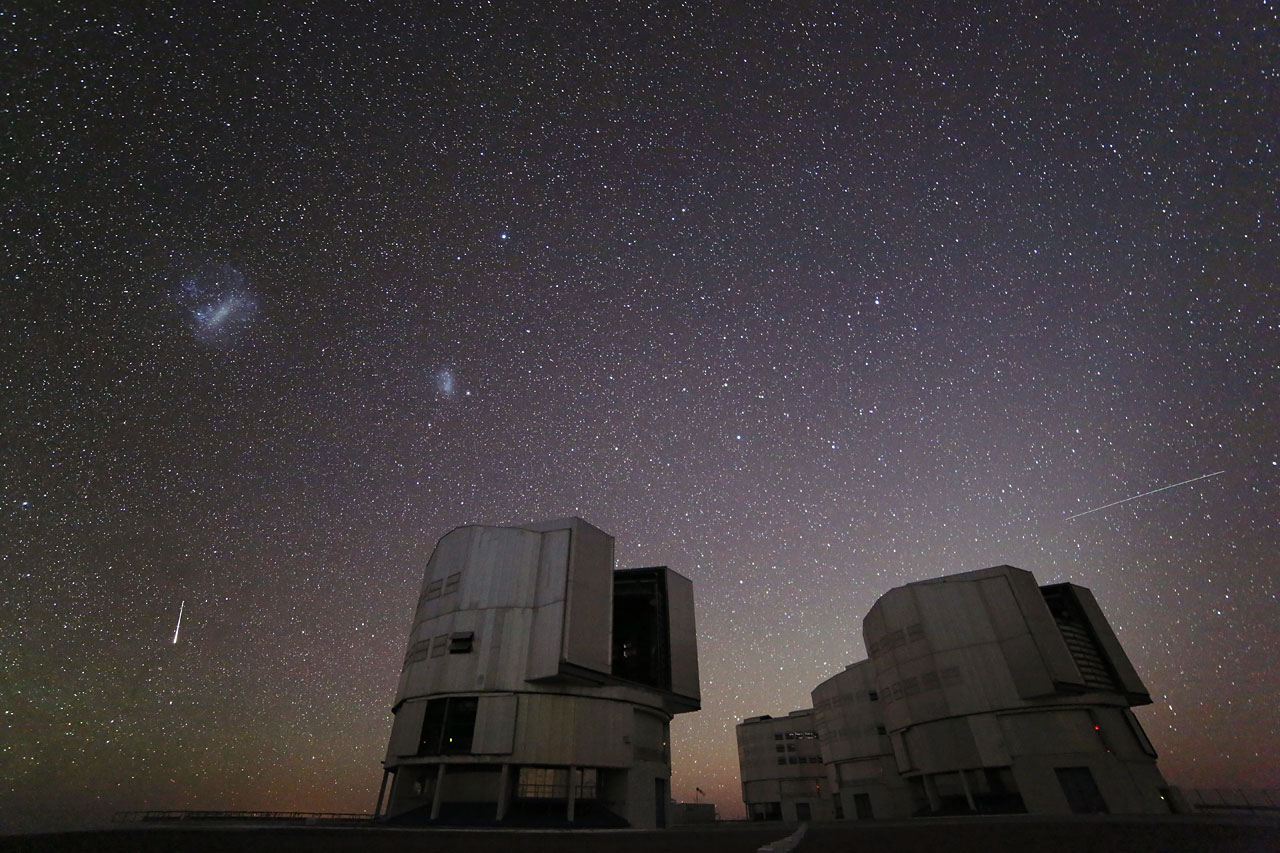
The Geminid meteor shower, one of the most striking events on the 2025 astronomical calendar, will reach its peak in the early hours of December 13 to 14, with the possibility of observing up to 150 meteors per hour under ideal conditions. The phenomenon will be visible throughout Chile and can be observed without any instruments.
Ricardo Demarco, Associate Researcher at the Center for Astrophysics and Associated Technologies (CATA) (ANID Basal Center) and professor at Universidad Andrés Bello (UNAB), provides details to understand its origin, characteristics, and the best conditions for observing this meteor shower.
What are the Geminids and where do they come from?
Meteor showers, popularly known as “star showers” or “shooting stars,” are fragments that break off from comets or asteroids and are distributed along their orbits around the Sun. At certain times of the year, the Earth’s orbit intersects with these trajectories, causing these fragments to be attracted by the Earth’s gravity and enter the atmosphere, where they become incandescent and generate visible flashes.
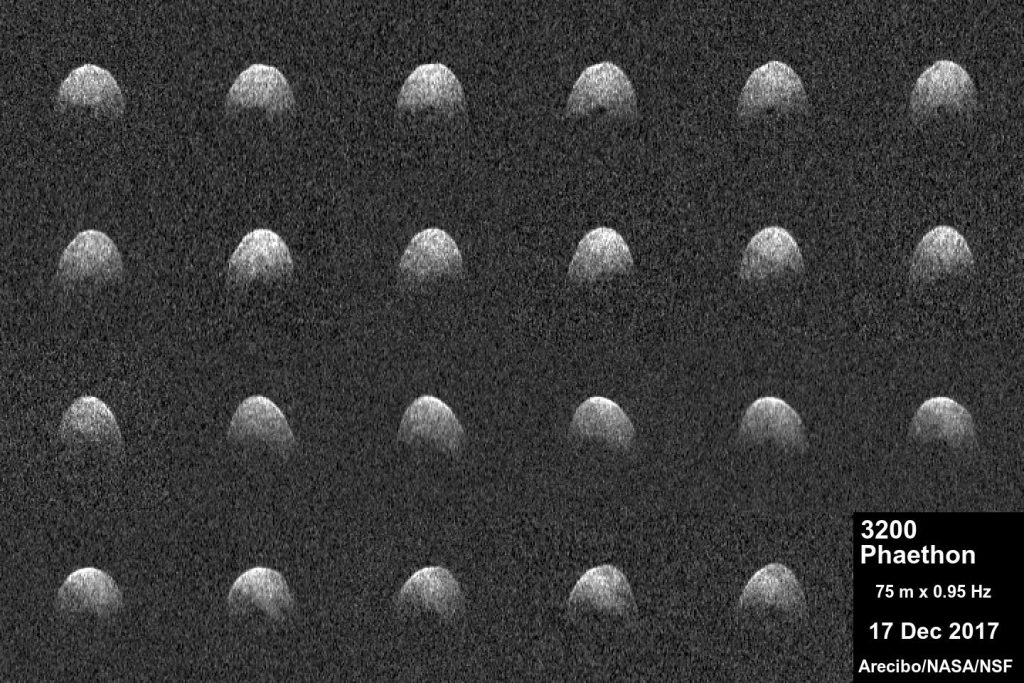
Unlike meteor showers such as the Perseids or Leonids, whose fragments come from comets, the Geminids correspond to fragments of an asteroid, 3200 Phaethon, whose origin is still not completely clear and which takes about 1.4 years to complete its orbit around the Sun.
“3200 Phaethon has an elongated orbit that is very characteristic of comets, but when you analyze its properties, it is more like a rocky asteroid. Unlike comets, the particles of this asteroid leave a denser trail,” explains Ricardo Demarco, Associate Researcher at CATA.
The UNAB academic also explains that this phenomenon is called the “Geminids” because its radiant point—the area of the sky from which the meteors appear to originate—is located in the constellation Gemini, very close to the stars Castor and Pollux, the two brightest stars in this constellation.
How and at what time can the Geminids be observed from Chile?
The CATA astronomer points out that in Chile, the meteor shower will be visible at night without the need for any kind of instrument. However, the best time to view it will be in the early hours of the morning. “Gemini will be at its highest point between 3:00 and 4:00 a.m. on December 14. That is the ideal time to observe the radiant point and enjoy the greatest number of meteors,” explains Demarco.
Although the radiant is in Gemini, meteors can appear anywhere in the sky. Therefore, the UNAB academic recommends choosing a dark place with good visibility toward the northern horizon and few obstructions from buildings, houses, or trees.
“This is one of the most spectacular rains of the year. In good conditions, you can see around 100 meteors per hour, and in optimal conditions even more. The ideal place to observe them is in high areas, far from light pollution,” adds Demarco.
The astronomer also emphasizes that the phenomenon is completely safe and poses no risk to Earth. “Practically all of these particles disintegrate in the atmosphere,” explains the CATA researcher.
The science behind the Geminids
In addition to the visual spectacle, the Geminids allow us to reflect on the origin of the Solar System. Although these fragments are destroyed upon entering the atmosphere, their nature, coming from asteroids or comets, offers important clues to understanding how the planets were formed and what compounds were present in the early stages of the Solar System.
“Bodies such as asteroids and comets play a very important role in understanding the physical conditions that existed in our cosmic neighborhood at the time of the formation of both the Sun and the planets. They may even contain key information for better understanding the origin of life. There have been space missions that have approached these types of bodies, conducting very detailed studies and even bringing samples of them back to Earth,” explains Ricardo Demarco.
Finally, the astronomer from CATA and UNAB highlights the importance of this type of phenomenon in bringing astronomy closer to people.
“Meteor showers capture people’s interest and children’s imaginations, fostering an interest in the universe and science in general. We are seeing particles falling that were present at the genesis of our solar system and our planet Earth, as well as molecules that probably paved the way for the emergence of life as we know it,” he concludes.
Outstanding news
Recent news
-
 Publicado el: 09/03/2026Astronomy will be part of Kidzapalooza 2026
 -
 Publicado el: 17/02/2026The National Congress Library highlights CATA researchers in its second edition of Chilean Women Scientists
 -
 Publicado el: 11/02/2026Science with a woman’s face: gaps, vocations, and pending challenges
 -
 Publicado el: 09/02/2026Astronomy Day was held at the Santiago Library
 -
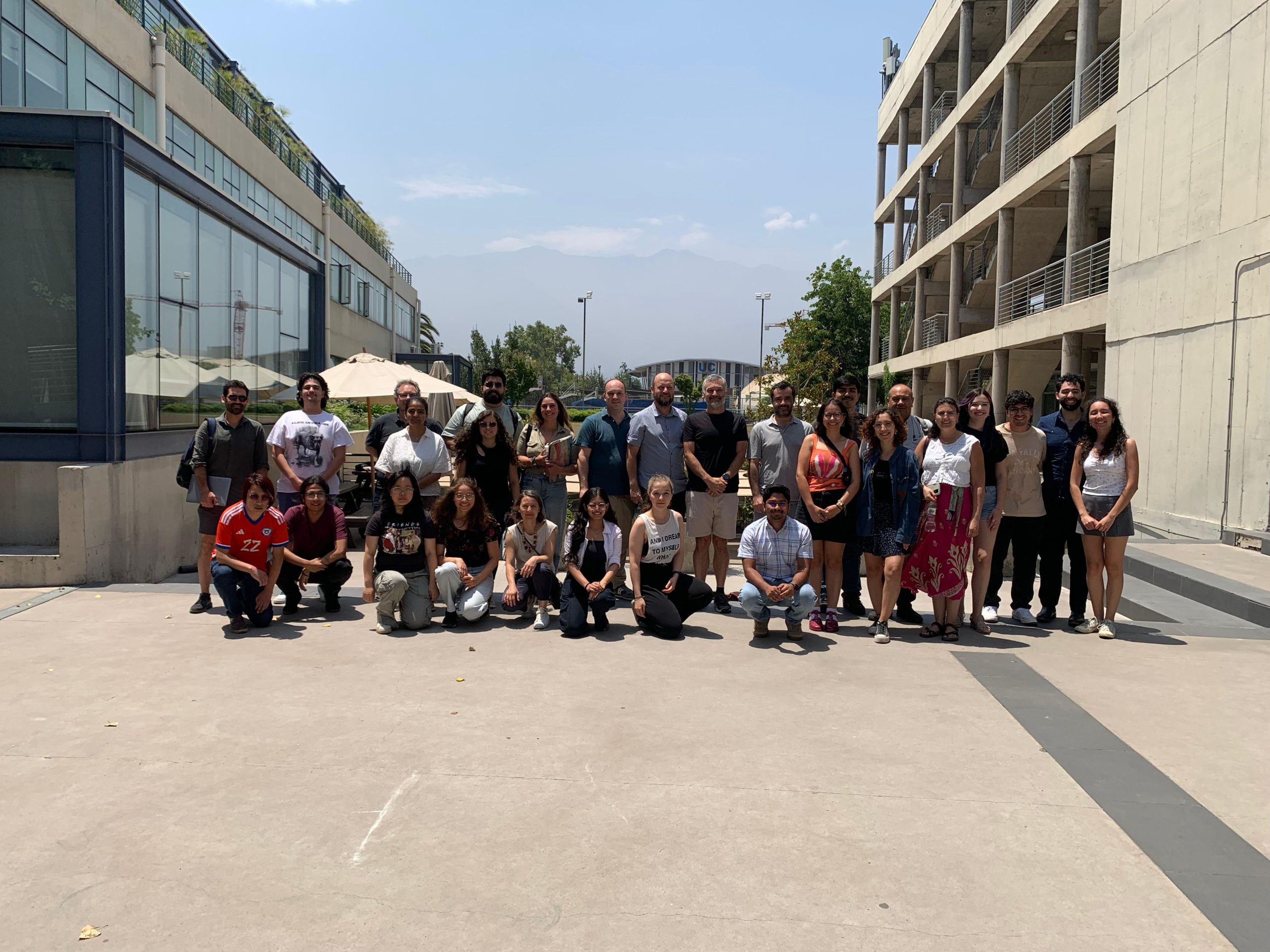 Publicado el: 30/01/2026Looking ahead to the next five years: Galaxies Area meets to share progress and strengthen research
Categories list
- Acknowledgments 24
- Astrobiology 8
- AstroCluster 1
- Black holes 19
- Corporativo 62
- Cosmology 5
- Descubrimientos 25
- Disclosure 79
- Exoplanets 15
- Extension 7
- Galaxies 23
- Galaxies formation 7
- Inter y Transdisciplina 4
- Local Universe 17
- Publications 7
- Sin categorizar 36
- Solar System 24
- Stellar formation 8
- Technology 18
- Technology Transfer 20