The National Congress Library highlights CATA researchers in its second edition of Chilean Women Scientists
As part of International Day of Women and Girls in Science, the BCN project aims to highlight and recognize the scientific work of Chilean women.
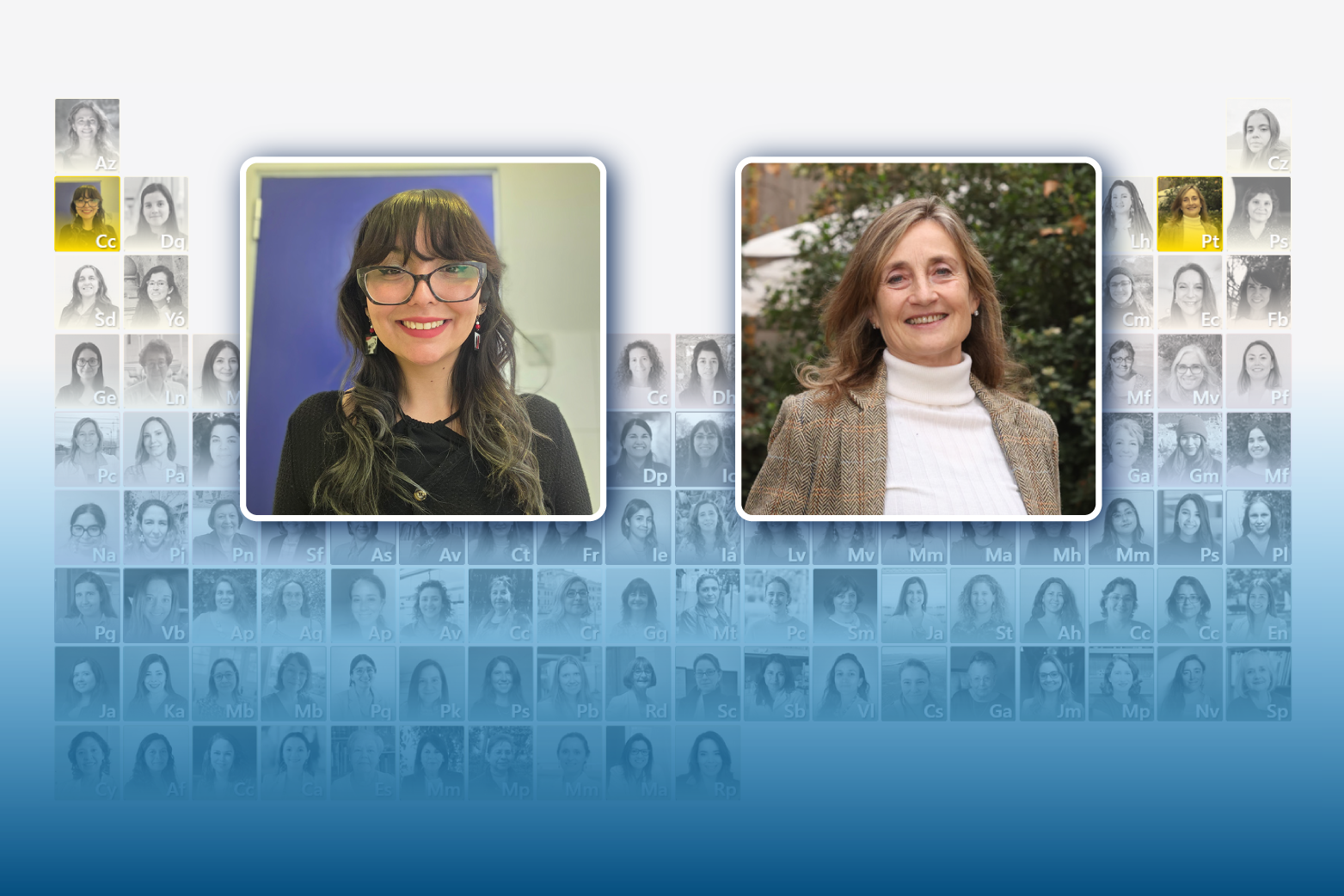
As part of International Day of Women and Girls in Science, researchers from the Center for Astrophysics and Related Technologies (CATA, ANID Basal Center) were featured in the second edition of the Periodic Table of Chilean Women Scientists, presented by the Library of the Chilean National Congress. This initiative recognizes 118 women scientists who contribute significantly to the development of STEM fields in Chile and abroad, highlighting the leadership, excellence, and impact of the scientific work promoted by CATA in astronomy and related technologies.
This project, whose first edition was launched in 2025, has established itself as an educational innovation resource that allows users to explore profiles of female researchers through thematic filters and personalized searches. The selection process considers criteria such as national and international awards and recognitions, pioneering work in their disciplines, contributions to scientific dissemination, knowledge generation, and academic careers, with the aim of highlighting role models who inspire new generations and contribute to reducing gender gaps in science and technology.
Among the scientists included in this edition is Patricia Tissera, Director and Principal Investigator at CATA, recognized as a Latin American pioneer in the study of galaxy formation and evolution and for developing some of the first comprehensive numerical models in the region. Throughout her career, she has built and led research groups in Argentina and Chile, while also promoting supercomputing infrastructure for astronomy.
As Director of CATA, she has strengthened talent development, cutting-edge research, and international collaboration. She is an academic at the Institute of Astrophysics at the Pontificia Universidad Católica de Chile (UC) and a member of the Advisory Committee of the Vice Dean of Digital Intelligence at the same university. She also co-led the installation and consolidation of the ERIS Millennium Nucleus and, during the period 2023-2026, coordinates the LACEGAL Horizon 2030 Network Node, funded by the European Commission.
Her contributions include directing CIELO, the first cosmological simulations carried out in the region, along with leading teams that acquired and operated computer clusters in Chile and Argentina. Her scientific output, focused on chemical evolution, metallic gradients, and the history of the Milky Way, has had a sustained international impact. In addition, he has done extensive training work by supervising numerous theses, with a special emphasis on supporting women and international students, as well as actively promoting gender equality, scientific diplomacy, and regional cooperation.
Another renowned scientist was Catalina Casanueva, an affiliated researcher at CATA and postdoctoral researcher at UC, noted for her work on the formation and evolution of galaxies and the physical processes that shaped the early universe. In recent years, she has studied the possible role of primordial black holes as candidates for dark matter, contributing background information to one of the most challenging debates in cosmology today.
Throughout her career, she has been the lead author of three publications in international journals, addressing topics ranging from the dynamics of gas and stars in simulated galaxies to the impact of primordial black holes. She has completed significant research stays at the Max Planck Institute for Astrophysics (Germany) and the University of Tokyo (Japan). Alongside her role as a researcher, she has been actively involved in teaching and scientific outreach, helping to bring astronomy closer to the general public and encouraging early vocations among girls and young women.
Finally, this edition also included women scientists who were part of the Center, including Elise Servajean, former General Manager, who during her tenure led CATA’s transformation toward technology transfer and industry outreach; and Paulina Assman, former postdoctoral researcher at CATA and the Universidad de Chile.
Outstanding news
Recent news
-
 Publicado el: 09/03/2026Astronomy will be part of Kidzapalooza 2026
 -
Publicado el: 17/02/2026The National Congress Library highlights CATA researchers in its second edition of Chilean Women Scientists
-
 Publicado el: 11/02/2026Science with a woman’s face: gaps, vocations, and pending challenges
 -
 Publicado el: 09/02/2026Astronomy Day was held at the Santiago Library
 -
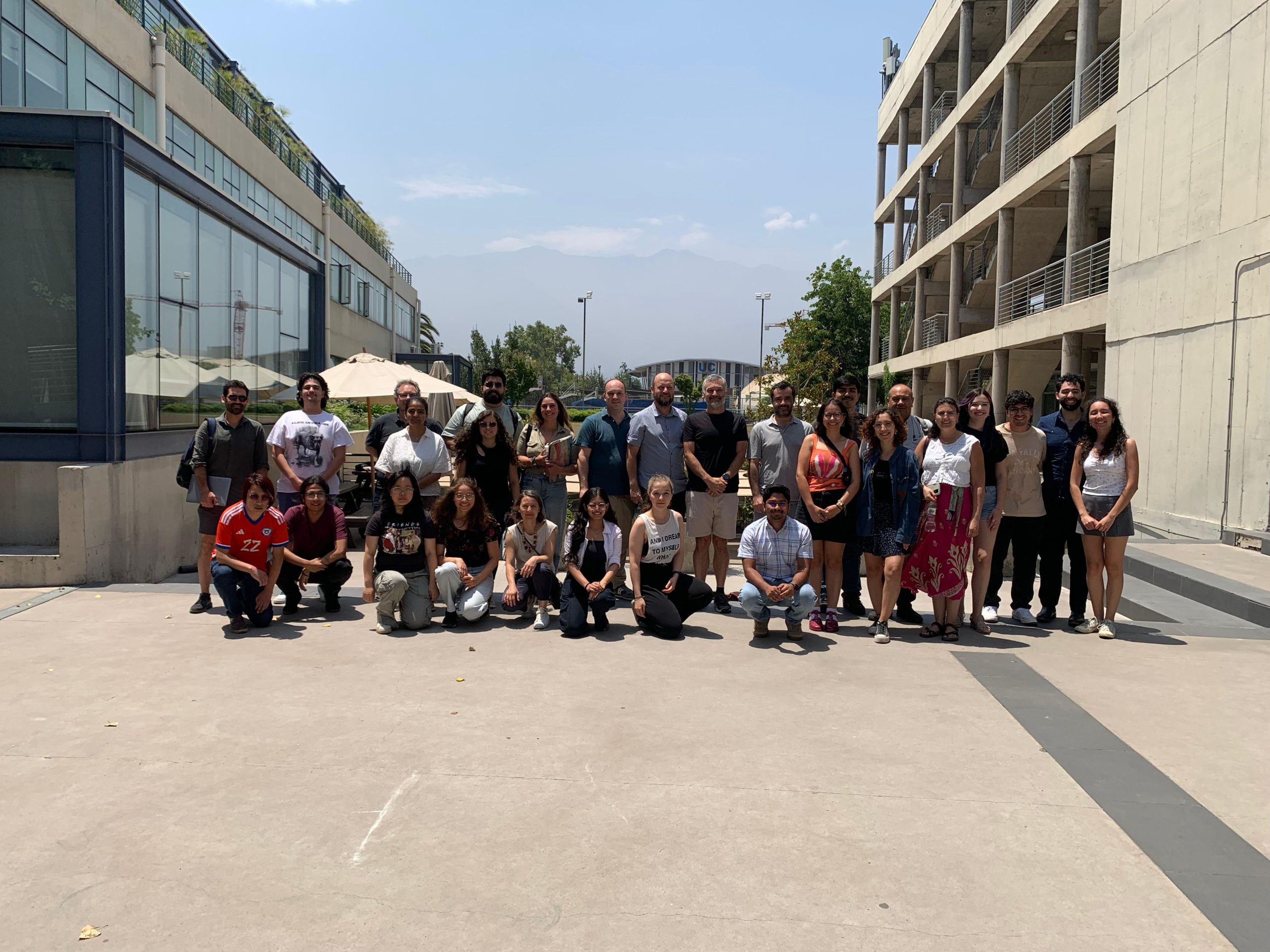 Publicado el: 30/01/2026Looking ahead to the next five years: Galaxies Area meets to share progress and strengthen research
Categories list
- Acknowledgments 24
- Astrobiology 8
- AstroCluster 1
- Black holes 19
- Corporativo 62
- Cosmology 5
- Descubrimientos 25
- Disclosure 79
- Exoplanets 15
- Extension 7
- Galaxies 23
- Galaxies formation 7
- Inter y Transdisciplina 4
- Local Universe 17
- Publications 7
- Sin categorizar 36
- Solar System 24
- Stellar formation 8
- Technology 18
- Technology Transfer 20