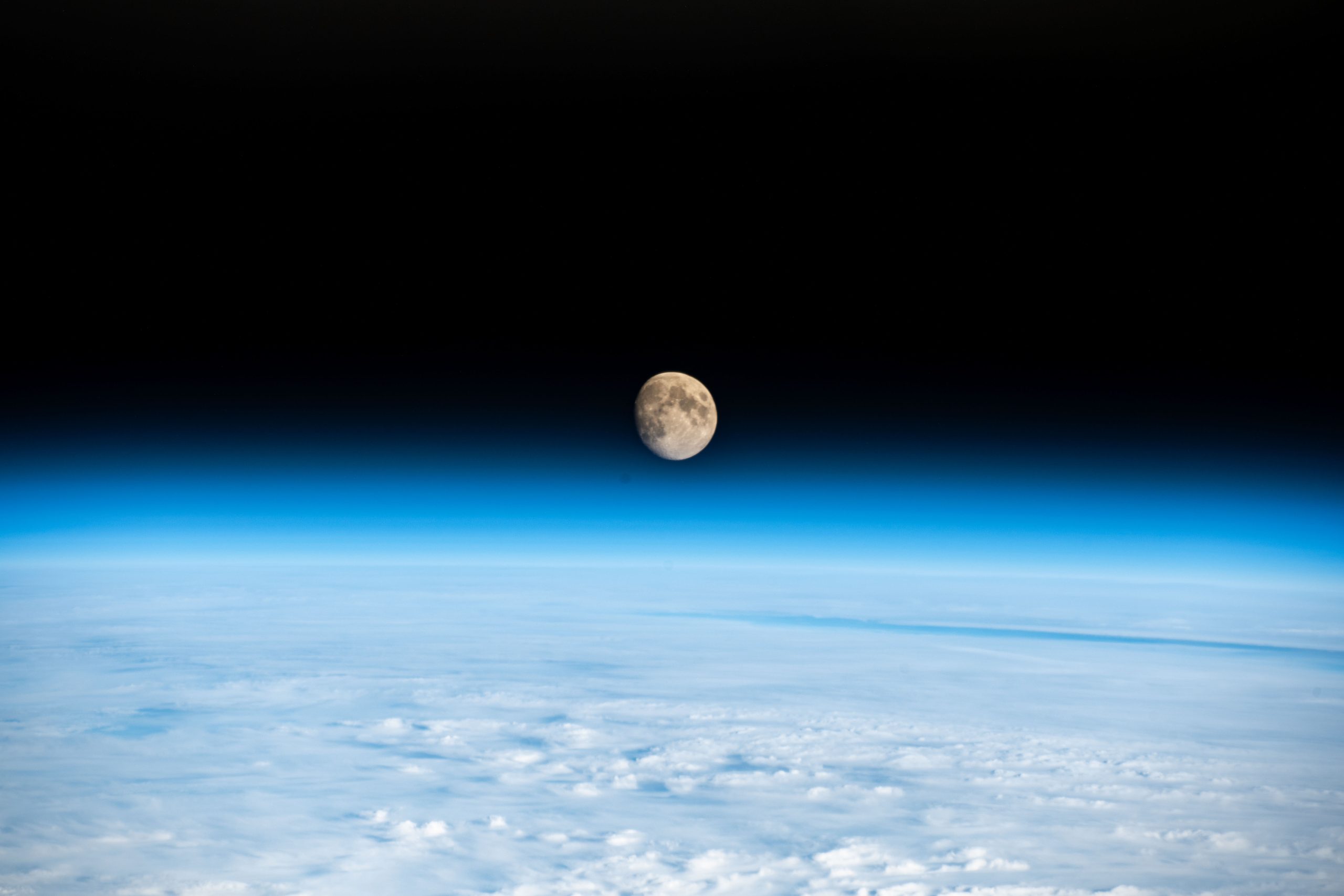
Will Earth have two moons until 2083? The idea behind object 2025 PN7
César Fuentes, an astronomer at CATA, explains the unique orbital dynamics of this asteroid, which has led to the hypothesis of a possible “second moon.”
Interest in the object 2025 PN7 has sparked speculation about the possibility of Earth having a “second moon” until 2083. However, in astronomy, such claims are linked to already known objects: quasi-moons or quasi-satellites, bodies that do not orbit Earth but, for a time, exhibit a particular dynamic that makes them appear to orbit our planet.
“These types of objects are those that appear to orbit Earth from Earth, but in reality, they are orbiting the Sun. It is a temporary effect that can last from a few months to even centuries,” explains César Fuentes, Associate Researcher at the Center for Astrophysics and Associated Technologies – CATA (ANID Basal Center) and academic at the Department of Astronomy (DAS) at the Universidad de Chile.
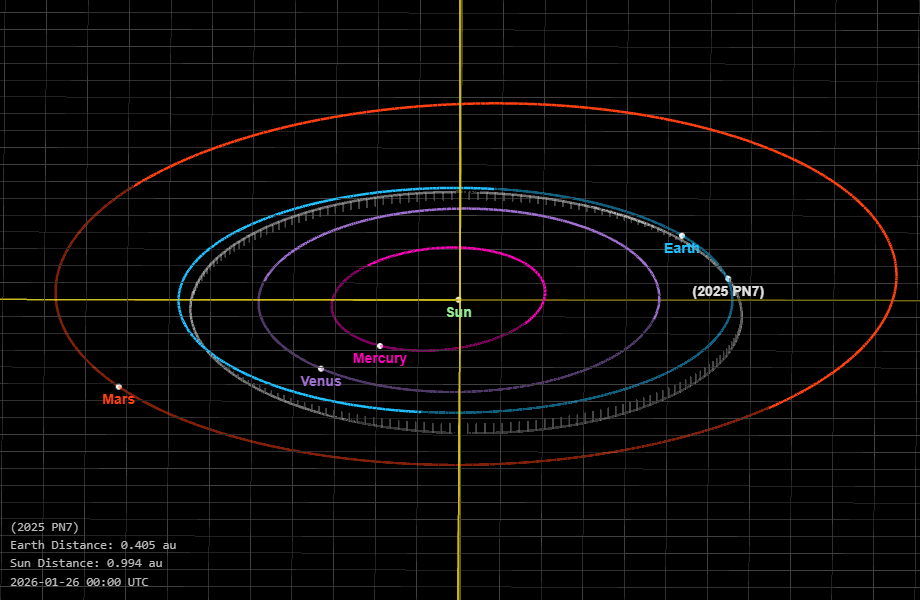
In the case of 2025 PN7, it is an asteroid that orbits the Sun in a one-to-one (1:1) resonance with Earth, which means that it completes a period of translation in a time very similar to that of our planet. This coincidence is what gives the impression that it accompanies Earth on its journey.
Most of these objects originate in the asteroid belt located between Mars and Jupiter. They are remnants of the Solar System’s formation process that never became planets and, after millions of years, may have their orbits altered due to gravitational encounters with these planets. In some cases, these disturbances carry them into the inner Solar System—from the Sun to Mars—where they can temporarily adopt orbits similar to that of Earth.
According to César Fuentes, “this object is not the first, as there are more than a dozen known objects that have orbits similar to Earth’s, until they change their trajectory and move away, only to return closer to our planet,” says the CATA astronomer.
The particular dynamics of 2025 PN7 have given rise to the idea of a supposed “second moon.” However, the University of Chile academic is emphatic in dismissing this interpretation. “It is not gravitationally bound to Earth, nor is it in a stable orbit like the Moon. In this case, it is much further away than the distance that separates us from the Moon. The claim that it is a satellite or a second satellite of our planet is incorrect,” emphasizes César Fuentes.
Despite the interest and curiosity that this idea may arouse, objects like these are not visible to the naked eye, even with binoculars or amateur telescopes. This is due to their small size—18 to 36 meters in diameter in the case of 2025 PN7—and their low luminosity. Their observation depends on professional telescopes and programs that monitor these objects, both to study their orbits and to evaluate possible trajectories.
As for potential risks, since it is not gravitationally bound to our planet, this asteroid poses no threat to Earth or its orbit. “Even in the extremely unlikely scenario of an impact, it would be a very localized event with no global consequences due to its small size,” concludes César Fuentes, CATA researcher and academic at the U. de Chile.
Outstanding news


Recent news
-
 Publicado el: 09/03/2026Astronomy will be part of Kidzapalooza 2026
 -
 Publicado el: 17/02/2026The National Congress Library highlights CATA researchers in its second edition of Chilean Women Scientists
 -
 Publicado el: 11/02/2026Science with a woman’s face: gaps, vocations, and pending challenges
 -
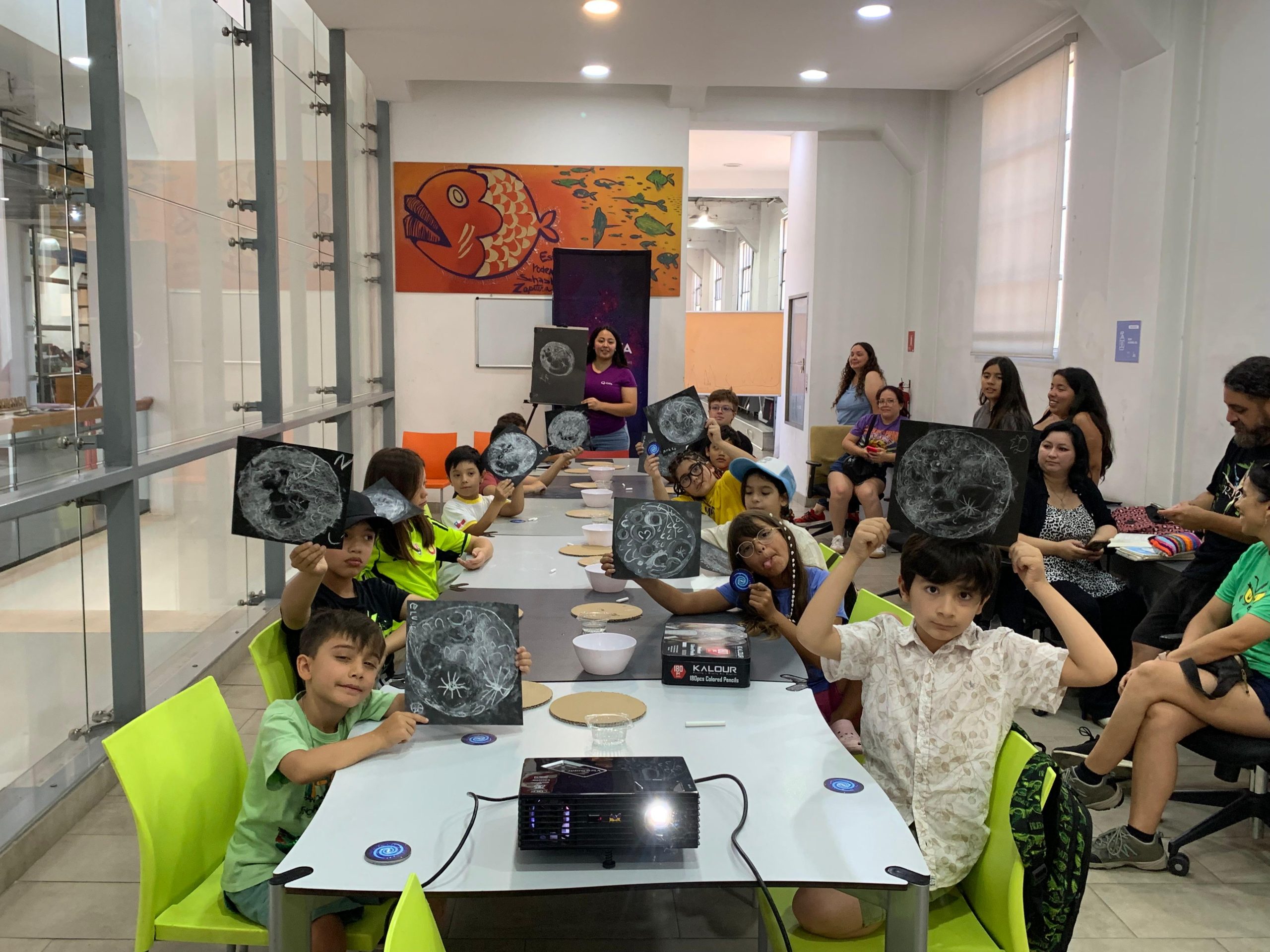 Publicado el: 09/02/2026Astronomy Day was held at the Santiago Library
 -
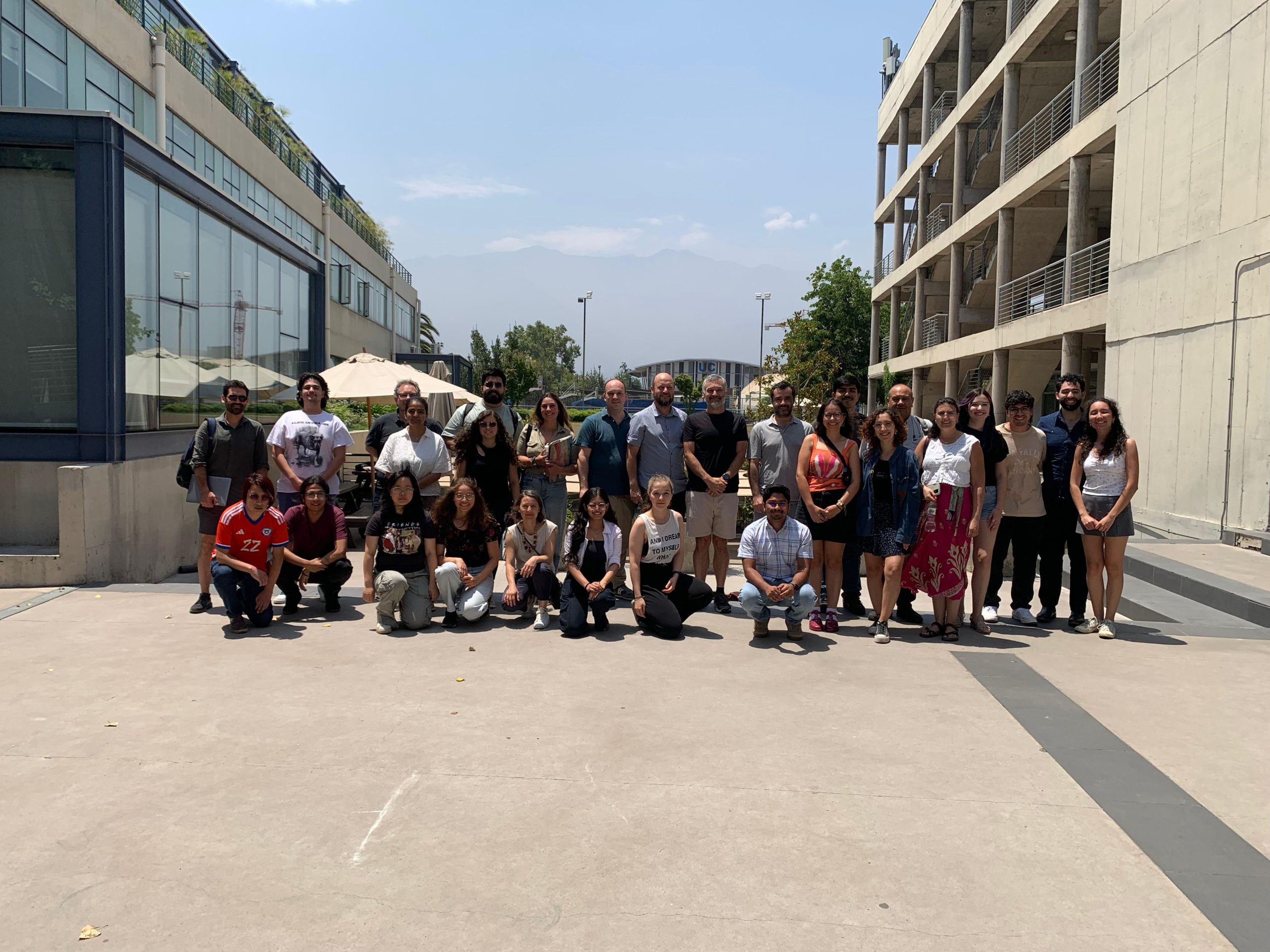 Publicado el: 30/01/2026Looking ahead to the next five years: Galaxies Area meets to share progress and strengthen research
Categories list
- Acknowledgments 24
- Astrobiology 8
- AstroCluster 1
- Black holes 19
- Corporativo 62
- Cosmology 5
- Descubrimientos 25
- Disclosure 79
- Exoplanets 15
- Extension 7
- Galaxies 23
- Galaxies formation 7
- Inter y Transdisciplina 4
- Local Universe 17
- Publications 7
- Sin categorizar 36
- Solar System 24
- Stellar formation 8
- Technology 18
- Technology Transfer 20