


Researcher Laura Pérez reaches a new milestone for Chilean astronomy
CATA’s Principal Researcher is the only Chilean woman included in Clarivate’s 2026 Highly Cited Researchers list and the first Chilean scientist to be recognized in the Space Sciences category. Her work on planetary formation ranks among the research with the greatest scientific impact worldwide.
Science conducted in Chile is once again making a name for itself on the international stage. On November 18, Clarivate released a new edition of its “Highly Cited Researchers 2026” list, which identifies researchers whose work ranks among the top 1% most cited worldwide in their respective disciplines. This year, the list recognized 6,802 researchers from more than 1,200 institutions in 62 countries.
Among those on the list is Laura Pérez, Principal Researcher at the Center for Astrophysics and Associated Technologies – CATA (project financed by ANID) and a faculty member in the Department of Astronomy at the Faculty of Physical and Mathematical Sciences of the Universidad de Chile. Her inclusion marks a double milestone: she is the only Chilean woman selected for this edition and the first scientist from the country to be recognized in the Space Sciences category.
The researcher is part of a group of four scientists affiliated with Chilean institutions who were included on this year’s list; she is the only woman and the only researcher in her field to be recognized.
Understanding how planets form
Laura Pérez’s research focuses on the early stages of planet formation, a process she studies through high-resolution observations of the gas and dust disks surrounding young stars. To do so, she uses state-of-the-art astronomical facilities such as the ALMA radio telescope, located in northern Chile, and the Very Large Array (VLA) in the United States. “I study the early stages of this formation, when solid particles clump together to form the cores of future planets. We do this using observations at multiple wavelengths from the ALMA and Very Large Array (VLA) telescopes. These telescopes allow us to see the solid-particle material and how it interacts with itself and with the young star, how it grows, and how it eventually forms planets,” explains the astronomer.
Her career was also highlighted by Clarivate, which selected her as one of the featured researchers in “Researcher Stories,” an international series of video interviews showcasing researchers included on the list. In this interview, the astronomer discussed not only the progress of her work but also the contribution of astronomy to scientific and technological development.
Beyond expanding our understanding of the origin of planetary systems, astronomical research drives the development of technologies with applications in other fields. This is how the Principal Researcher at CATA frames it when referring to knowledge transfer and the capabilities that arise from international scientific collaboration. “Understanding how the largest solids grow within protoplanetary disks requires specialized technology, developed, for example, for the ALMA radio telescope, which is a global collaboration. Part of this development took place at our university. And this same group that develops technology for astronomy at the University of Chile is creating tools for the benefit of society; you can use that same technology to create detectors that save lives after an earthquake.”
The researcher highlights the training of new generations of scientists, astronomers, and engineers as another key contribution, along with the opportunities offered by the development of astronomical instrumentation to create technological solutions that benefit the public.
A career with international reach
Laura Pérez earned her bachelor’s and master’s degrees from the University of Chile and her Ph.D. in astrophysics from the California Institute of Technology (Caltech) in the United States. Her career includes major international and national honors, among them the 2024 New Horizons Prize in Physics—making her the first Chilean to receive this award—the 2021 TWAS-CAS Prize, and the Adelina Gutiérrez Award for Scientific Excellence, presented by the Chilean Academy of Sciences in 2020.
Regarding her inclusion on the Highly Cited Researchers list, the astronomer highlights the significance of this achievement for her work and the scientific community in her field. “Being named a Highly Cited Researcher is truly an honor. It means you’ve had an impact on your field. I know many researchers in the field of planetary formation, and I know how wonderful, intelligent, and hardworking they are. After all these years, you can see that your science is making an impact.”
The 2026 edition of Highly Cited Researchers considers these publications over an 11-year period, along with quantitative and qualitative assessments of the researchers’ scientific careers. Clarivate also incorporates criteria related to academic integrity, excluding retracted publications and anomalous citation patterns, among other filters.
Laura Pérez’s award highlights the international scope of the research being conducted in Chile and the contribution of its scientific communities to the advancement of knowledge, technological innovation, and the education of new generations.
Outstanding news

Recent news
-
Publicado el: 26/11/2026Researcher Laura Pérez reaches a new milestone for Chilean astronomy
-
 Publicado el: 26/11/20264MOST launches its five-year scientific program, with CATA researchers participating in two major astronomy projects
-
 Publicado el: 25/11/2026Distance of the candidate for the farthest “little red dot” in the Universe confirmed
-
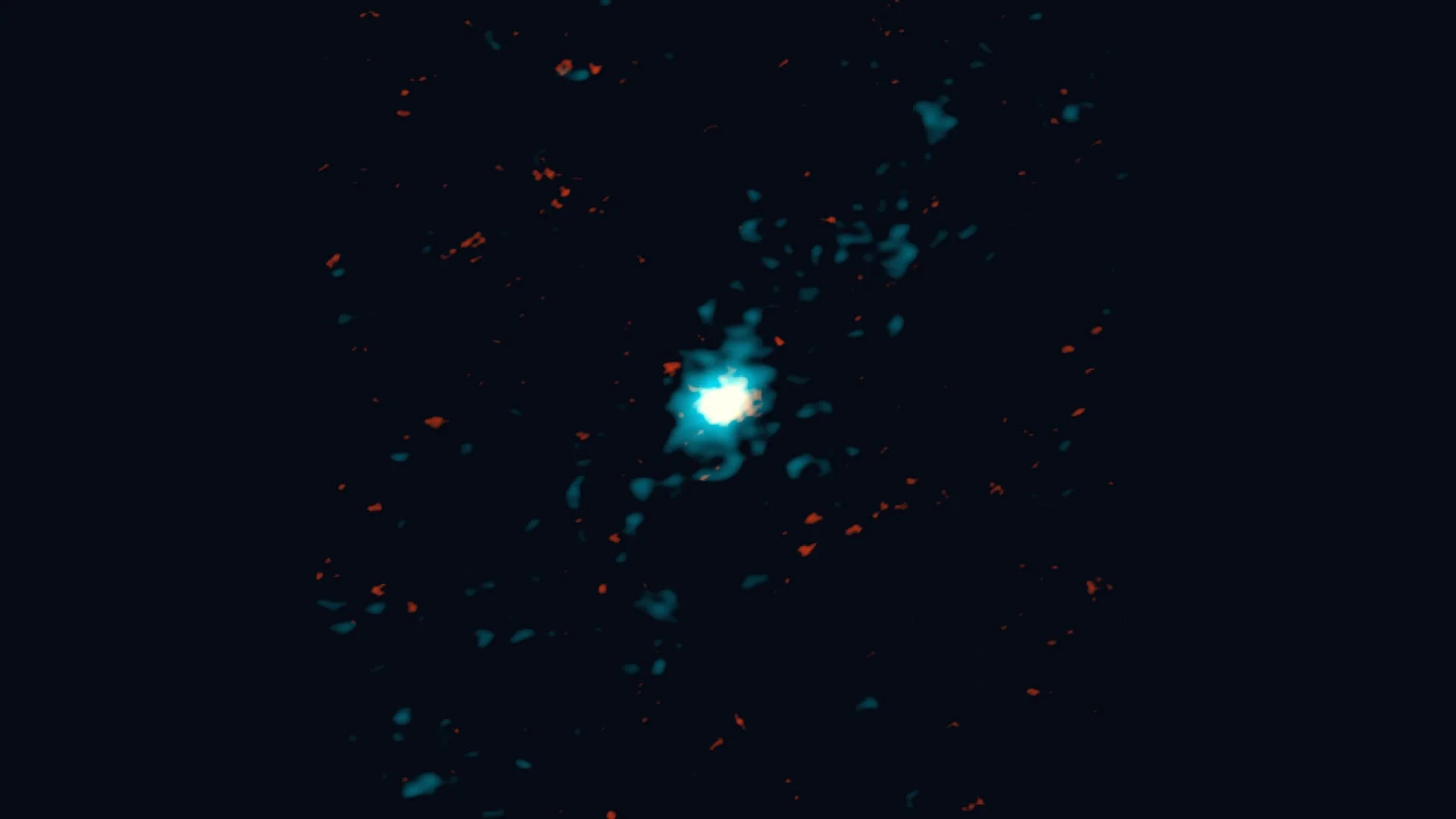 Publicado el: 23/11/2026Gravitational footprint of a giant black hole discovered in the early universe
-
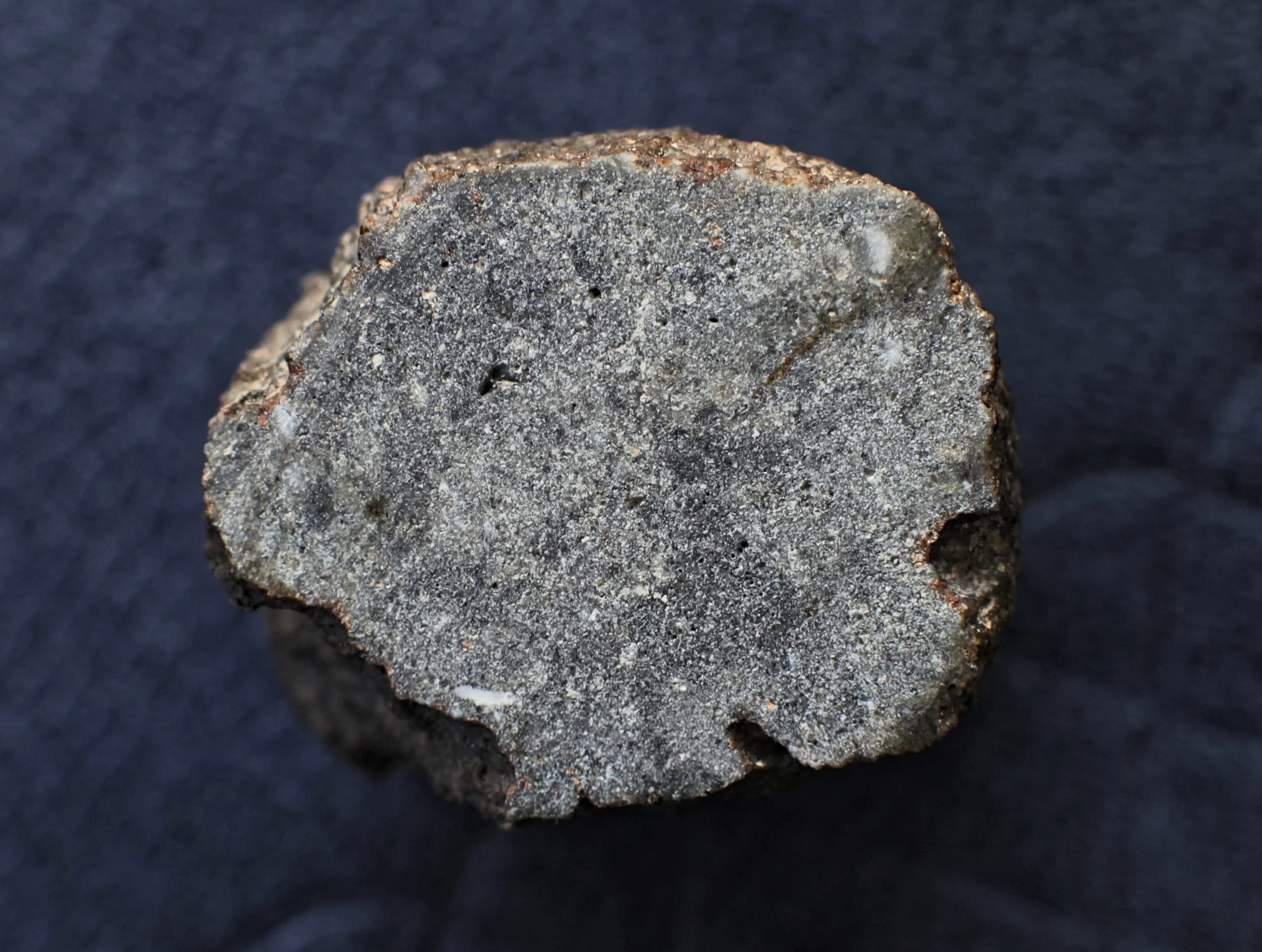 Publicado el: 16/11/2026Discovery of the first lunar meteorite in South America confirmed: it was found in the Atacama Desert
Categories list
- Acknowledgments 33
- Astrobiology 12
- AstroCluster 1
- Black holes 24
- Corporativo 74
- Cosmology 10
- Descubrimientos 33
- Disclosure 92
- Exoplanets 20
- Extension 14
- Galaxies 34
- Galaxies formation 12
- Inter y Transdisciplina 5
- Local Universe 22
- Publications 10
- Sin categorizar 34
- Solar System 32
- Stellar formation 14
- Technology 34
- Technology Transfer 34


