Astronomy-related activities were part of the 2026 Puerto de Ideas Festival
Through workshops, interactive activities, and forums for scientific discussion, CATA participated in the latest edition of the festival held in Antofagasta.
The Center for Astrophysics and Associated Technologies – CATA (ANID Basal Center), participated in the latest edition of the Puerto de Ideas Festival, an event that brought together more than 22,000 people to celebrate knowledge, creativity, and science outreach.
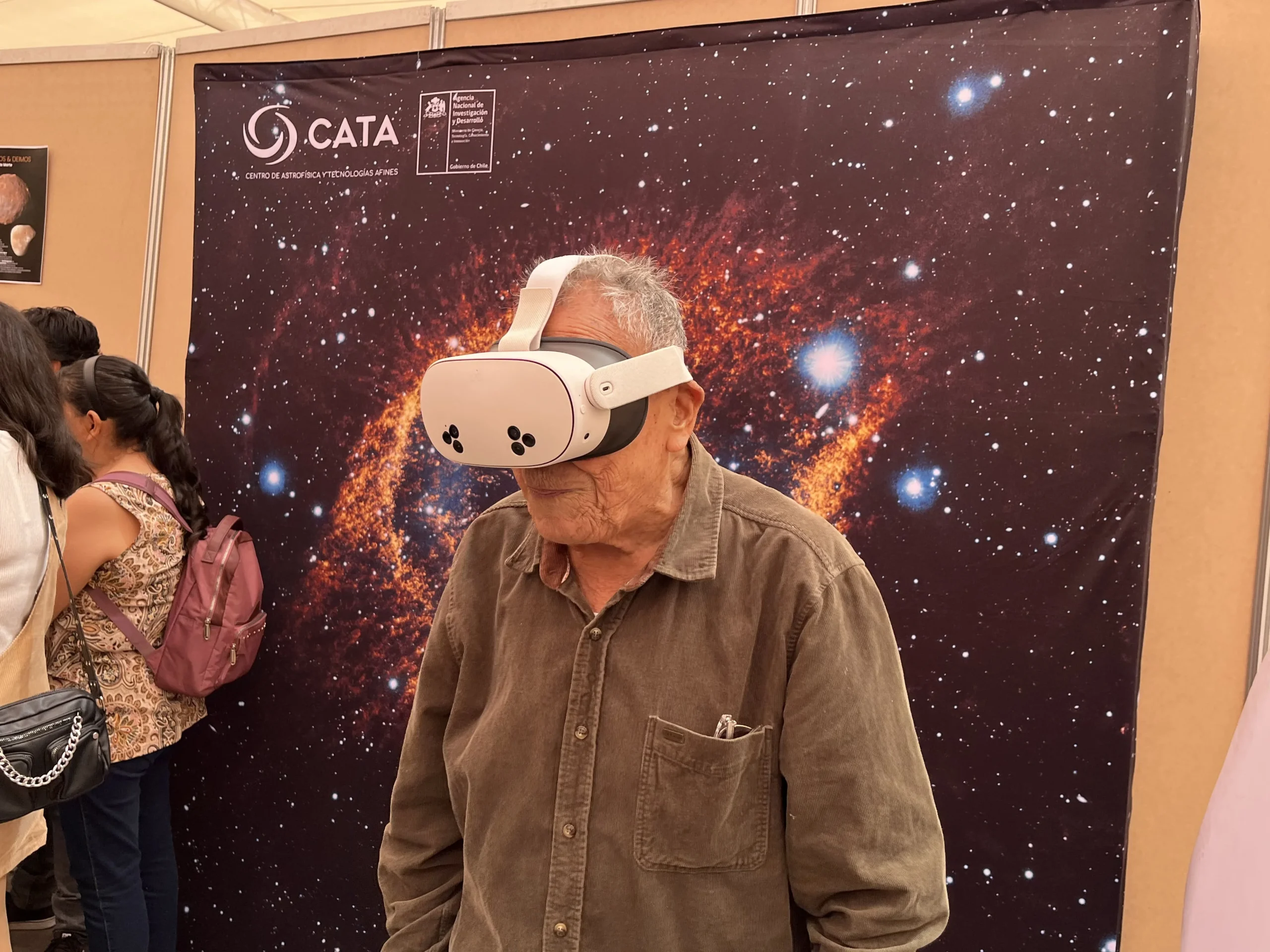
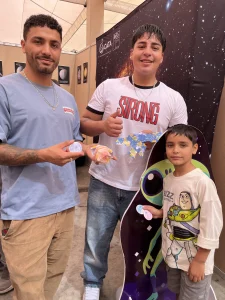
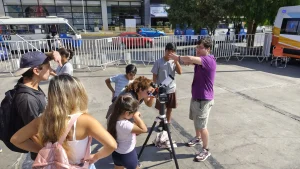
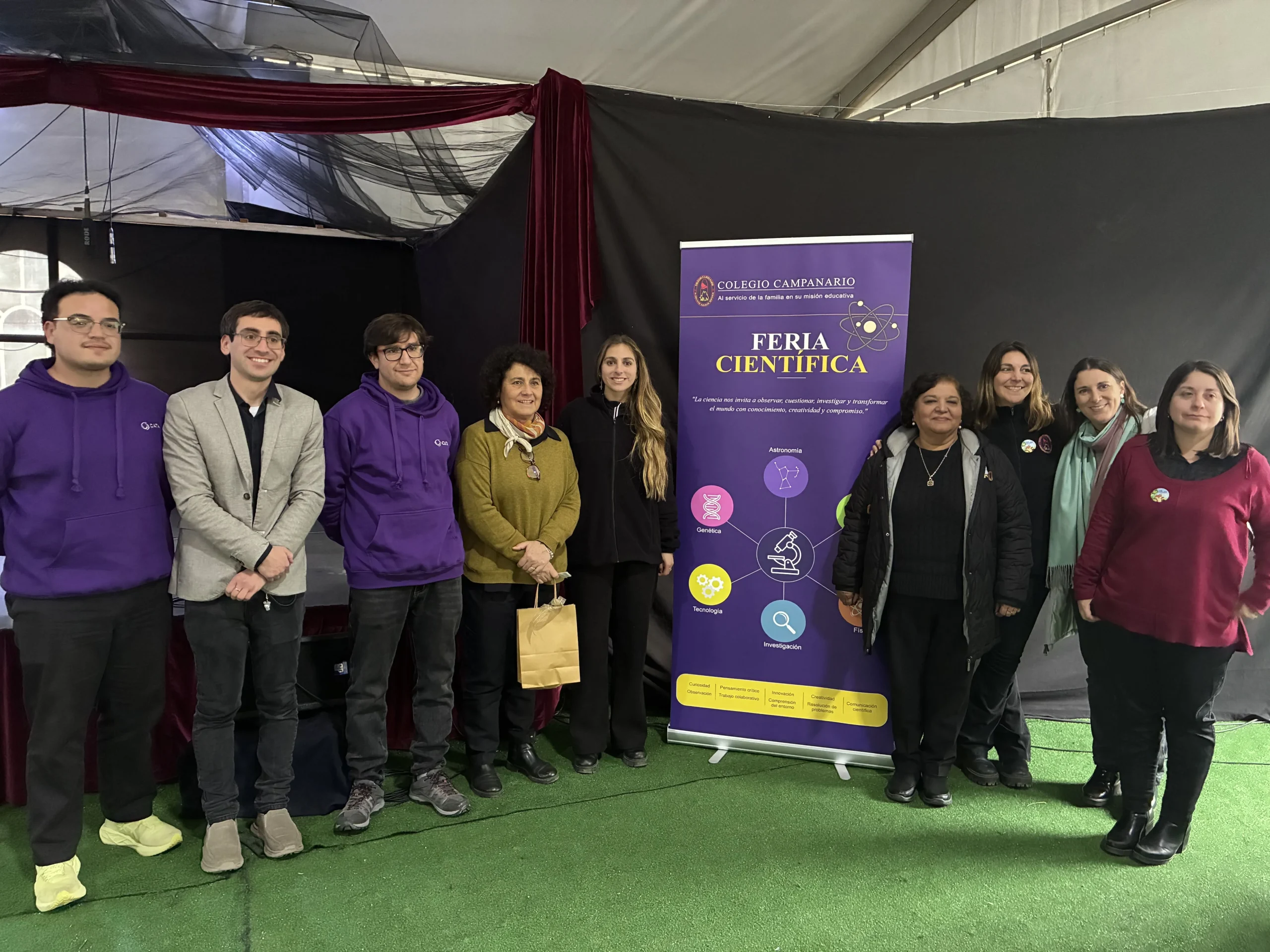
During the event, held in Antofagasta from April 23 to 26, CATA participated in the Science Fair with a variety of activities designed to make astronomy accessible and engaging. Highlights included solar observation, viewing 3D images of the Moon through virtual reality goggles, and a booth dedicated to the Moon that featured three-dimensional models of this celestial body and asteroids.
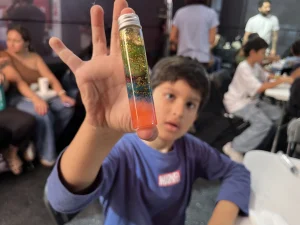
In addition, there were activities that actively involved the public, such as the creation of a 150x150cm pixel art piece featuring an astronomical image, built using attendees’ answers to the question “What would you take to space?” Other highlights included the creation of personalized pins, the assembly of paper planets, and the “Create Your Nebula!” workshop, where attendees crafted a small-scale representation of these clouds of gas and dust and learned more about these objects in the Universe.
The CATA team at the festival consisted of José Utreras, Outreach and Content Coordinator; Edmundo Albornoz, Outreach Analyst; and astronomers Silvio Ulloa, Marcela López and Ernesto Camacho, who served as activity monitors.
“It’s incredibly valuable to be part of a large-scale festival that brings together so many institutions committed to science outreach, especially since it’s held outside the Metropolitan Region, which allows us to reach audiences we don’t normally have direct contact with. We were visited by schools and families who came out of curiosity, asked questions, and stayed to explore—it was like being in an open-air museum,” noted José Utreras.
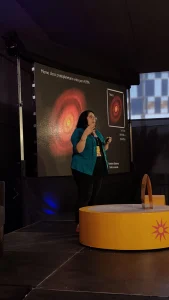
CATA’s participation also extended to the festival’s lecture and discussion series through Laura Pérez, Principal Investigator and professor at the Universidad de Chile, who presented the talk “From Dust to Planets: How ALMA Observes the Origin of Other Worlds.”
In this presentation, the astronomer discussed how observations from the ALMA radio telescope have made it possible to study the gas and dust disks surrounding young stars in unprecedented detail, revealing that these systems exhibit a wide variety of shapes and substructures that provide key clues about planet formation.
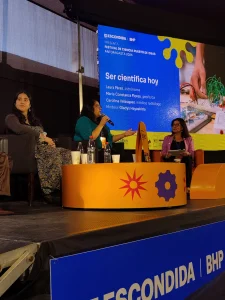
The scientist also took part in the discussion “Being a Woman Scientist Today,” where she and other female researchers reflected on the paths they have taken and the challenges of making a name for themselves in science as women.
Thanks to CATA’s participation in Puerto de Ideas 2026, children, teenagers, and adults were introduced to astronomy through interactive experiences and hands-on activities, reinforcing the Center’s commitment to science outreach and fostering a connection between astronomical research and the public.
Outstanding news
Recent news
-
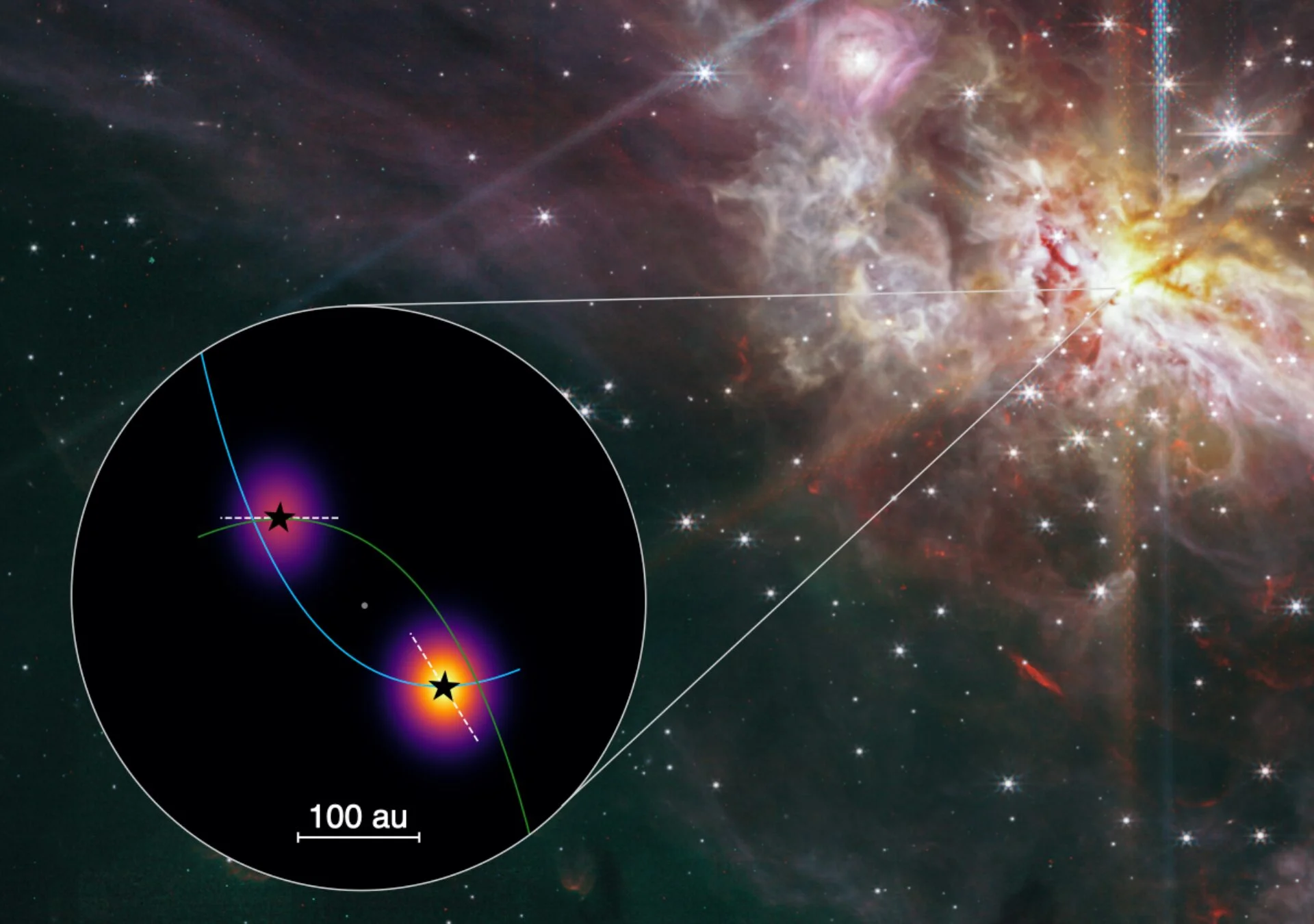 Publicado el: 08/09/2026The wedding dance of massive stars: Astronomer from CATA and the Universidad de Chile contributes to historic discovery
 -
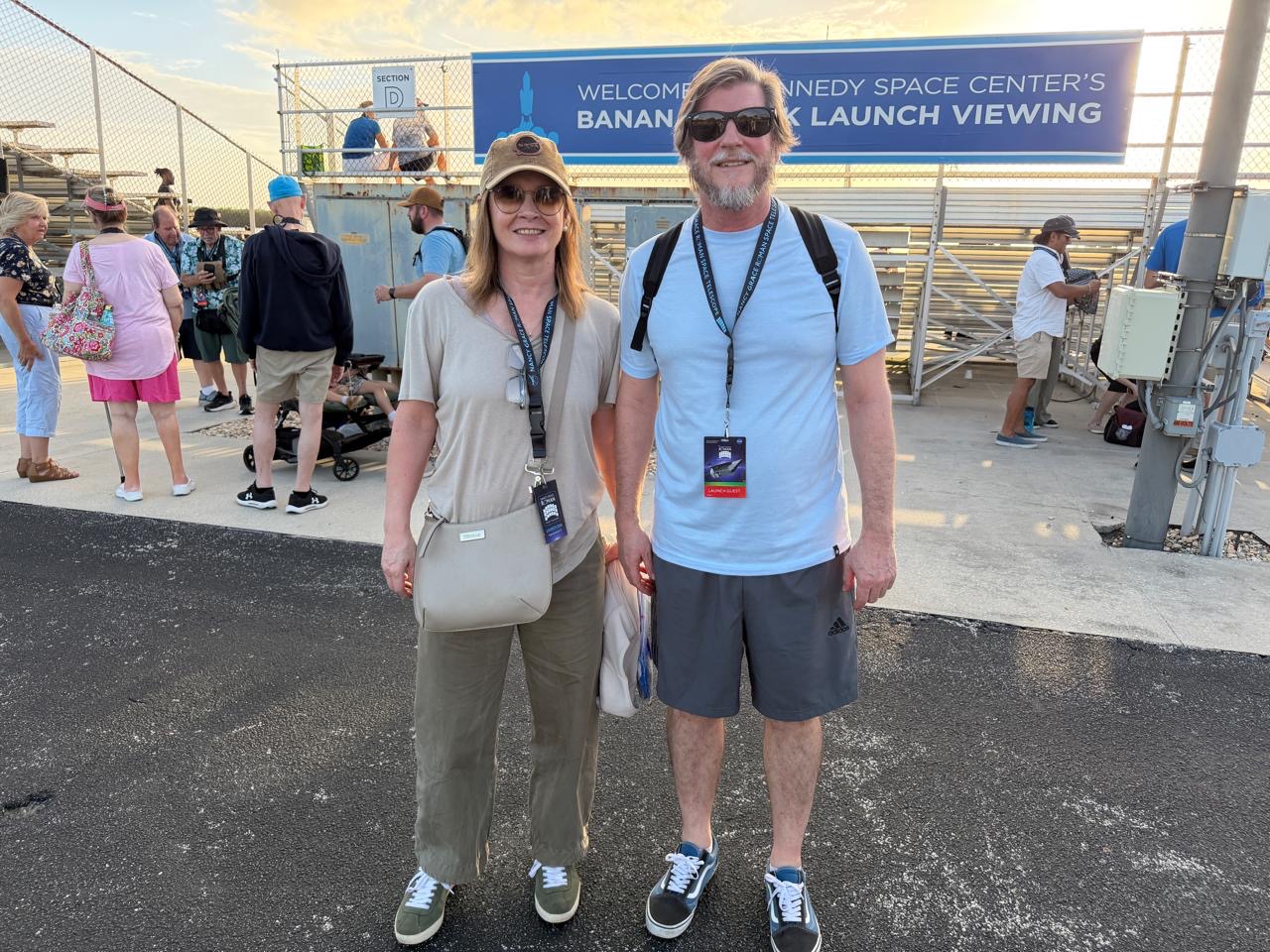 Publicado el: 07/09/2026The launch of the Nancy Grace Roman Space Telescope, as experienced firsthand by a CATA astronomer involved in the mission
 -
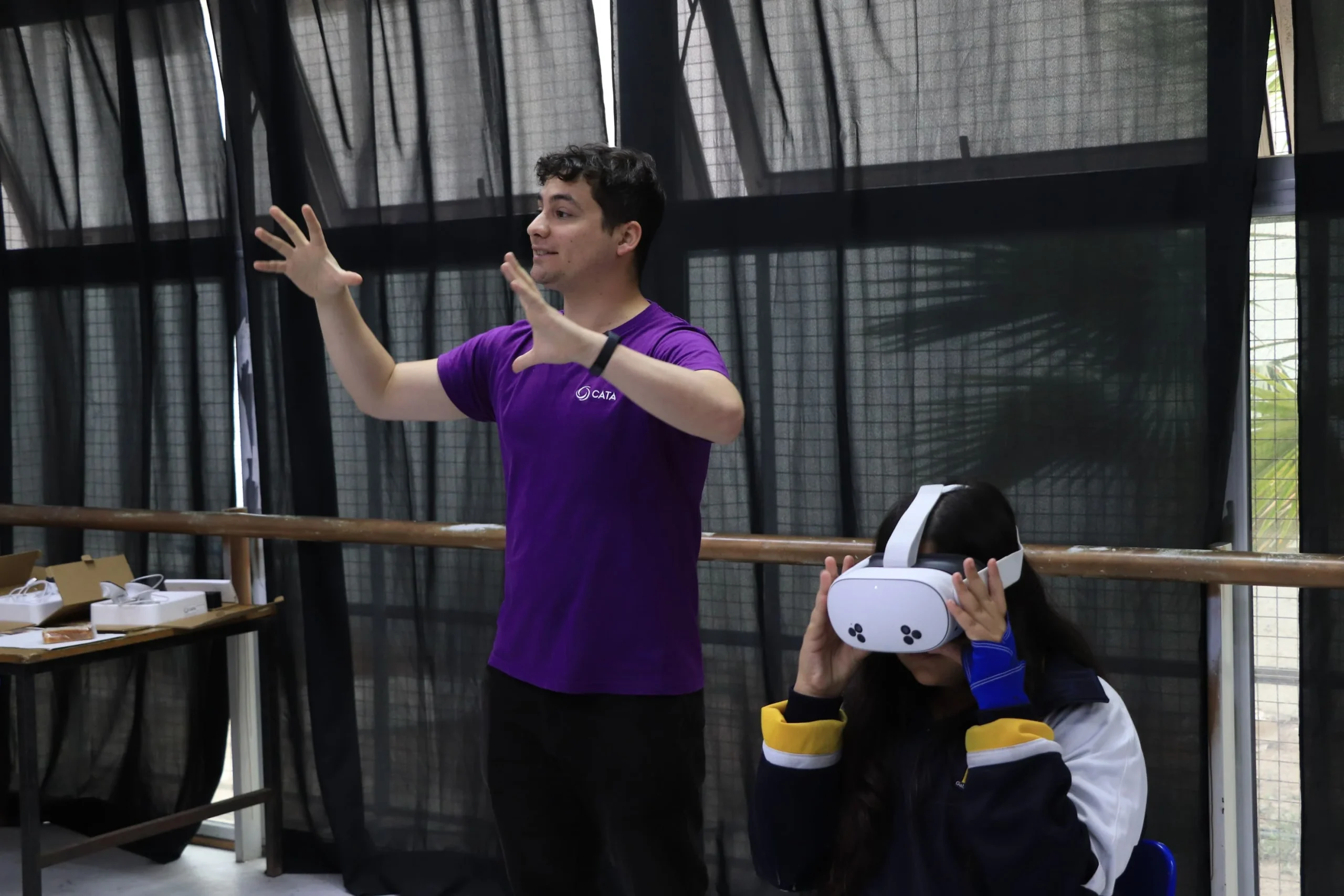 Publicado el: 29/08/2026Talks and hands-on activities related to astronomy were part of the “Congreso Futuro en tu Comuna” event in Arica
 -
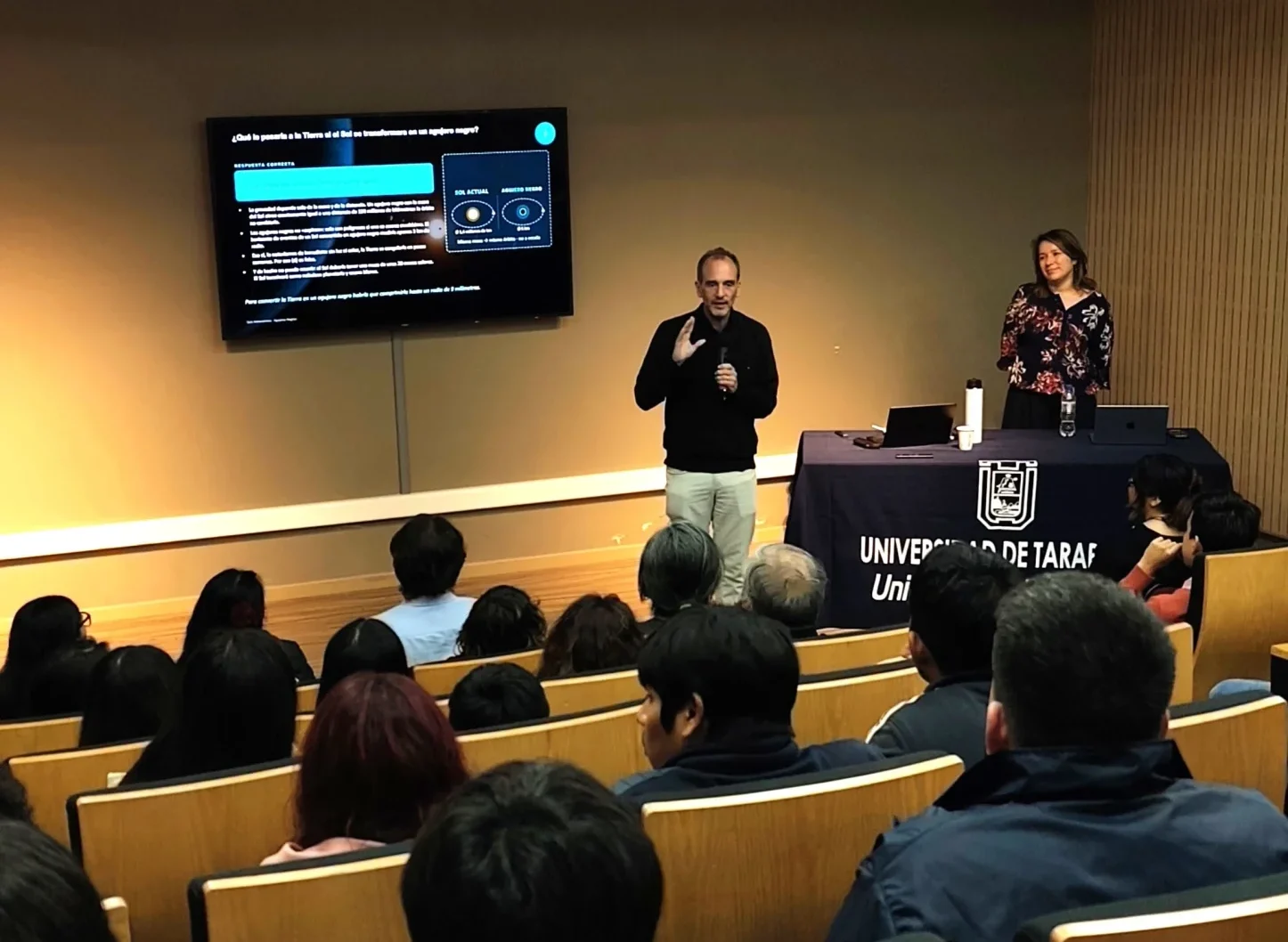 Publicado el: 28/08/2026Astronomical trivia drew a large crowd at the Universidad de Tarapacá
 -
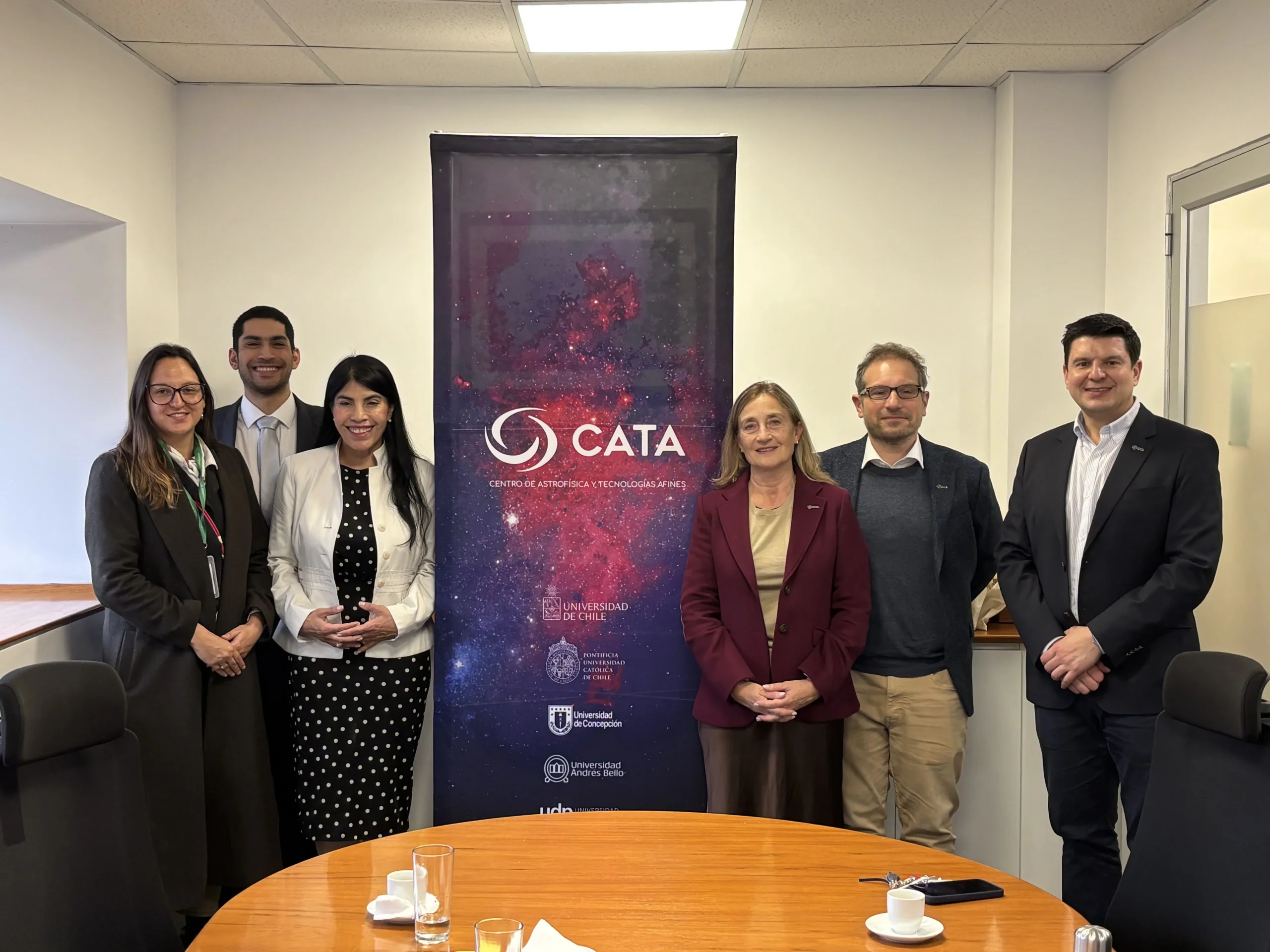 Publicado el: 27/08/2026Minister Ximena Lincolao meets CATA’s scientific and technological capabilities
Categories list
- Acknowledgments 27
- Astrobiology 12
- AstroCluster 1
- Black holes 21
- Corporativo 73
- Cosmology 9
- Descubrimientos 28
- Disclosure 91
- Exoplanets 18
- Extension 13
- Galaxies 27
- Galaxies formation 9
- Inter y Transdisciplina 5
- Local Universe 22
- Publications 9
- Sin categorizar 34
- Solar System 30
- Stellar formation 12
- Technology 30
- Technology Transfer 32