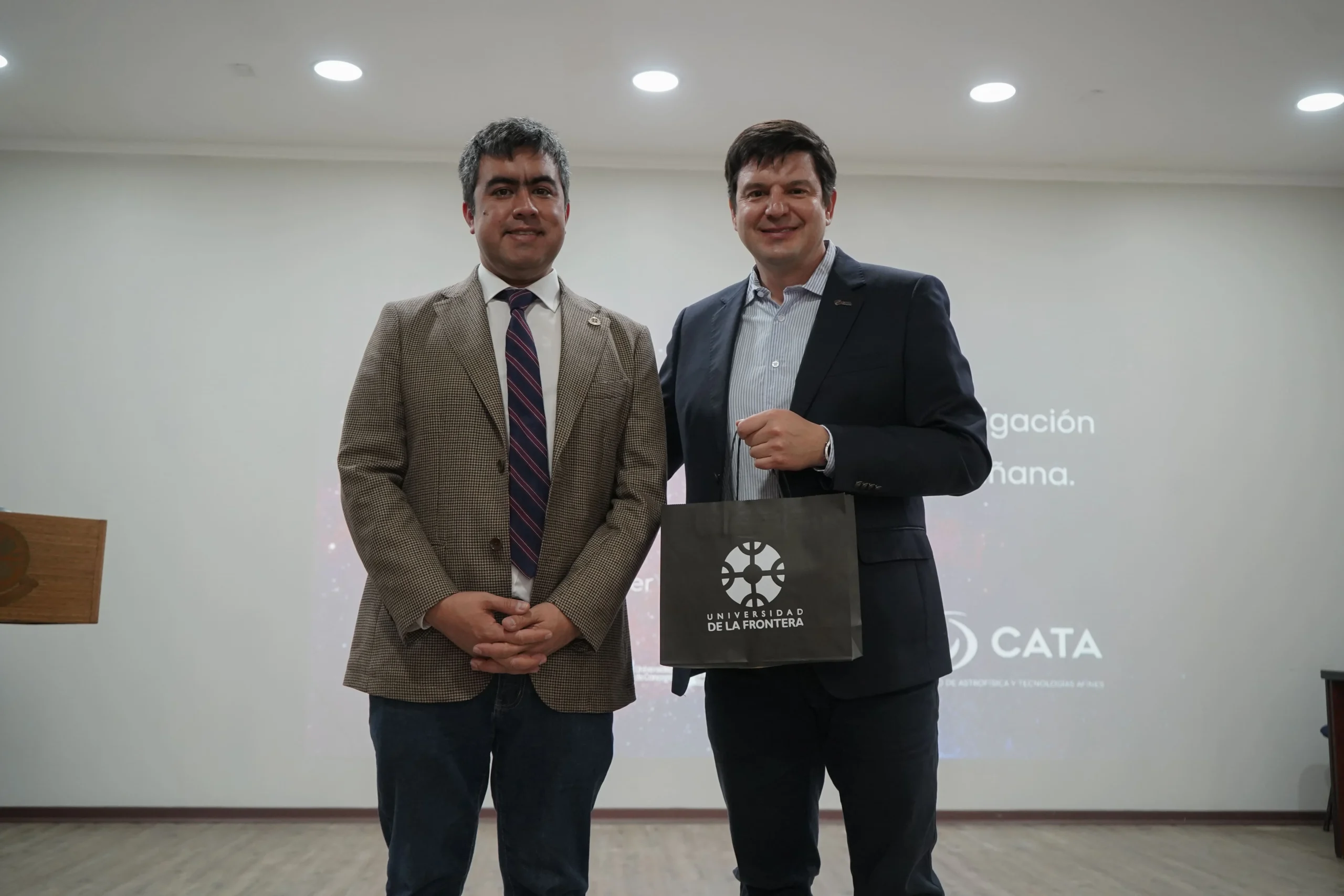
Astronomy and intellectual property: CATA’s General Manager attended a meeting at UFRO
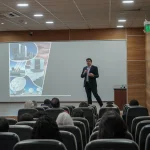
Santiago Prat's presentation highlighted the potential of astronomy to drive transferable innovation, strengthening its ties to industry and the country's technological development.
As part of Intellectual Property Day 2026, the General Manager of the Center for Astrophysics and Associated Technologies — CATA (ANID Basal Center), Santiago Prat, participated as a speaker in an event organized by the Technology Transfer Coordination Office at the Universidad de La Frontera (UFRO), an event that brought together researchers, students, and professionals interested in the valorization of knowledge and its application to the productive sector.
The event took place in the Hernán López Villanueva Auditorium at the School of Agricultural Sciences and the Environment, and focused on the role of intellectual property in protecting and promoting scientific and technological advancements that have an impact on society.
In this context, CATA’s General Manager delivered a talk titled “From the Universe to Industry: From Astronomical Science to Technological Innovation,” in which he discussed how cutting-edge astronomical research is transformed into concrete solutions with a real impact on industry and Chilean society.
“Astronomy not only allows us to understand the universe, but also drives the development of advanced technologies that have concrete applications in industry and, as we have demonstrated on this occasion, in everyday life as well. The challenge lies in linking that knowledge to effective mechanisms for transfer and protection, so that it reaches society and the productive sector in a secure and strategic manner,” said Santiago Prat.
For his part, Sergio Sandoval, Technology Transfer Coordinator at UFRO, noted that “Santiago’s participation was particularly significant because it highlighted how astronomical innovations—which are often perceived as far removed from practical applications—can be transformed into technological capabilities with great potential for industry.”
He also emphasized that, for the institution, “this type of experience underscores the importance of integrating research, safeguarding results, and engaging with the community, thereby fostering an ecosystem in which the university plays an active role in the country’s technological and productive development.”
The event also featured a presentation by the National Institute of Industrial Property (INAPI), which focused on the use of patents as a tool for strategic decision-making, offering a complementary perspective on the importance of intellectual property within the innovation ecosystem.
Initiatives such as this aim to strengthen the links between academia, scientific research, and industry, promoting the creation of protected innovations that contribute to the country’s economic and social development. In this context, CATA’s participation, through its General Manager, reinforces its position as a key player in the transfer of knowledge from basic science to technological applications with real-world impact.
Outstanding news
Recent news
-
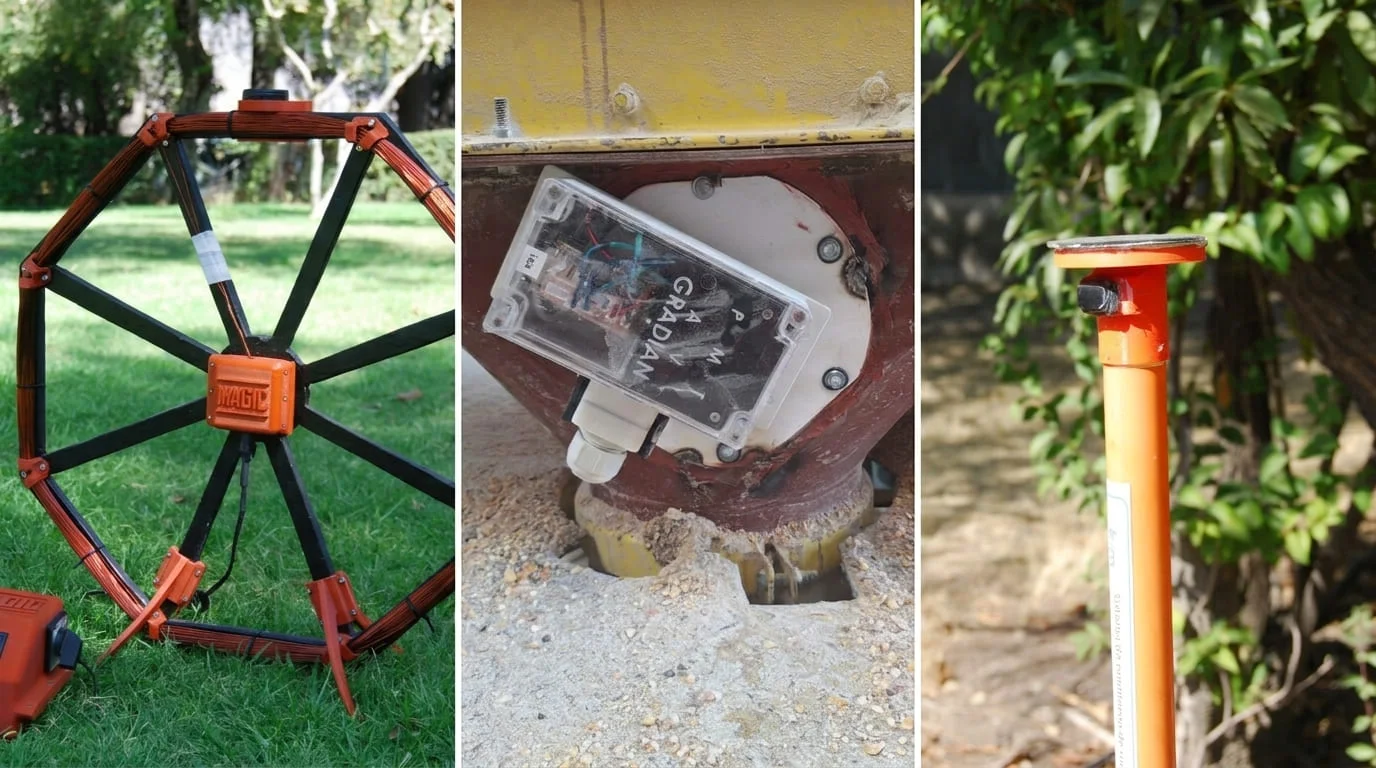 Publicado el: 09/10/2026From studying the universe to solving industry challenges: CATA’s technology transfer model in Nature Astronomy
 -
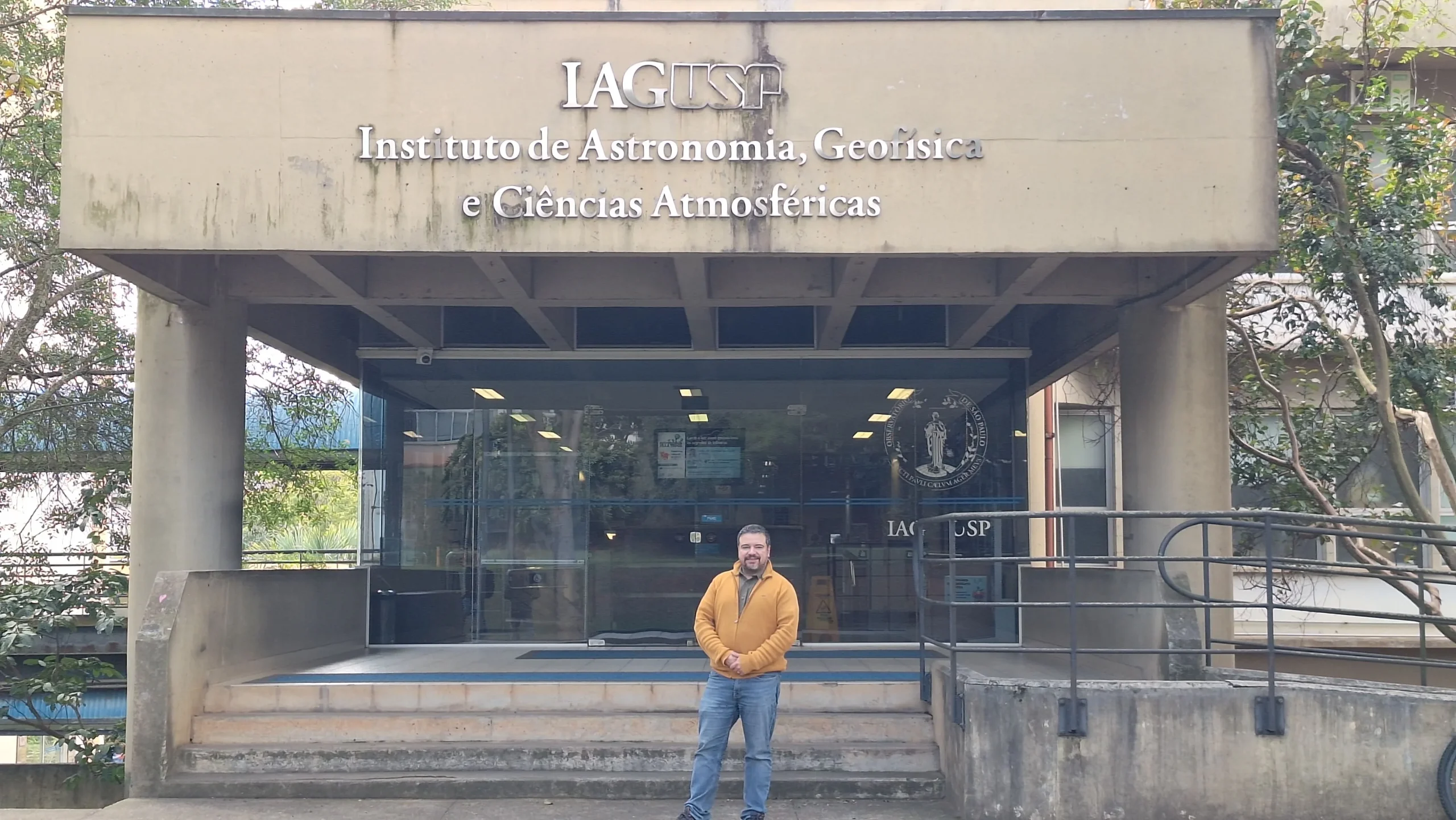 Publicado el: 01/10/2026CATA Associate Researcher concludes research stay at the University of São Paulo thanks to a Brazilian fellowship
 -
 Publicado el: 29/09/2026Chilean technology aims to improve the accuracy of telescopes studying the origin of the Universe
 -
 Publicado el: 25/09/2026CATA Associate Researcher named Director of the Las Campanas Observatory
 -
 Publicado el: 23/09/2026CATA’s General Manager presented the Center’s technology transfer model at an international meeting in Peru
Categories list
- Acknowledgments 29
- Astrobiology 12
- AstroCluster 1
- Black holes 21
- Corporativo 73
- Cosmology 10
- Descubrimientos 28
- Disclosure 91
- Exoplanets 18
- Extension 14
- Galaxies 28
- Galaxies formation 10
- Inter y Transdisciplina 5
- Local Universe 22
- Publications 9
- Sin categorizar 34
- Solar System 30
- Stellar formation 12
- Technology 33
- Technology Transfer 34