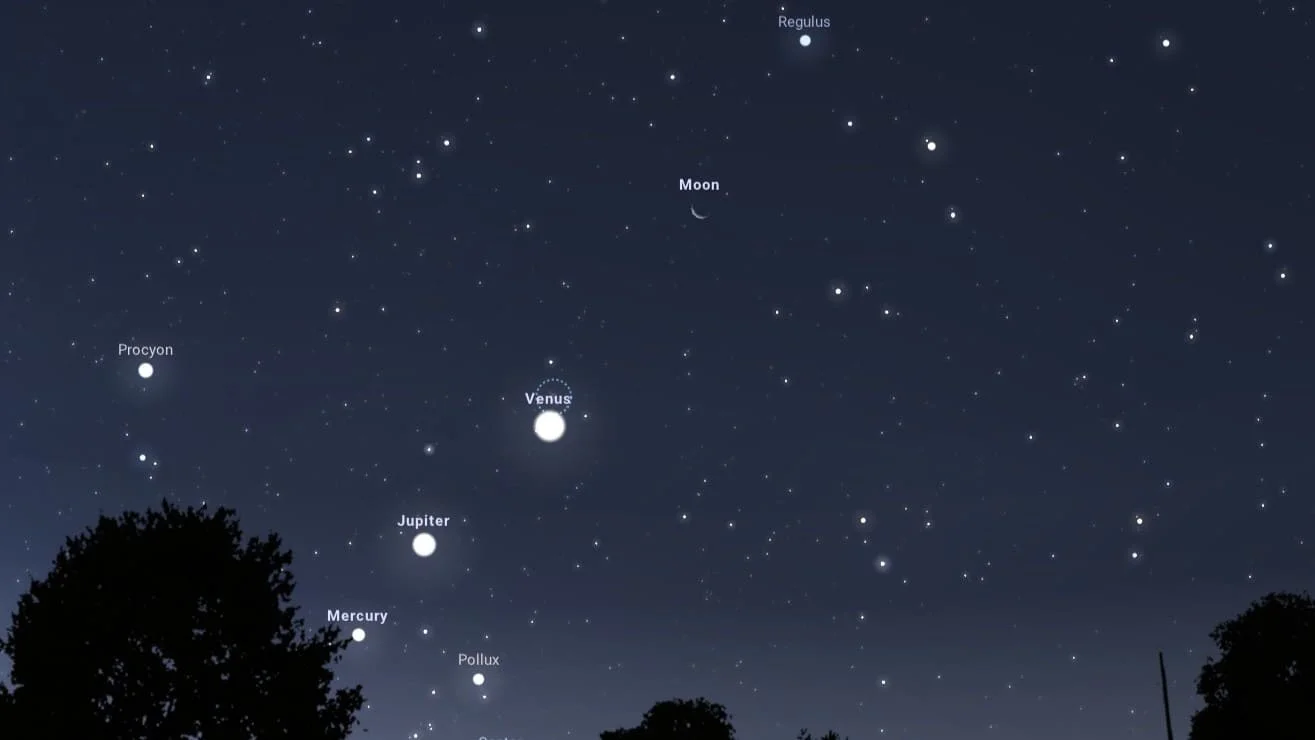
Planetary alignment of Mercury, Venus, Jupiter, and the Moon: a spectacle visible from Chile
The three planets and the natural satellite will align in the sky during the evenings of June 16, 17, and 18, and can be seen with the naked eye without the need for optical instruments.
On the evenings of Tuesday, June 16, Wednesday, June 17, and Thursday, June 18, a phenomenon commonly known as a “planetary alignment” will occur, during which the Moon, Mercury, Venus, and Jupiter will be visible in the same section of the sky shortly after sunset.
Catalina Casanueva, Affiliated Researcher at the Center for Astrophysics and Associated Technologies – CATA (ANID Basal Center) and holder of a Ph.D. in astrophysics from the Pontificia Universidad Católica de Chile (UC), explains what these astronomical events are and the best conditions for observing them.
What is a planetary alignment?
A planetary alignment is an optical illusion. Although the four celestial bodies appear to be clustered together in the same section of the sky, in space they are separated by enormous distances: the Moon will be about 361,000 kilometers from Earth, Mercury about 120 million, Venus 171 million, and Jupiter 914 million. Their apparent proximity depends solely on our vantage point.
The path along which these celestial bodies move is called the ecliptic, and its origin lies in the formation of the Solar System. “About 4.6 billion years ago, the Sun and the planets emerged from a spinning disk of gas and dust, and their orbits retained that common plane. That is why, when viewed from our planet, they always appear in a relatively narrow band of the sky,” explains Catalina Casanueva.
As for how often this happens, “the Moon passes close to a planet practically every month. Whether several bright planets align in a way that’s easy to observe depends on the orbital periods of each planet, the time of day, and the location from which we’re observing. Some alignments recur within a single year, while others take much longer to occur again under favorable conditions,” the astronomer emphasizes.
How to observe from Chile?
The alignment will be visible to the naked eye across much of the country, although not all the celestial bodies will be equally easy to spot. The Moon will be the best guide for finding your way in the evening sky. Near it will be Venus—except on June 16—the brightest of the planets, whose atmosphere reflects a great deal of sunlight, making it visible before the sky darkens. Jupiter will appear as a bright spot along the same band, and Mercury, the hardest to see, will lie just above the horizon, shrouded in the glow of twilight.
“On this occasion, it’s best to look with the naked eye, since telescopes show only a very small—or magnified—area and can make it hard to see the whole picture. Binoculars can help you locate Mercury, but they should only be used after the Sun has completely set, as pointing optical instruments near the Sun can cause permanent eye damage,” says Casanueva.
From Santiago, it is best to look westward, toward the setting sun. The optimal viewing window for the alignment will be between approximately 6:20 p.m. and 6:45 p.m. By around 8:00 p.m., the celestial bodies will no longer be visible.
The Moon’s proximity to the planets will also vary from day to day. On June 16, it will appear near Mercury, while on June 17, it will be very close to Venus; finally, on June 18, the Moon will have moved further up along the ecliptic.
Visibility by region
Observation quality will vary depending on latitude, weather, and horizon conditions. In the northern part of the country, conditions are more favorable: lower humidity and greater atmospheric transparency allow objects to be seen more clearly. In the central region, it should also be observable, provided the strip extending west-northwest is clear, while in the south, seasonal cloud cover and humidity may hinder visibility.
“The most important factor is having a clear horizon. When a celestial object is low in the sky, its light passes through a thicker layer of atmosphere and loses intensity. A high terrace, a lookout point, a beach, an open park, or any unobstructed area facing the setting sun can make all the difference. For this event, rather than avoiding city lights, the key is to have a clear view of the lower part of the sky,” notes Casanueva.
Those who wish to plan their stargazing more effectively can use astronomy apps such as Star Walk or Stellarium, which display the position of each celestial body in real time based on the user’s location.
The science behind a planetary alignment
Beyond their visual appeal, events like this help illustrate how the Solar System works. The path traced by these four celestial bodies reveals the architecture of our cosmic neighborhood: if they moved in different planes, we would see them scattered across different parts of the sky. When we look toward the west at sunset, we are viewing the projection of that structure from within.
This phenomenon also invites us to distinguish between appearance and physical reality, allowing us to reconstruct depth, distance, and movement. In that sunset scene, vastly different timescales come together: the light reflected by the Moon takes just over a second to reach us; that from Venus, about 10 minutes; and that from Jupiter, nearly 50 minutes.
“That’s what’s so striking about paying attention to these events: they start out as something visually appealing, but they raise big questions about gravity, light, and the structure of our planetary system,” concludes the CATA researcher.
Outstanding news


Recent news
-
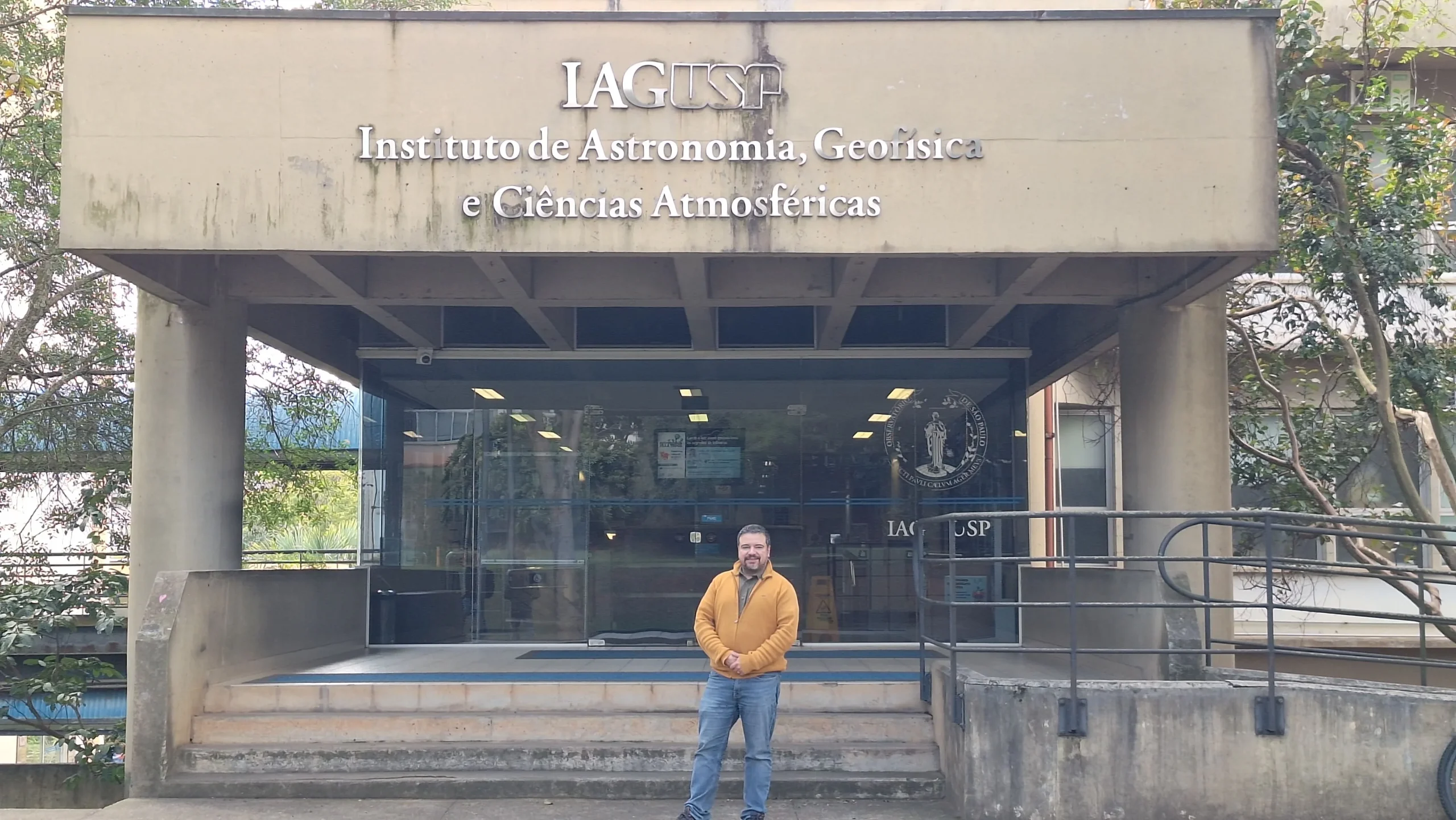 Publicado el: 01/10/2026CATA Associate Researcher concludes research stay at the University of São Paulo thanks to a Brazilian fellowship
 -
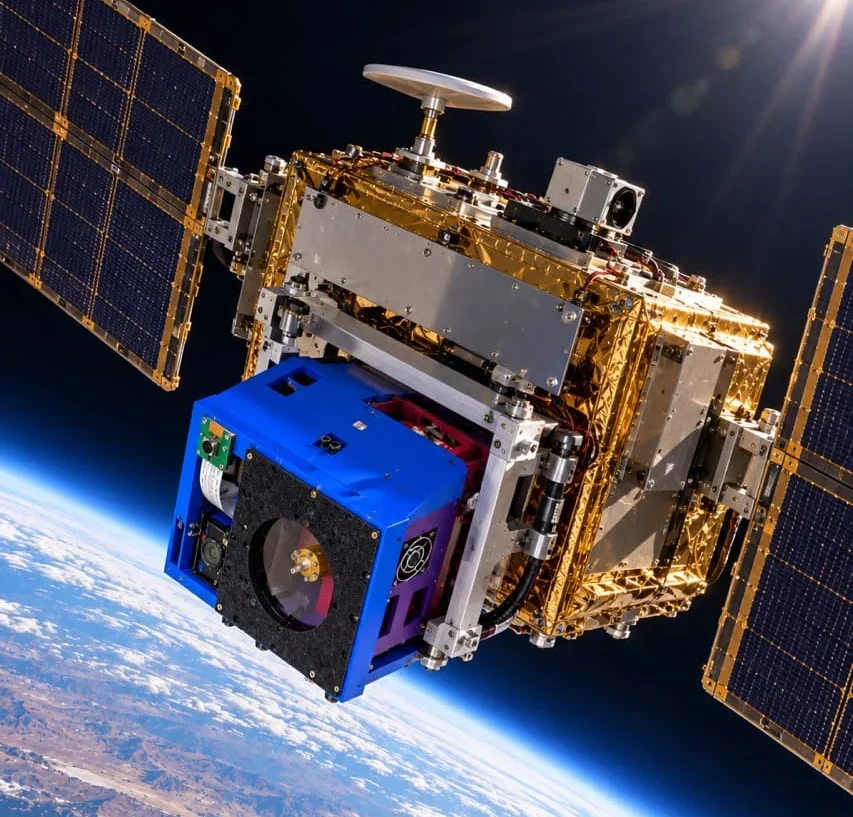 Publicado el: 29/09/2026Chilean technology aims to improve the accuracy of telescopes studying the origin of the Universe
 -
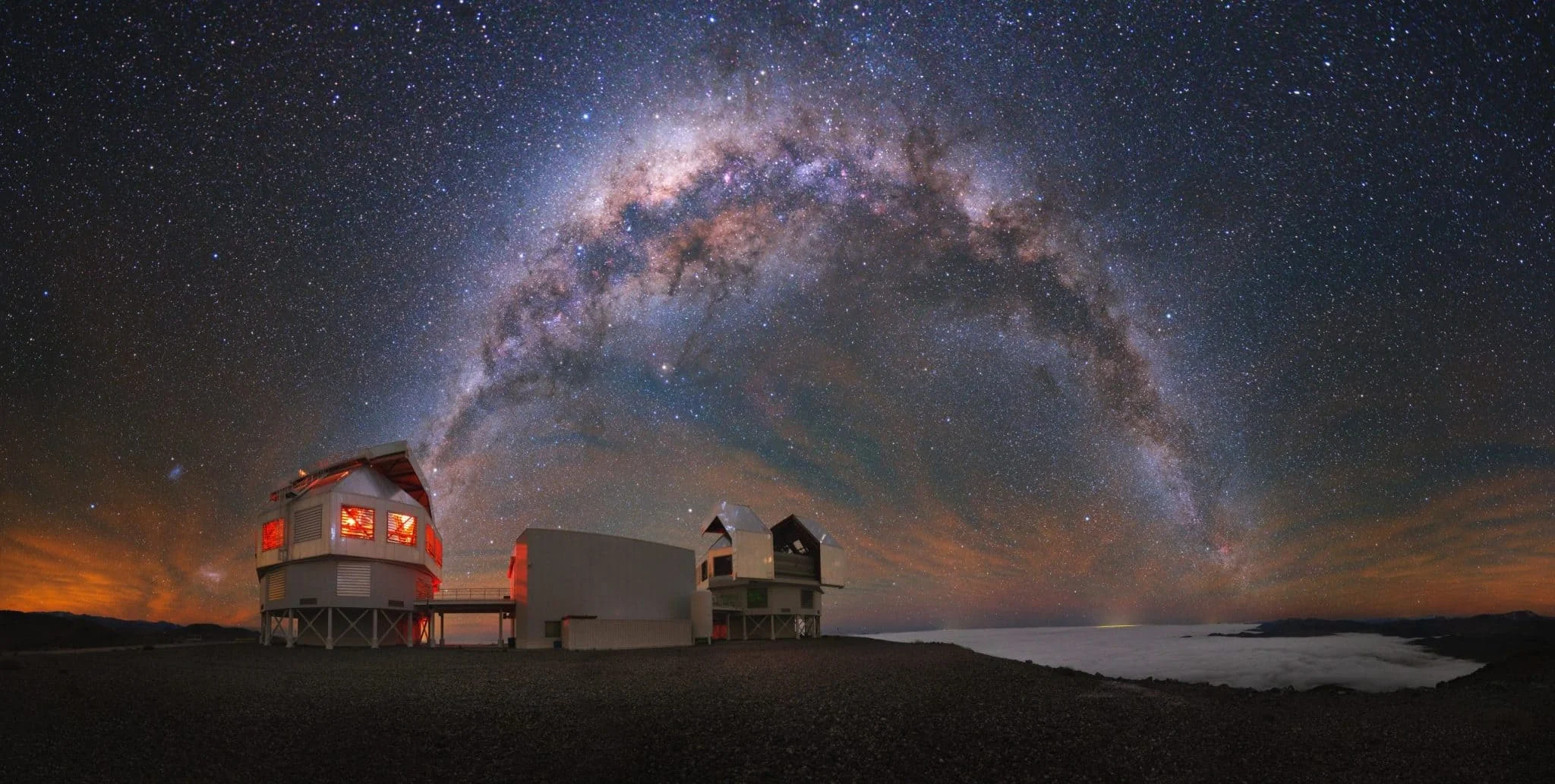 Publicado el: 25/09/2026CATA Associate Researcher named Director of the Las Campanas Observatory
 -
 Publicado el: 23/09/2026CATA’s General Manager presented the Center’s technology transfer model at an international meeting in Peru
 -
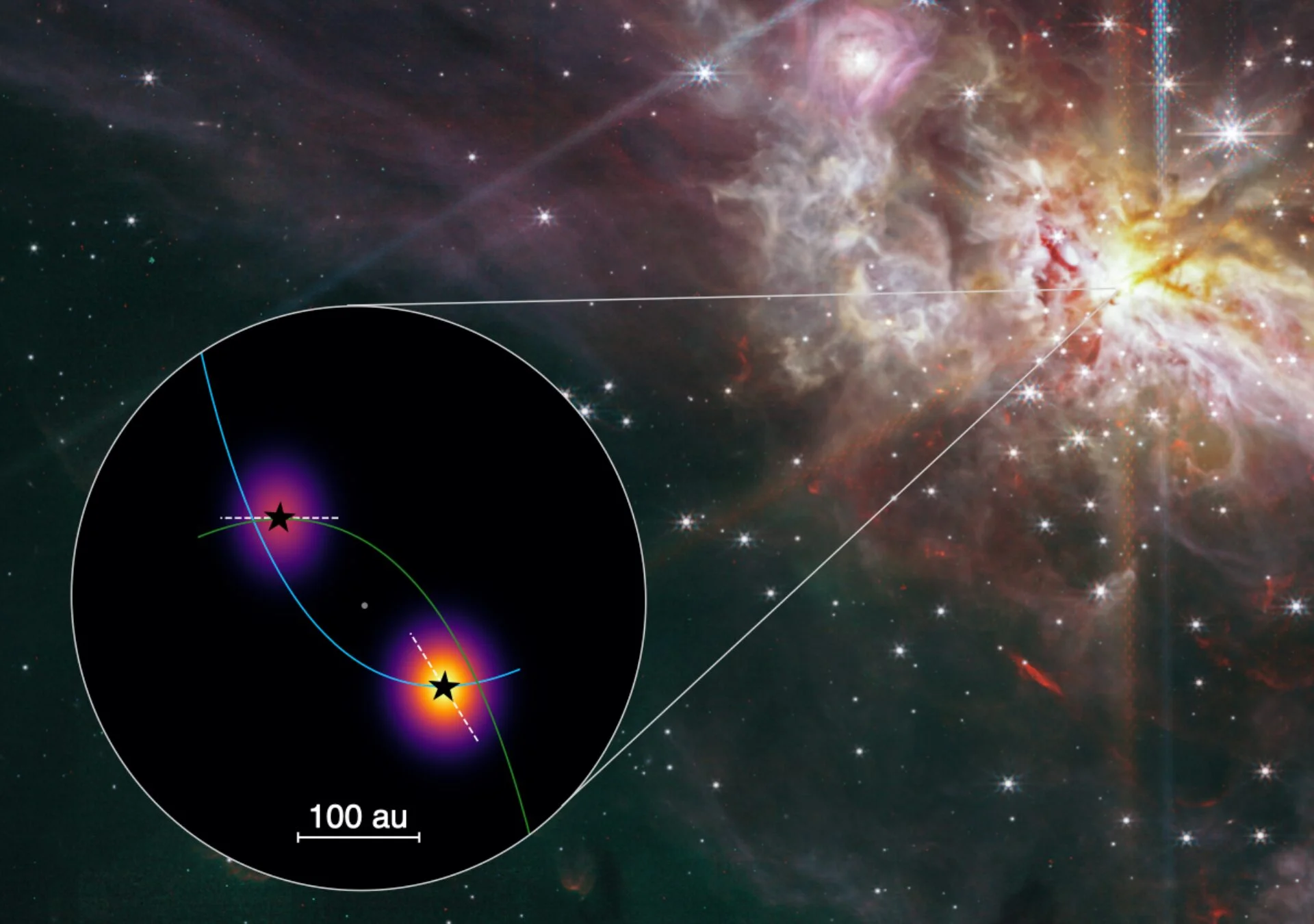 Publicado el: 08/09/2026The wedding dance of massive stars: Astronomer from CATA and the Universidad de Chile contributes to historic discovery
Categories list
- Acknowledgments 28
- Astrobiology 12
- AstroCluster 1
- Black holes 21
- Corporativo 73
- Cosmology 10
- Descubrimientos 28
- Disclosure 91
- Exoplanets 18
- Extension 14
- Galaxies 28
- Galaxies formation 10
- Inter y Transdisciplina 5
- Local Universe 22
- Publications 9
- Sin categorizar 34
- Solar System 30
- Stellar formation 12
- Technology 32
- Technology Transfer 33