How can phylogenetics reconstruct the evolutionary history of galaxies?
Through biological tools, the chemical composition of stars can act as “galactic DNA” and reveal the processes that shaped a galaxy over billions of years.
A study involving astronomers from the Center for Astrophysics and Associated Technologies (CATA)—a project funded by ANID—adapted methods from evolutionary biology to reconstruct the chemical enrichment of a galaxy throughout its history.
The study, published in Astronomy & Astrophysics, was led by Brian Tapia Contreras, an Affiliated Researcher at CATA and a doctoral student at the Pontificia Universidad Católica de Chile (UC), under the supervision of Patricia Tissera, Director of the Center and a faculty member at the UC Institute of Astrophysics. The team also included Emanuel Sillero, a Fondecyt postdoctoral researcher at UC and a CATA affiliated researcher, and Paula Jofré, professor at Universidad Diego Portales (UDP), among other researchers. This project began under the auspices of the ERIS Millennium Nucleus, led by Jofré and Tissera.
Galactic phylogenetics: applying biology to the study of the Universe
Phylogenetics is the discipline that reconstructs the evolutionary relationships among species, today primarily by comparing their DNA sequences. Since DNA is passed down from one generation to the next and accumulates changes over time, these differences make it possible to construct evolutionary trees that show which species are most closely related and which share the most recent common ancestors.
Its adaptation to the study of galaxies gave rise to “galactic phylogenetics,” a methodology that treats stellar chemical abundances as “galactic DNA.” Each stellar generation enriches the surrounding gas with new chemical elements, primarily through supernova explosions and other mass-loss processes. Stars that form later from that gas incorporate the chemical signature of previous generations into their composition. By analyzing this record using this approach, researchers hope to reconstruct a galaxy’s evolutionary history.
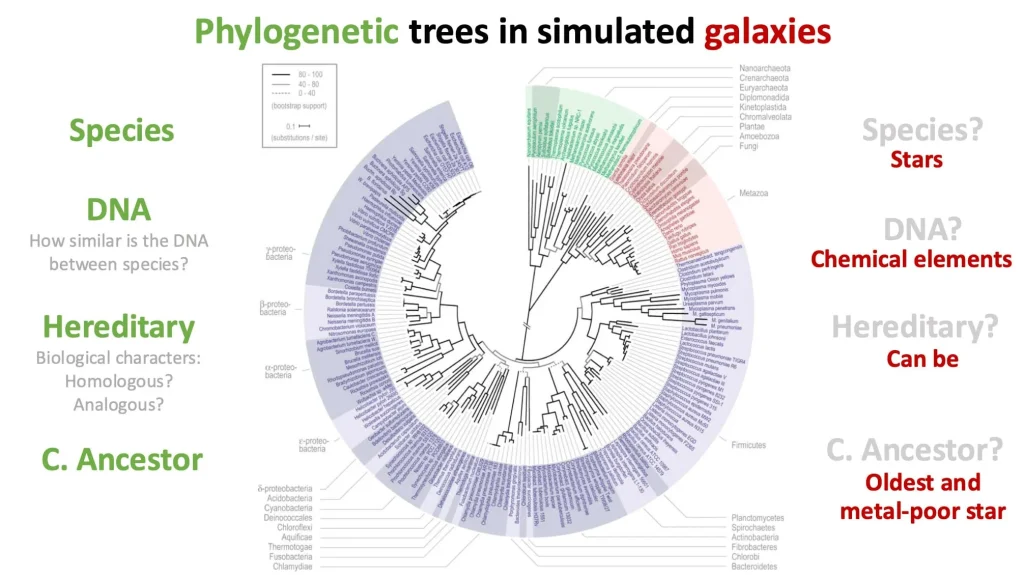
Brian Tapia Contreras explains that “the idea is to take different stellar populations and calculate the chemical differences between them. We use an algorithm that takes that information and, assuming a common primordial ancestor, begins to construct an evolutionary sequence. What’s striking is that this process is based solely on chemical information: at no point do we say that one star is older than another. It is the elements themselves that reconstruct a temporal evolution.”
A simulation to track the chemistry star by star
To test this idea, the researchers designed Origins, a simulation of a disk galaxy similar to the Milky Way that evolves in isolation over 3.5 billion years. This model reproduces the main physical processes that shape a galaxy’s evolution—such as gravity, gas physics, and the formation and development of new stars—and tracks the origin and transport of 22 chemical isotopes in great detail.
This made it possible to track how the interstellar medium becomes enriched with chemical elements and how various physical processes alter their distribution and abundance, leaving their mark on the chemical composition of stars.
The simulation was run using high-performance computing resources in Chile, including the Geryon cluster at the Center for Astrophysics and Associated Technologies (CATA), which was used to develop the numerical code, and the Ladgerda cluster, funded by Fondecyt Regular and the ERIS Millennium Nucleus.
Phylogenetic trees reveal evolutionary histories
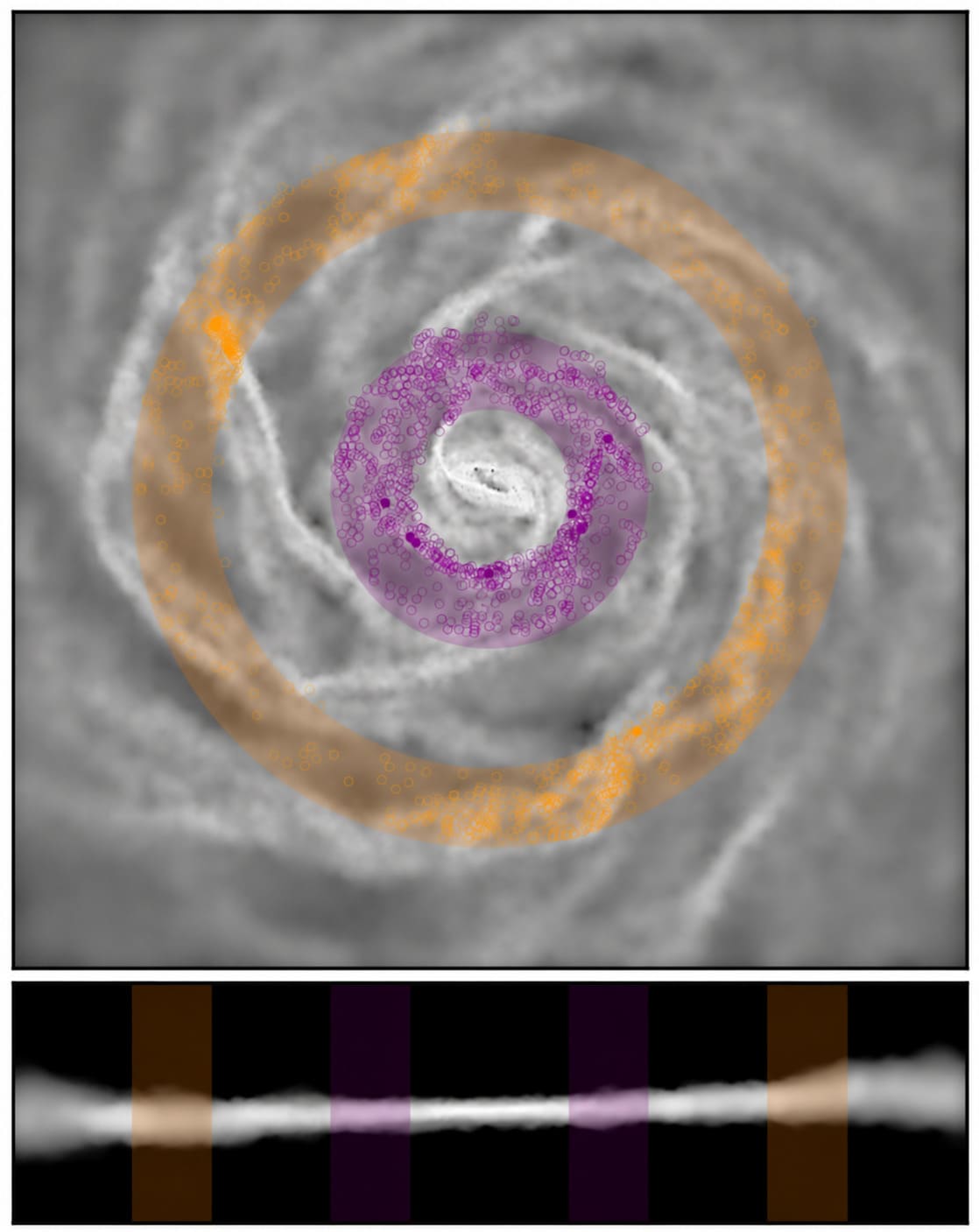
The team applied phylogenetic analysis to two regions of the simulated Origins galaxy with very different histories: an inner ring, where a galactic bar drives intense gas flows toward the center, and an outer ring, dominated by spiral arms and characterized by a more gradual chemical evolution. If the methodology worked as expected, it should have been able to distinguish between these two evolutionary trajectories based on the chemical information contained in the stars.
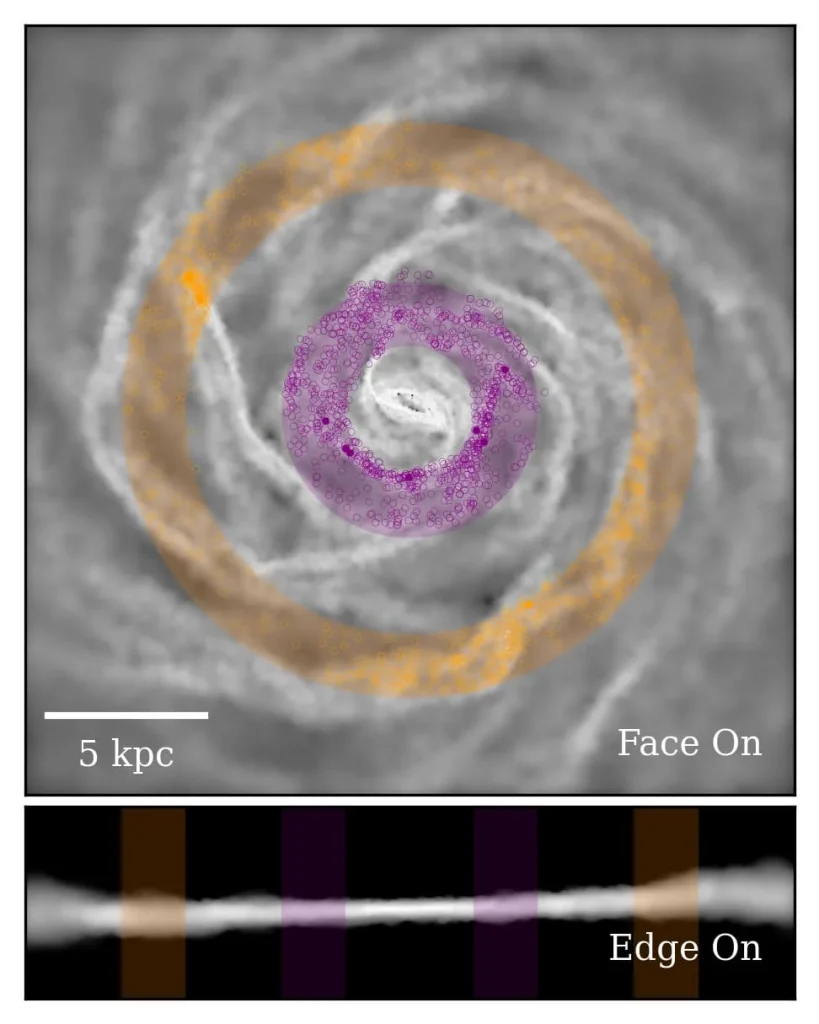
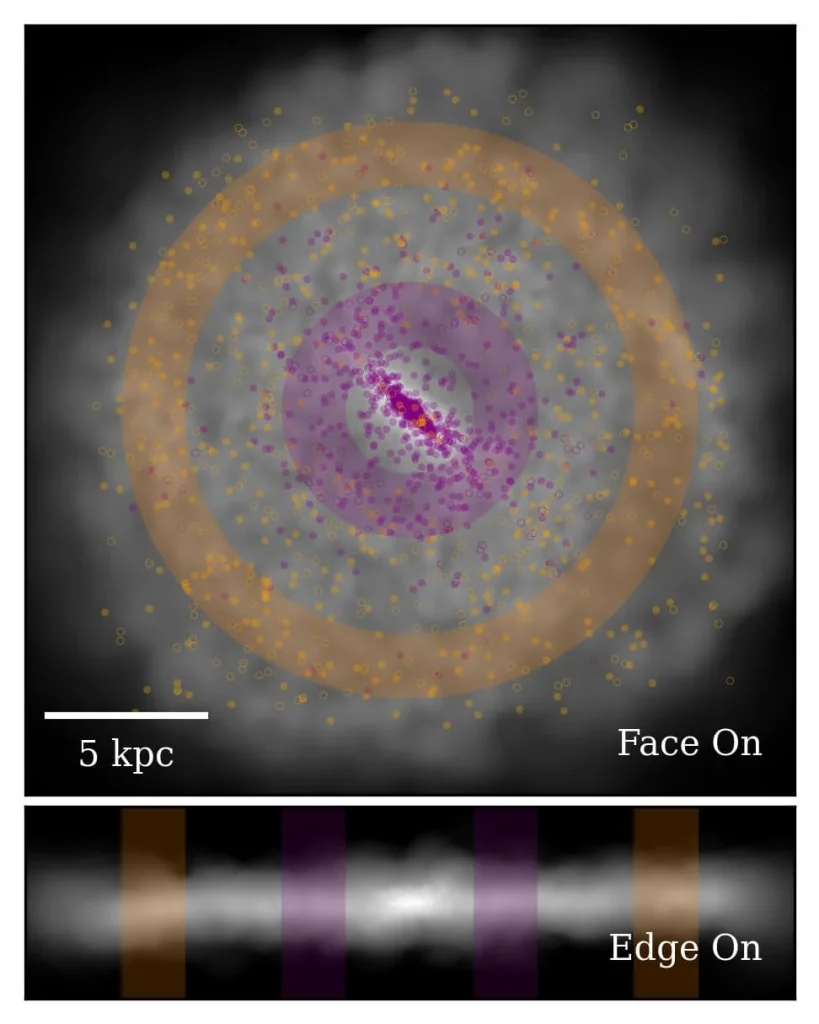
The phylogenetic trees constructed from these data were able to distinguish real differences between the formation histories of the two regions.
Within the inner ring, a complex structure emerged, featuring clusters known as “strong clades”—that is, groups of stars that share a common history of chemical enrichment. The most prominent group consisted of old stars rapidly enriched by Type II supernovae, indicating an early and intense episode of star formation associated with gas flows driven by the presence of the galactic bar.
In contrast, the tree corresponding to the outer ring exhibited a more linear and symmetrical branching pattern, consistent with a continuous chemical trajectory—a characteristic of a region dominated by more sustained stellar activity over time.
In this regard, Patricia Tissera explains that this “shows that the method can distinguish between regions with violent star formation, such as the center of a galaxy, and regions with a more gradual and steady evolution, such as those in the disk, simply by analyzing the structure of the resulting phylogenetic tree.”
To quantify these differences, the team used tools from biology to measure the complexity of evolutionary trees. The results showed that the configurations corresponding to the inner ring are consistently more complex than those of the outer ring, reflecting a past consistent with a more dynamic formation and chemical enrichment.
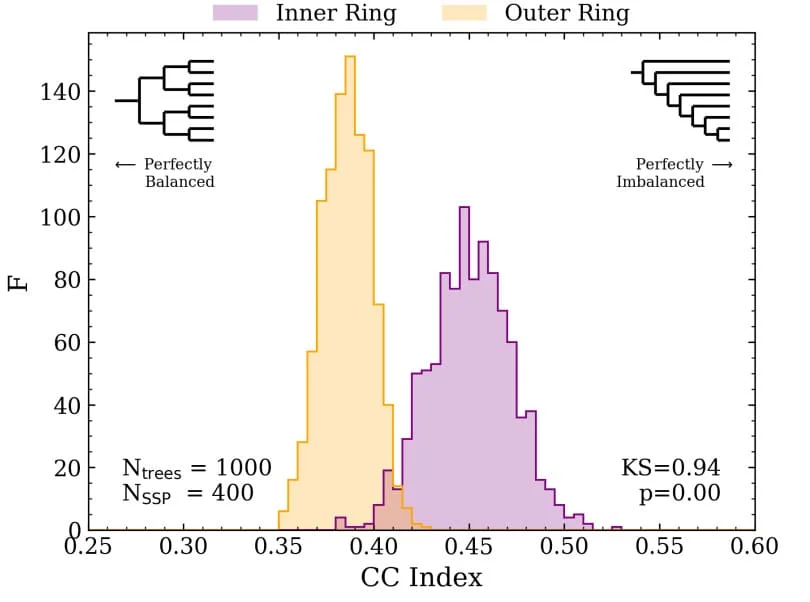
The analysis also showed that this methodology is capable of detecting the galactic bar’s signature. By redistributing gas toward the center of the galaxy, this structure generates stellar populations with distinct chemical histories that this technique can identify without the need for position, age, or dynamical data.
“This could become a method for confirming or identifying stars that may have had a different origin than the others. It’s something that’s also done in the Milky Way when studying globular clusters or stars resulting from past mergers, which tend to be chemically distinct,” explains Brian Tapia Contreras.
A new approach for the era of astronomical big data
Galactic phylogenetics does not replace existing methods, but rather complements them. One of its main advantages is that it does not require precise estimates of stellar ages. Instead, it relies on chemical abundances, information that is becoming increasingly accessible thanks to large-scale spectroscopic projects.
The main challenge will be interpreting the vast amount of data that these initiatives will generate. In this context, this methodology could become a key tool for reconstructing the history of galaxy formation, identifying stellar populations based on their origin, and comparing other galaxies based on their chemical enrichment patterns.
Against this backdrop, Tissera argues that “given the exponential growth of data from observatories and projects such as Gaia, MOONS, 4MOST, and the ELT (Extremely Large Telescope), galactic phylogenetics is emerging as a revolutionary tool. It allows us to decode the ‘fossil record’ of galaxies using only chemical information—which is vital because obtaining robust estimates of stellar ages is extremely difficult, whereas chemical abundances act as inherited stellar DNA.”
Next steps
The study demonstrated the effectiveness of the method in a simulated and intentionally controlled setting to understand the meaning of each signal in the phylogenetic tree. The next steps aim to expand on that complexity.
“The next step will be to extend this approach to more complex scenarios that more closely resemble a real galaxy. The challenge will be to understand what happens when multiple stellar populations of different origins—primarily associated with galaxy mergers that occurred at different points in a galaxy’s history—mix,” emphasizes Tapia Contreras.
To this end, the team plans to apply galactic phylogenetics to simulations from the CIELO project, an initiative led by Patricia Tissera. Developed by the same research team, these simulations will serve as more realistic test beds for further testing and refining this methodology.
This paper demonstrates how numerical simulations make it possible to recreate virtual universes, which can be used as laboratories to test new ideas, hypotheses, and analytical techniques, in addition to highlighting the value of multidisciplinary research.
Outstanding news
Recent news
-
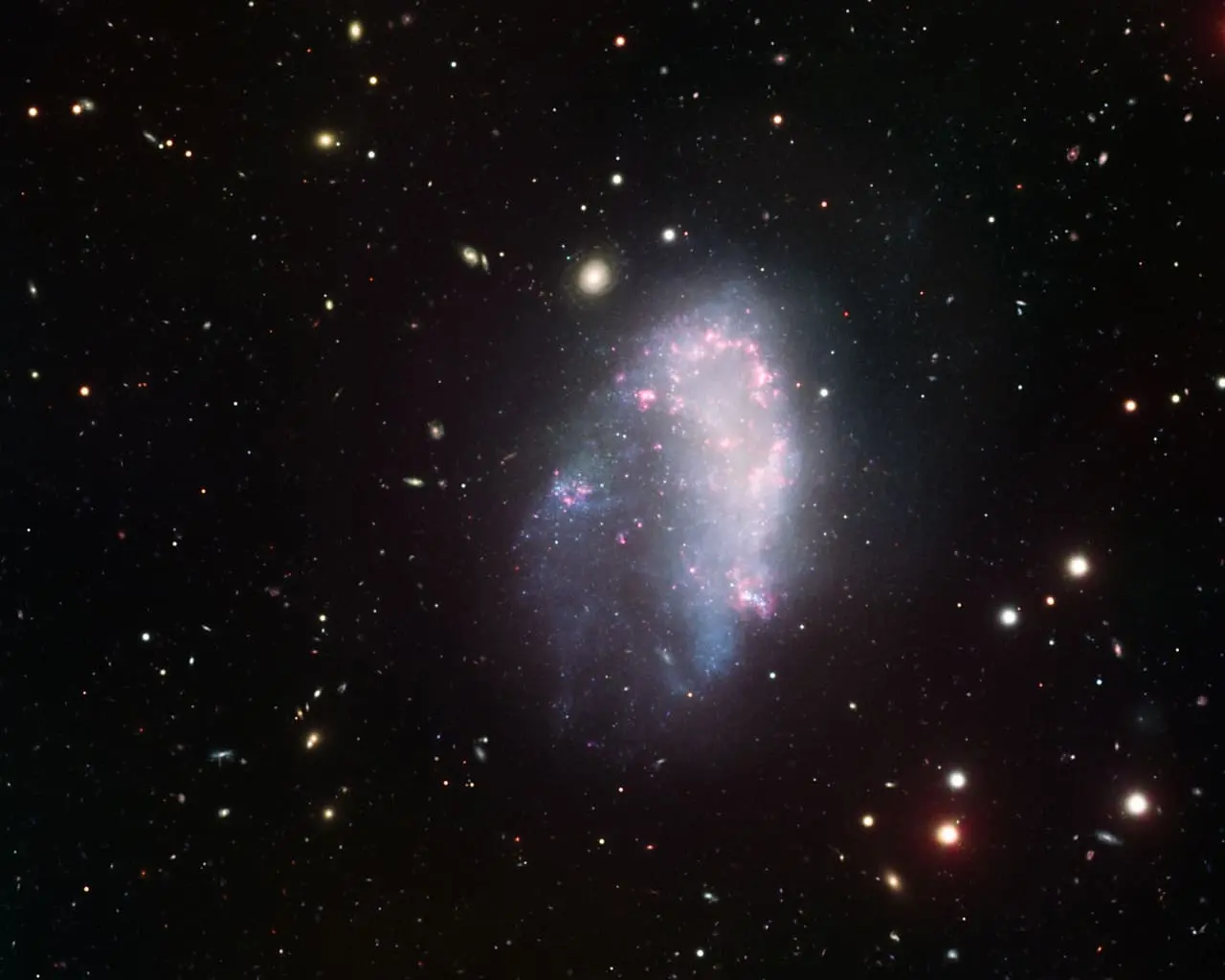 Publicado el: 19/10/2026Study led by CATA researchers solves a 30-year-old mystery about a dwarf galaxy
 -
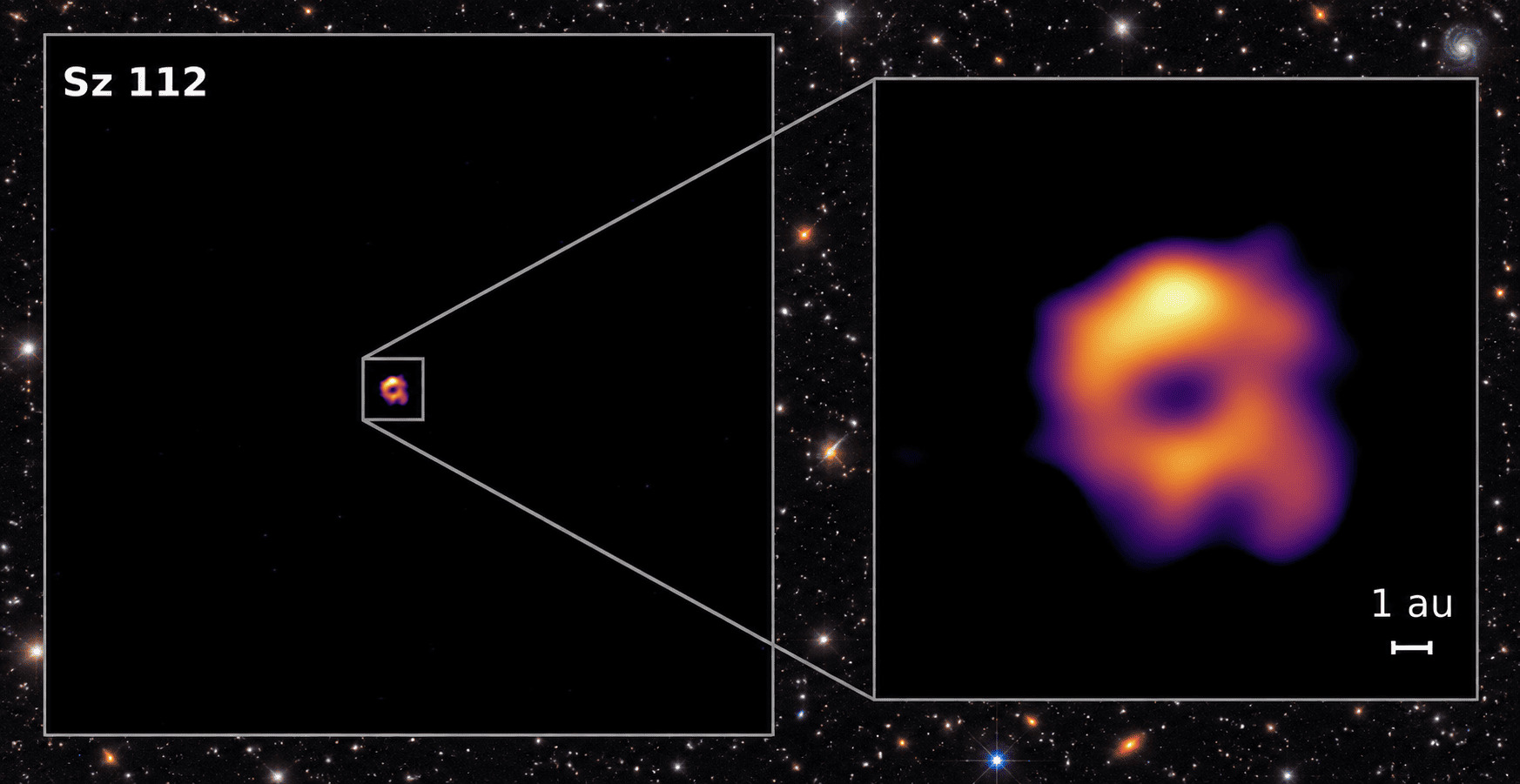 Publicado el: 15/10/2026Structures potentially associated with the formation of super-Earths and mini-Neptunes have been detected in compact disks
 -
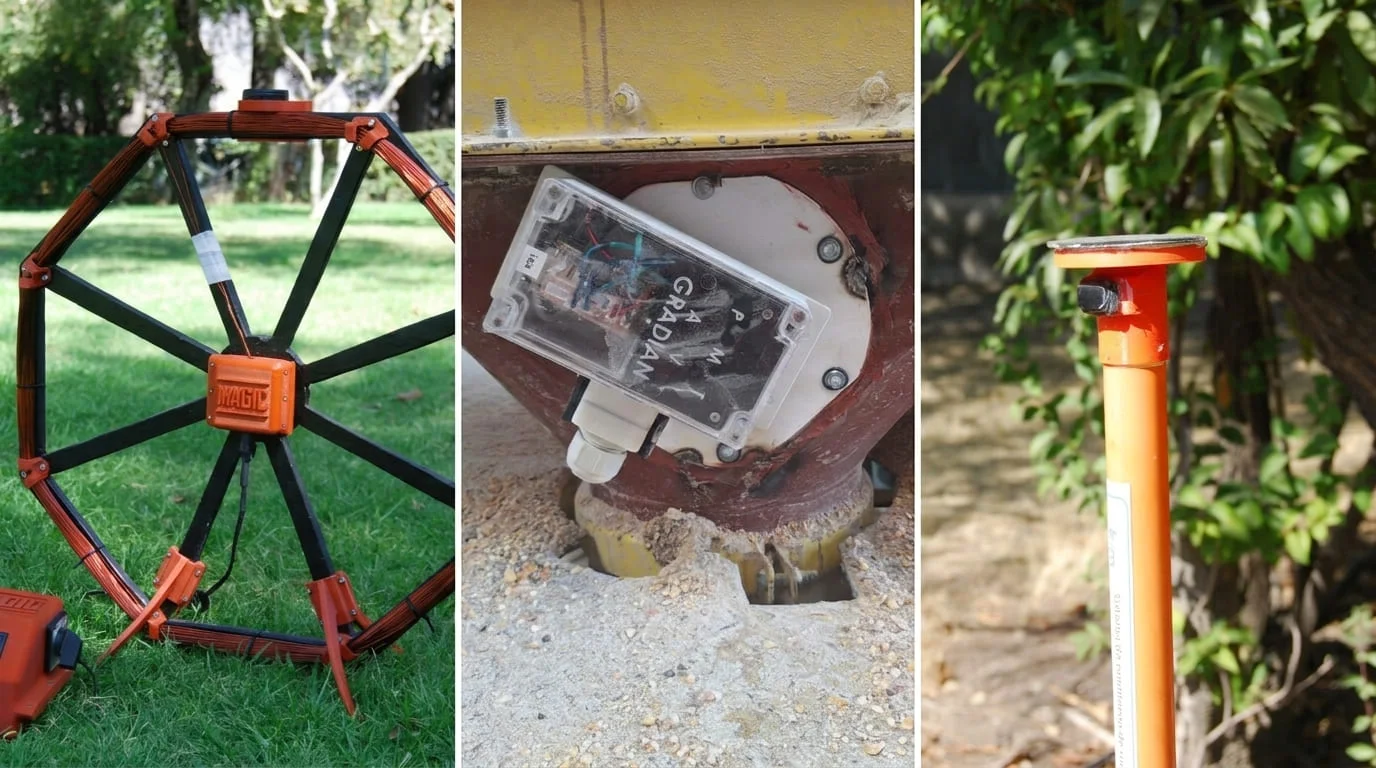 Publicado el: 09/10/2026From studying the universe to solving industry challenges: CATA’s technology transfer model in Nature Astronomy
 -
 Publicado el: 01/10/2026CATA Associate Researcher concludes research stay at the University of São Paulo thanks to a Brazilian fellowship
 -
 Publicado el: 29/09/2026Chilean technology aims to improve the accuracy of telescopes studying the origin of the Universe
Categories list
- Acknowledgments 29
- Astrobiology 12
- AstroCluster 1
- Black holes 21
- Corporativo 73
- Cosmology 10
- Descubrimientos 30
- Disclosure 91
- Exoplanets 19
- Extension 14
- Galaxies 29
- Galaxies formation 11
- Inter y Transdisciplina 5
- Local Universe 22
- Publications 9
- Sin categorizar 34
- Solar System 30
- Stellar formation 12
- Technology 33
- Technology Transfer 34