The Vera C. Rubin Observatory launches the largest survey of the moving universe: the LSST officially begins
With the launch of the Legacy Survey of Space and Time (LSST), a ten-year research project is underway that will map the southern sky in unprecedented detail.
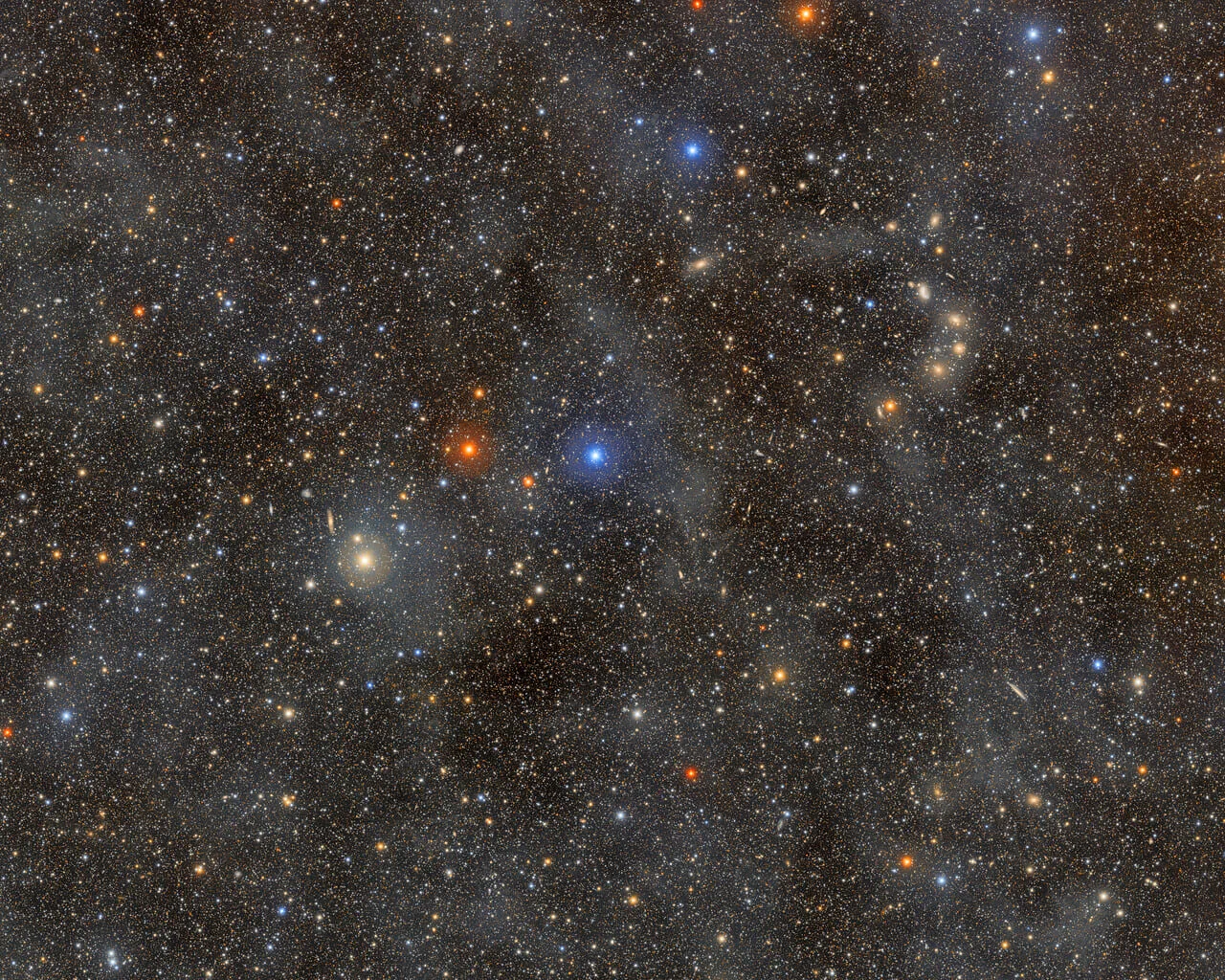
The Vera C. Rubin Observatory, located on Cerro Pachón in the Coquimbo Region, officially launched the Legacy Space-Time Survey (LSST), a program that will run for the next ten years. This milestone is the culmination of years of effort by thousands of people and follows the first-light event recorded in June 2025, as well as the completion of final commissioning work, the operational readiness review, and the start of the alert flow.
A huge camera pointing at the southern sky
Rubin will continuously survey the entire southern sky to create an ultra-wide and deep dynamic catalog of the Universe. According to Roberto Assef, Deputy Director and Principal Investigator at the Center for Astrophysics and Associated Technologies – CATA (ANID Basal Center), “the LSST project will map the sky in six different color bands over the course of a decade, with two main objectives: to create a ‘movie’ that allows us to study the cosmos dynamically, and to combine all the images taken to produce an extremely deep final image.”
To achieve this, the instrument combines an enormous light-gathering capacity, the ability to move quickly across the sky, and a wide field of view. Its 3,200-megapixel camera (the largest in the world) will capture a new image approximately every 40 seconds.
Assef emphasizes that, to study the dynamic sky, “the telescope will return to each part of it approximately every 3 days, except in the special fields called Deep Drilling Fields, where it will do so much more frequently. “This is the first time an instrument with an aperture of nearly 6 meters has conducted a survey of this kind, allowing us to observe much deeper than the smaller telescopes used until now for this type of study.”
“The start of operations marks a turning point, as it ushers in an ambitious observation strategy—the starting point from which we can begin collecting data to study the universe in all its dimensions, from the Solar System to its farthest reaches,” adds the scholar from Universidad Diego Portales (UDP).
A flood of astronomical data
Every night, Rubin will collect approximately ten terabytes of data and generate millions of alerts about changes in the night sky. As Assef explains, “This scenario will require new ways of working for the astronomical community, in which algorithms for machine learning algorithms will be key to categorizing and prioritizing that volume of data.”
For his part, Francisco Förster, CATA Associate Researcher and professor at the Universidad de Chile, notes that one of the greatest challenges in analyzing the observatory’s data “will be its accurate characterization and classification—automatically and at scale. Computationally efficient statistical methods will be needed to analyze large samples of objects without introducing significant biases.”
Once the LSST survey is complete, the final dataset will contain billions of objects with trillions of measurements. This will be the first time such a large volume of astronomical data has been made available to the scientific community, opening the door to new avenues of discovery for both scientists and the public.
For Roberto Assef, the impact of this new survey also extends to all of CATA’s lines of research. “Many of our researchers and students are already an integral part of the scientific collaborations involved in this initiative and have been thinking for many years about how to make the most of this data—some are even already leading preparatory scientific studies. We hope that our Center will continue to play a leading scientific role in this major project,” he notes.
One such example is strong gravitational lensing, a phenomenon that is relatively rare in the universe. Timo Anguita, Associate Researcher at the Center and professor at Universidad Andrés Bello (UNAB), is a member of the LSST’s Strong Gravitational Lensing Science Collaboration (SLSC), and he illustrates the potential of this breakthrough for the field of study.
“A survey of this depth across the entire southern sky will be unique in its ability to identify around 100,000 systems of this type, revolutionizing the field. Furthermore, by observing each of the fields about 800 times over 10 years using six different filters, we’ll be able to use thousands of variable lensed sources—such as quasars and supernovae—to measure cosmological parameters like the Hubble constant,” explains Anguita. “In this regard, as part of the SLSC collaboration, we have spent more than 15 years planning how to make the most of Rubin’s observations to find these objects and follow up on them with other instruments to maximize the scientific return.”
A consolidated leadership
With Rubin now fully operational, Chile accounts for a large portion of the world’s optical observation capacity, solidifying its position as one of the planet’s leading centers for astronomical observation. Assef points out that this regional leadership also translates into scientific prominence.
“It is essential for the progress of our community, because the fact that it is located in Chile allows us to participate in and lead the scientific aspects of this project, which is highly relevant on a global scale. It certainly reinforces our role as the world’s astronomical capital—not only as a place where data is collected, but also as a place where discoveries are made,” he notes.
Finally, the Deputy Director of CATA concludes that this milestone will advance our understanding of many different aspects of the universe—including those that remain beyond our reach. “The most important thing is everything we haven’t even thought of yet. Exploring a new window like this will bring us many surprises and will surely change how we understand the cosmos.”
The Vera C. Rubin Observatory is funded by the National Science Foundation (NSF) and the U.S. Department of Energy (DOE), and is jointly operated by NSF’s NOIRLab—managed by the Association of Universities for Research in Astronomy (AURA)—and the DOE’s SLAC National Accelerator Laboratory.
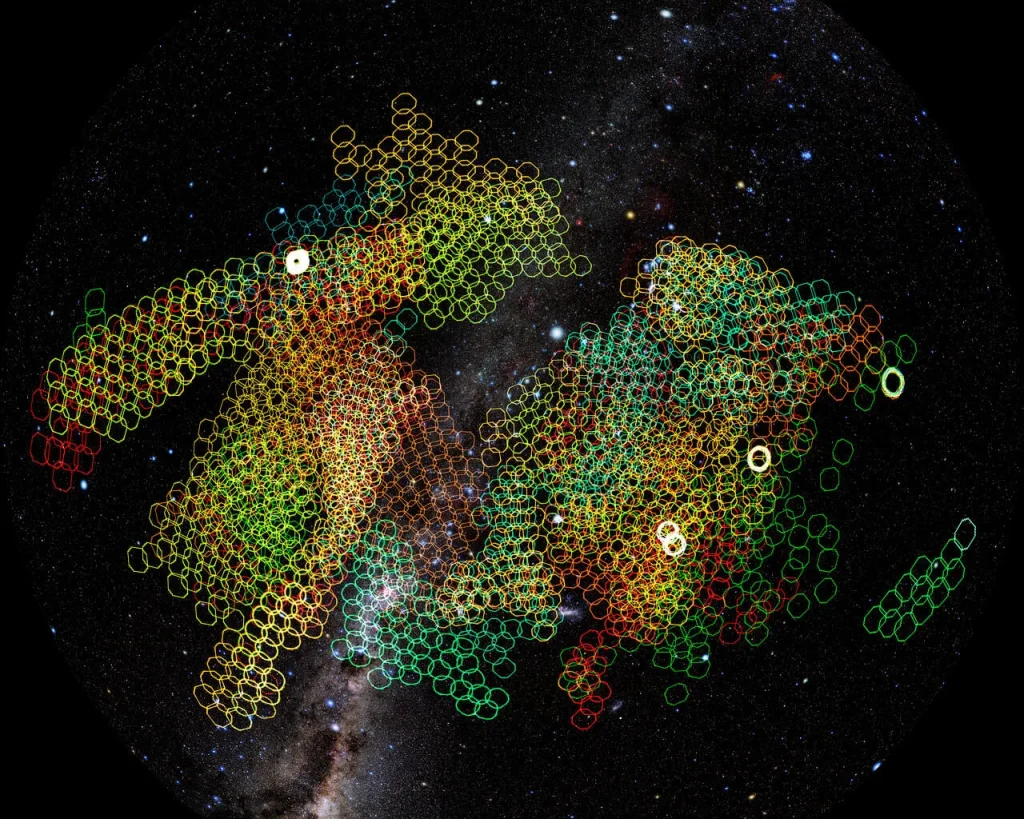
This map shows a representative week of observations from the Rubin Observatory for the Study of Spacetime as a Legacy for Posterity. The color of each mosaic represents the filter used for each exposure (u, g, r, i, z, and y), revealing how quickly the Rubin Observatory creates a multicolored map of the Universe.
Credit: NSF–DOE Vera C. Rubin Observatory/NOIRLab/SLAC/AURA
Outstanding news
Recent news
-
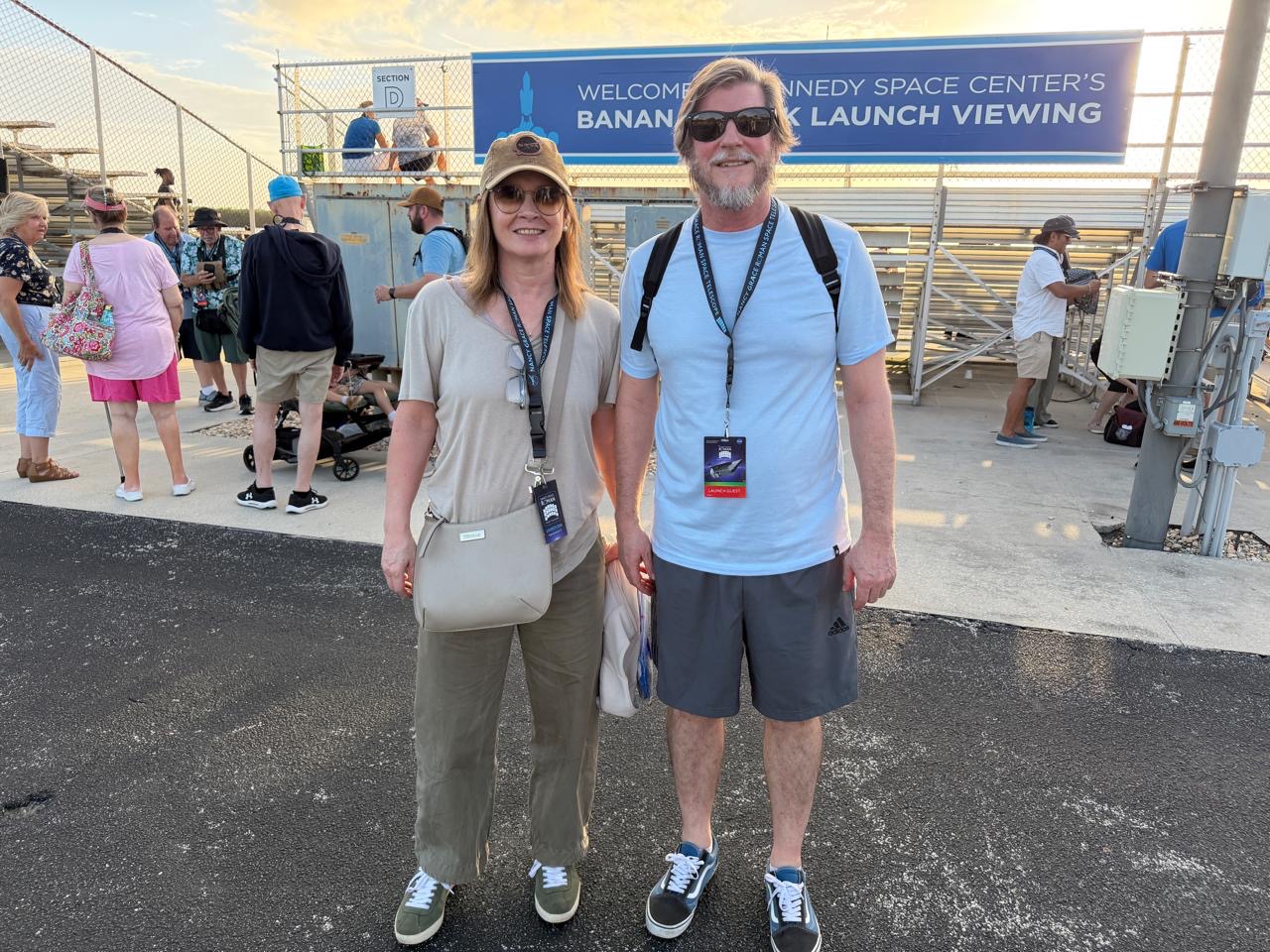 Publicado el: 07/09/2026The launch of the Nancy Grace Roman Space Telescope, as experienced firsthand by a CATA astronomer involved in the mission
 -
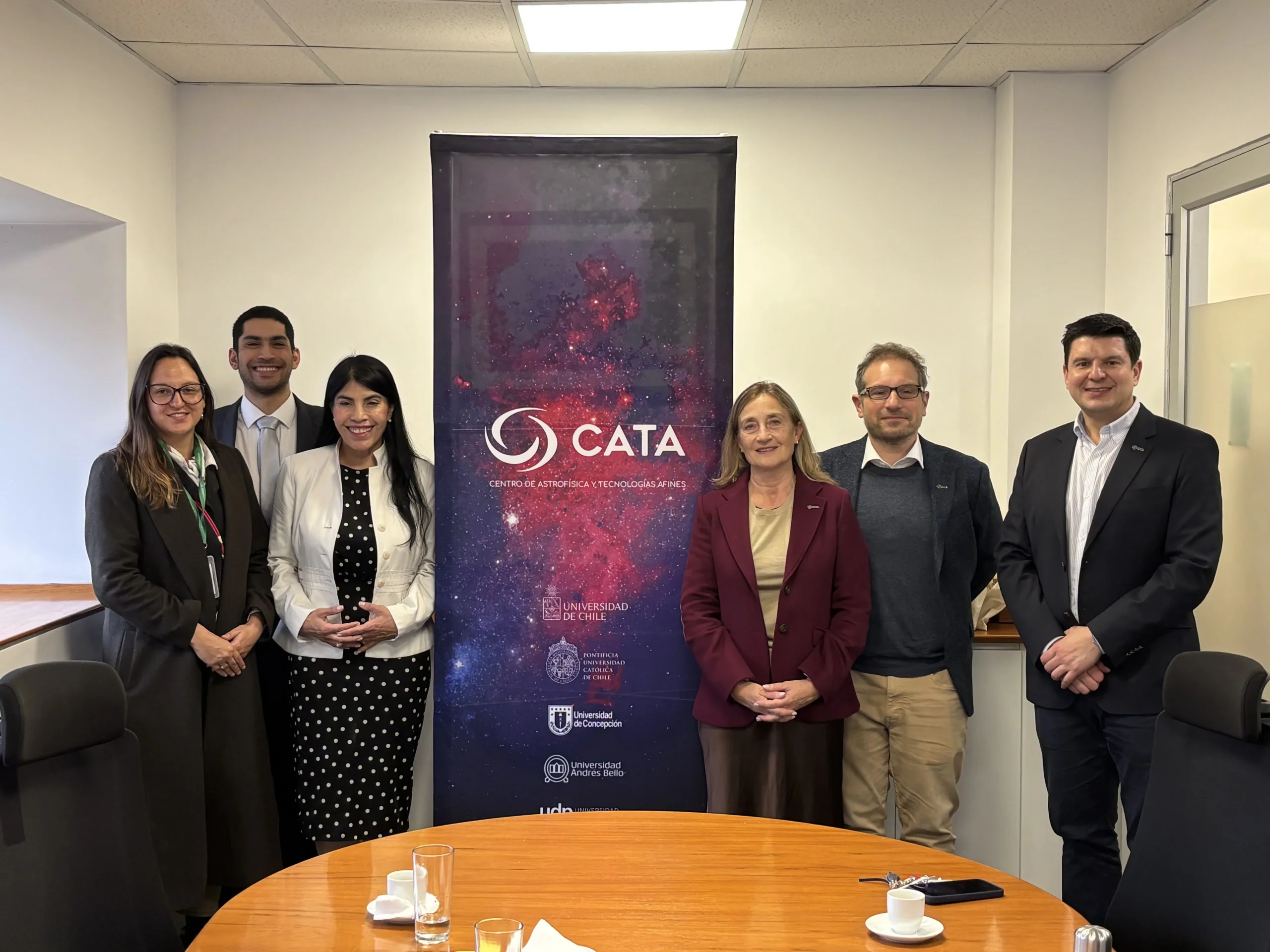 Publicado el: 31/08/2026Minister Ximena Lincolao meets CATA’s scientific and technological capabilities
 -
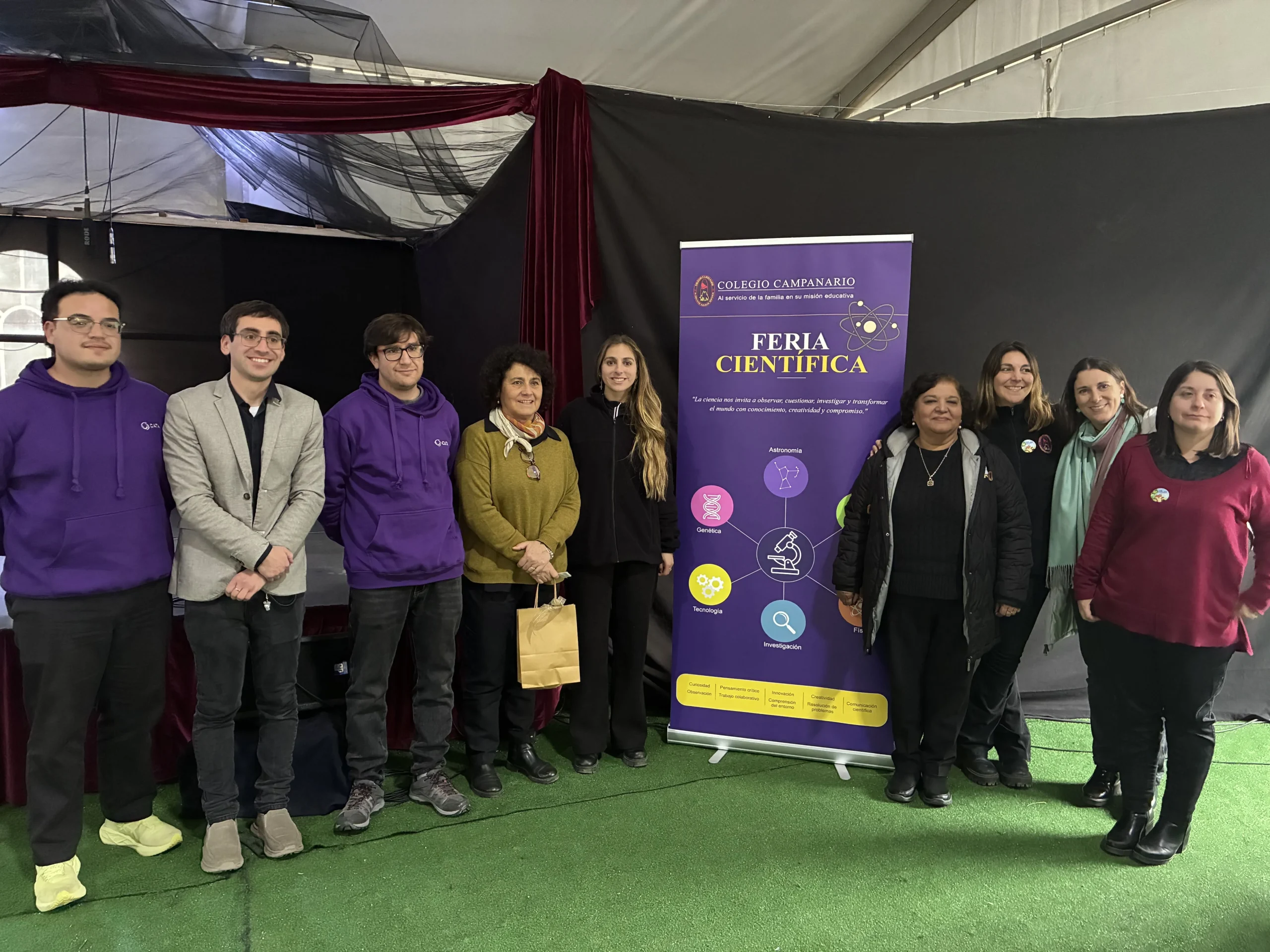 Publicado el: 19/08/2026CATA brings astronomy and technology to students at the 2026 Science Fair
 -
 Publicado el: 18/08/2026Silicate clouds discovered in the daytime atmosphere of the only ultra-hot Neptune
 -
 Publicado el: 12/08/2026CATA and PROVOCA announce call for applications for a mentoring program for students and postdocs
Categories list
- Acknowledgments 27
- Astrobiology 11
- AstroCluster 1
- Black holes 19
- Corporativo 73
- Cosmology 9
- Descubrimientos 27
- Disclosure 89
- Exoplanets 18
- Extension 13
- Galaxies 27
- Galaxies formation 9
- Inter y Transdisciplina 5
- Local Universe 21
- Publications 8
- Sin categorizar 34
- Solar System 29
- Stellar formation 11
- Technology 30
- Technology Transfer 32