CATA Emprende 2026: Four tech startups secure funding
After months of training, mentoring, and support, the selected teams received funding to continue developing their solutions.
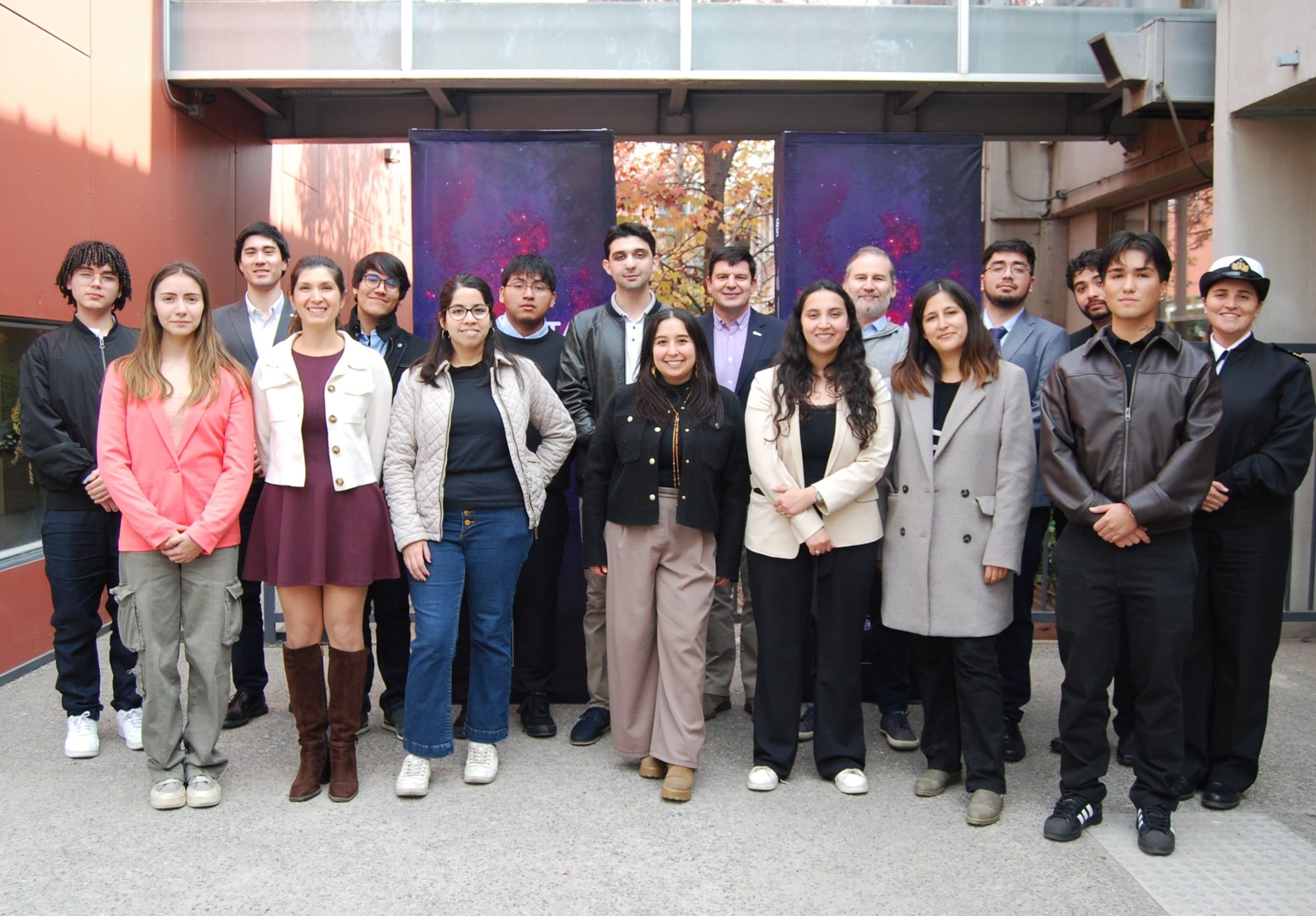
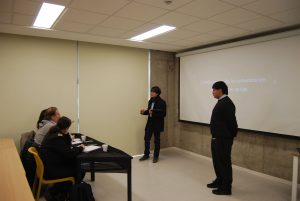
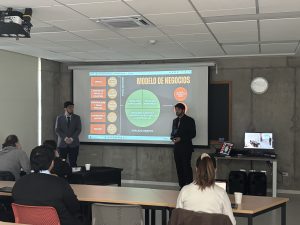
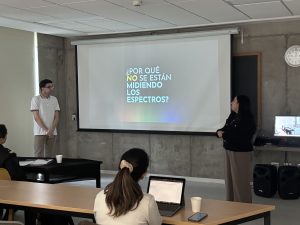
The Center for Astrophysics and Associated Technologies – CATA (ANID Basal Center) held the second edition of CATA Emprende Pitch Day, a program designed to support entrepreneurship and the development of technology-based solutions led by students from across the country. The event brought together teams from different regions that, over the past few months, participated in a training and mentoring process focused on innovation, project development, business models, and financing.
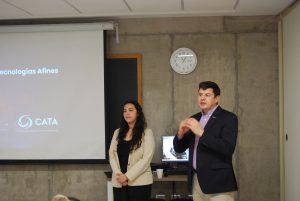
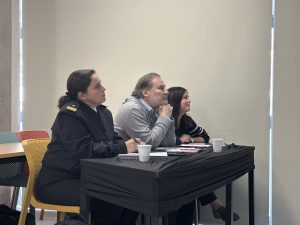
During the event, participants presented their proposals to an evaluation committee composed of prominent representatives from the technology and entrepreneurial sectors, including Jennifer Araya, co-founder of IMEKO and applied research consultant at Agrosuper; Alejandro Pantoja, executive director of OpenBeauchef at the University of Chile; and Francisca Lema, First Lieutenant in the Chilean Navy and liaison officer for the Undersecretariat of Defense and CORFO, who evaluated aspects such as the potential impact, level of innovation, and feasibility of implementation for each initiative.
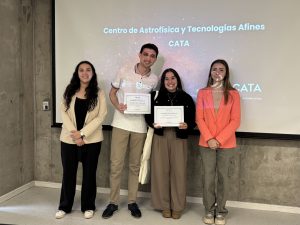
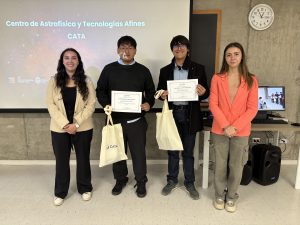
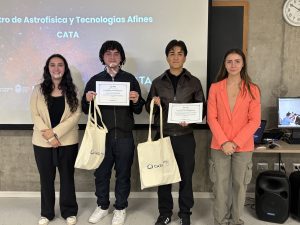
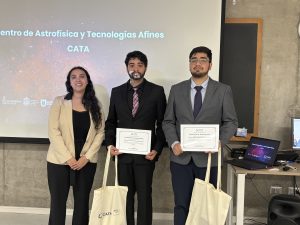
Following the jury’s deliberations, four startups received funding to support the next stages of development for their solutions. The selected teams were:
Open Spectrum (1st Place): The winning project of the event, led by Catalina Campos and Maximiliano Taverne, undergraduate astronomy students at the Universidad de Chile. It aims to expand access to astronomical spectroscopy, a fundamental technique for studying the universe. The project involves the development of a modular spectroscope that can be adapted to different types of telescopes, complemented by tools for machine learning for automated data processing and monitoring, with the aim of making these capabilities accessible to communities, institutions, and individuals interested in generating scientific knowledge.
ECO-NET (2nd Place): A proposal developed by civil engineering students at the Universidad de Tarapacá (Iquique): Flavio Ocampo, Franco Dávalos, Luciano Alfaro, and René Castro. The solution addresses the communication challenges faced by communities and emergency agencies during disasters or disruptions to traditional telecommunications services through a decentralized messaging system that operates without an internet connection using LoRa (Long Range) technology.
Respira IA (3rd Place): Led by Maximiliano Montoya and Omar Arbuch, students in the Production Process Analysis and Management program at the University of Santiago, this initiative addresses the scarcity and uneven distribution of green spaces in urban areas. To achieve this, it combines sensors installed on-site with artificial intelligence algorithms capable of identifying where to plant trees, which species to use, and how to optimize their maintenance.
GEOSALUS (4th Place): A startup presented by Eduardo Fernández and Carlos Huenuhueque, geology students at the Universidad Católica de Temuco, which aims to bridge gaps in geological information for land-use planning and risk management. The proposal involves identifying sites of geological interest and creating specialized maps of natural hazards through satellite analysis and field validation.
Claudia San Martín, the Center’s Innovation Leader, highlighted the success of the event and the value of supporting technology-based initiatives. “CATA Emprende aims to provide concrete tools so that students can explore the potential of their projects and turn them into impactful solutions. Our goal is to help these ideas evolve and find practical applications in various social and industrial sectors.”
For his part, Alejandro Pantoja emphasized that “initiatives such as those supported by the Center are essential for linking knowledge and technology to challenges in the public and private sectors and in society. At OpenBeauchef, we aim to complement this work by supporting teams through incubation and validation processes that enable them to continue developing their technologies and apply them to real-world solutions.”
For his part, Maximiliano Taverne of Open Spectrum—the day’s winning team—highlighted the value of the event, noting that “the feedback provided by the jury helped us identify new opportunities to strengthen our proposal and plan for its future development.” Meanwhile, co-founder Catalina Campos added that programs like these represent “a significant opportunity to present ideas, receive support, and transform nascent projects into initiatives with greater technological and scientific potential.”
The funding provided will enable the teams to continue refining their solutions, move forward with new validation phases, and explore opportunities for their implementation in both industry and society.
Outstanding news
Recent news
-
 Publicado el: 09/10/2026From studying the universe to solving industry challenges: CATA’s technology transfer model in Nature Astronomy
 -
 Publicado el: 01/10/2026CATA Associate Researcher concludes research stay at the University of São Paulo thanks to a Brazilian fellowship
 -
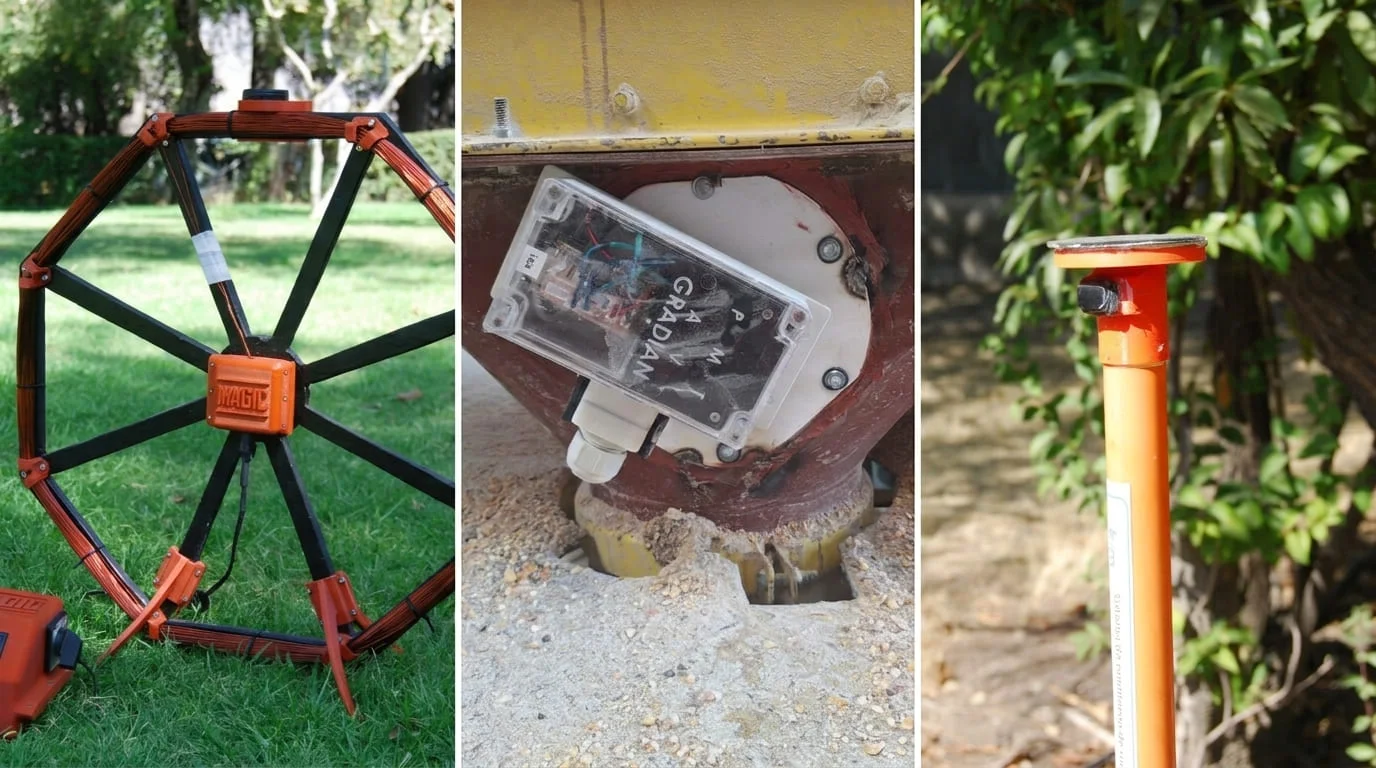
 Publicado el: 29/09/2026Chilean technology aims to improve the accuracy of telescopes studying the origin of the Universe
 -
 Publicado el: 25/09/2026CATA Associate Researcher named Director of the Las Campanas Observatory
 -
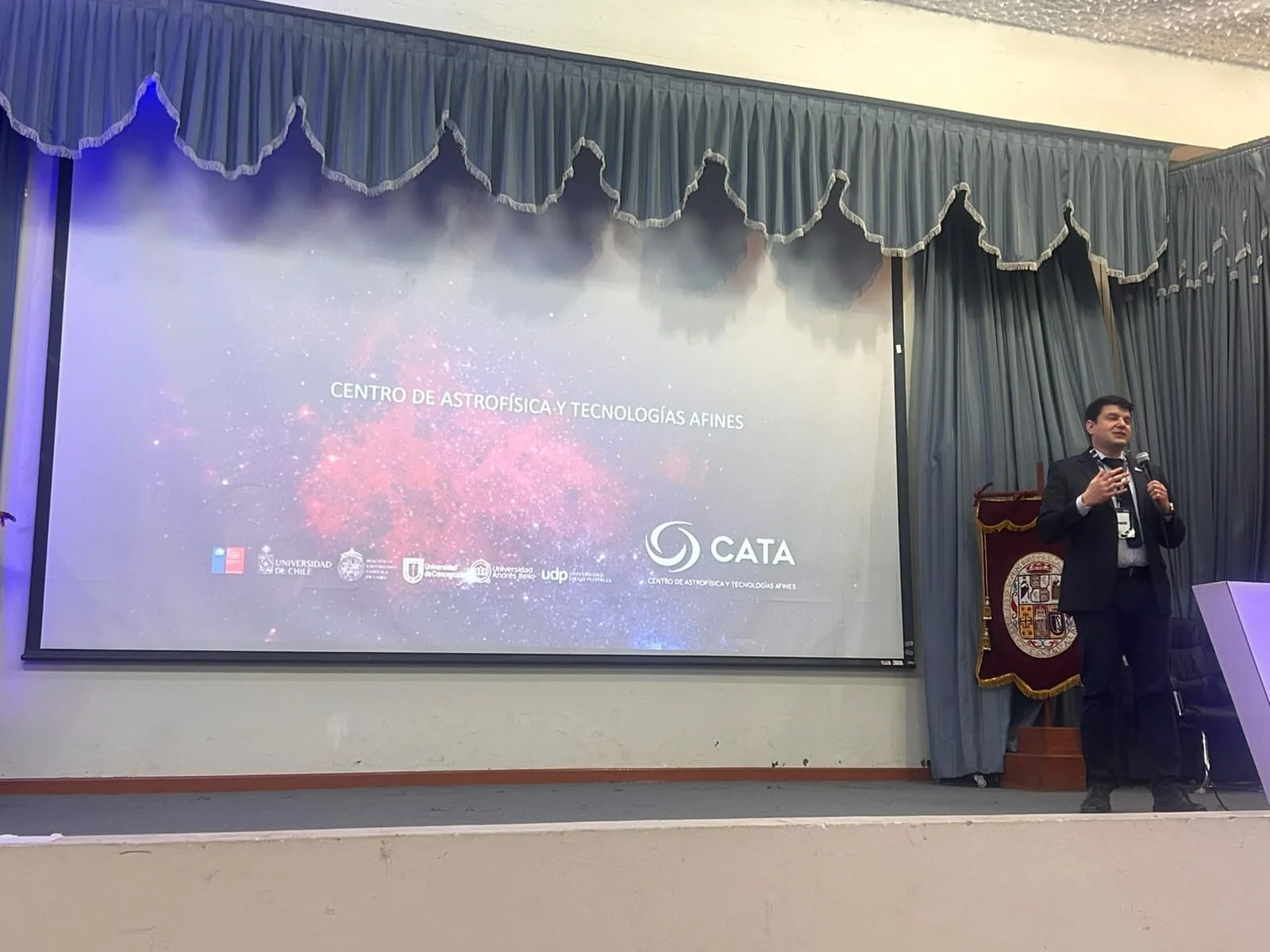 Publicado el: 23/09/2026CATA’s General Manager presented the Center’s technology transfer model at an international meeting in Peru
Categories list
- Acknowledgments 29
- Astrobiology 12
- AstroCluster 1
- Black holes 21
- Corporativo 73
- Cosmology 10
- Descubrimientos 28
- Disclosure 91
- Exoplanets 18
- Extension 14
- Galaxies 28
- Galaxies formation 10
- Inter y Transdisciplina 5
- Local Universe 22
- Publications 9
- Sin categorizar 34
- Solar System 30
- Stellar formation 12
- Technology 33
- Technology Transfer 34