


Juan Espinoza-Retamal wins the first CATA PhD Award for his research on planetary systems
The award, presented by the Center for Astrophysics and Associated Technologies (CATA), recognized the excellence, originality, and impact of doctoral research conducted by researchers affiliated with the Center. Nine applications were received for this first call for nominations, and the results were announced during the 2026 Annual Meeting.
The Center for Astrophysics and Associated Technologies – CATA (project financed by ANID) honored Juan Espinoza-Retamal as the winner of the first edition of the 2026 CATA PhD Award, an initiative created by the Center to recognize scientific excellence and the contributions of new generations of researchers who have conducted their studies in connection with the institution.
This first call for submissions received nine applications, which were reviewed by an evaluation committee composed of CATA researchers. This process ensured transparency, impartiality, and academic rigor in the selection of the winning entries. The results were announced during the Center’s 2026 Annual Meeting.
First place was awarded to Espinoza-Retamal for his doctoral dissertation titled “Constraining the Flatness of Planetary Systems.” The research addressed the formation and evolution of planetary systems orbiting other stars, providing new insights into the diversity of worlds beyond our Solar System. “Receiving this award is a tremendous joy and an honor, especially since this is the first edition. It is very gratifying to see that the work I carried out during my doctoral studies is recognized by CATA, a center that brings together researchers from different institutions and has contributed significantly to the development of astronomy in Chile,” Espinoza-Retamal noted.
The astronomer’s research sought to understand how planetary systems beyond the Solar System form and evolve, focusing in particular on the architecture of their orbits and their orientation relative to the stars they orbit. To do so, he used observations obtained with some of the world’s most advanced telescopes, including the ESPRESSO spectrographs at the Very Large Telescope (VLT) and the HARPS spectrograph at the La Silla Observatory—both operated by the European Southern Observatory (ESO)—as well as data from NASA’s TESS space telescope.
“One of the main findings was that giant planets with highly eccentric—that is, highly elliptical—orbits tend to be aligned with their stars’ equators—the line that divides the star into two hemispheres. This is surprising because traditional models of formation and dynamical evolution predict that the processes producing highly eccentric orbits should also generate significant misalignments; therefore, my results directly challenge the most widely used theories for explaining how these planets form,” explained Espinoza-Retamal.
Among the results of their work, the discovery and characterization of TOI-4507 b also stands out. This exoplanet is similar in size to Saturn but has a mass comparable to that of Neptune, and it completes one orbit around its star approximately every 100 days. This combination gives it an extraordinarily low density, making it an object of particular interest for studying the internal structure and formation of this type of system.
Finally, using simulations, his thesis projected that the European Space Agency’s (ESA) Gaia space mission could detect hundreds of giant gas planets with orbital periods of several years—similar to Jupiter—allowing for a more accurate reconstruction of the three-dimensional architecture of various planetary systems.
Regarding his affiliation with the Center, the astronomer served as an Affiliated Researcher during his Ph.D. in Astrophysics at the Universidad Católica (UC), under the supervision of CATA’s Adjunct Researcher Cristóbal Petrovich. During that time, he was actively involved in the Exoplanets and Astrobiology program, where he valued the opportunities for collaboration and scientific exchange that he was able to pursue during his doctoral studies.
“My affiliation with CATA allowed me to become part of a broad scientific community, with researchers working in different areas of astronomy. This kind of interaction is very important during doctoral training because it allows you to learn about other perspectives, discuss results, and establish collaborations that continue beyond the doctorate. “A researcher’s training is not limited to writing a dissertation or publishing scientific articles; it also involves exchanging ideas with colleagues and learning to communicate the results of our work,” he noted.
Honorable mentions
The first edition of the CATA PhD Award also honored the doctoral dissertations of Manuel Solimano and Elisa Tau—researchers affiliated with the Center—with honorable mentions; their theses address various processes that are fundamental to understanding the formation and evolution of galaxies.
In the case of Manuel Solimano (Universidad Diego Portales), his doctoral dissertation, “The Byron Cycle in the Early Universe: A Multiwavelength, High-Resolution View of Interstellar and Circumgalactic Gas Emission,” investigated how gas moves and transforms within and around galaxies during the early stages of the universe—a process that is fundamental to understanding star formation and the growth of supermassive black holes. Using observations made with instruments such as ALMA and the James Webb Space Telescope, the researcher identified extensive gas structures and two large nebulae in a system of distant galaxies, providing new insights into the processes that influenced the formation and evolution of the earliest galaxies.
For her part, Elisa Tau (Universidad de La Serena) conducted a study titled “The Role of In-Situ and Accreted Populations in Shaping the Stellar Haloes of Low-Mass Galaxies,” focused on understanding how the outer regions of smaller galaxies formed and evolved. Through computer simulations of 17 galaxies, the researcher discovered that many of the stars in their outer regions originated within the galaxies themselves and were later displaced to those outer regions due to interactions with other galactic systems. Her findings provide a better understanding of how these encounters have influenced the structure and evolution of galaxies over billions of years.
Recognition that fosters the development of new generations
Patricia Tissera, Director and Principal Researcher at CATA and a professor at UC, highlighted the importance of the award in training astronomers and fostering excellence in research.
“One of the Center’s fundamental pillars is training new generations of researchers who will contribute to the development of world-class astronomy in Chile. Through this award, we seek to recognize the quality, originality, and impact of their doctoral research, as well as the effort and commitment behind each project. We are very proud to honor Juan, Manuel, and Elisa, whose work reflects the excellence and diversity of the scientific research we promote at CATA,” concluded Tissera.



Outstanding news
Recent news
-
Publicado el: 05/11/2026Juan Espinoza-Retamal wins the first CATA PhD Award for his research on planetary systems
-
 Publicado el: 02/11/2026ANID renews CATA’s basal finance for five years and envisions a new phase of scientific and technological development
-
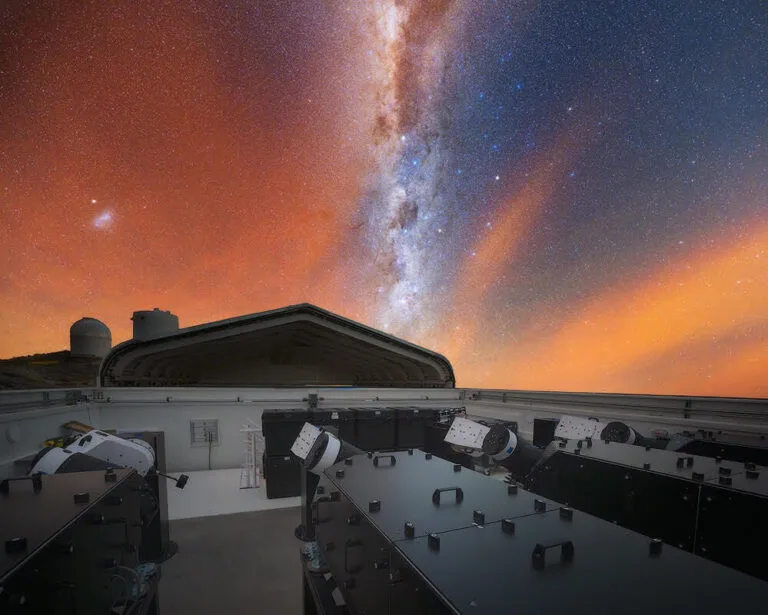 Publicado el: 19/10/2026CATA will contribute to data processing for a major international astronomy project
-
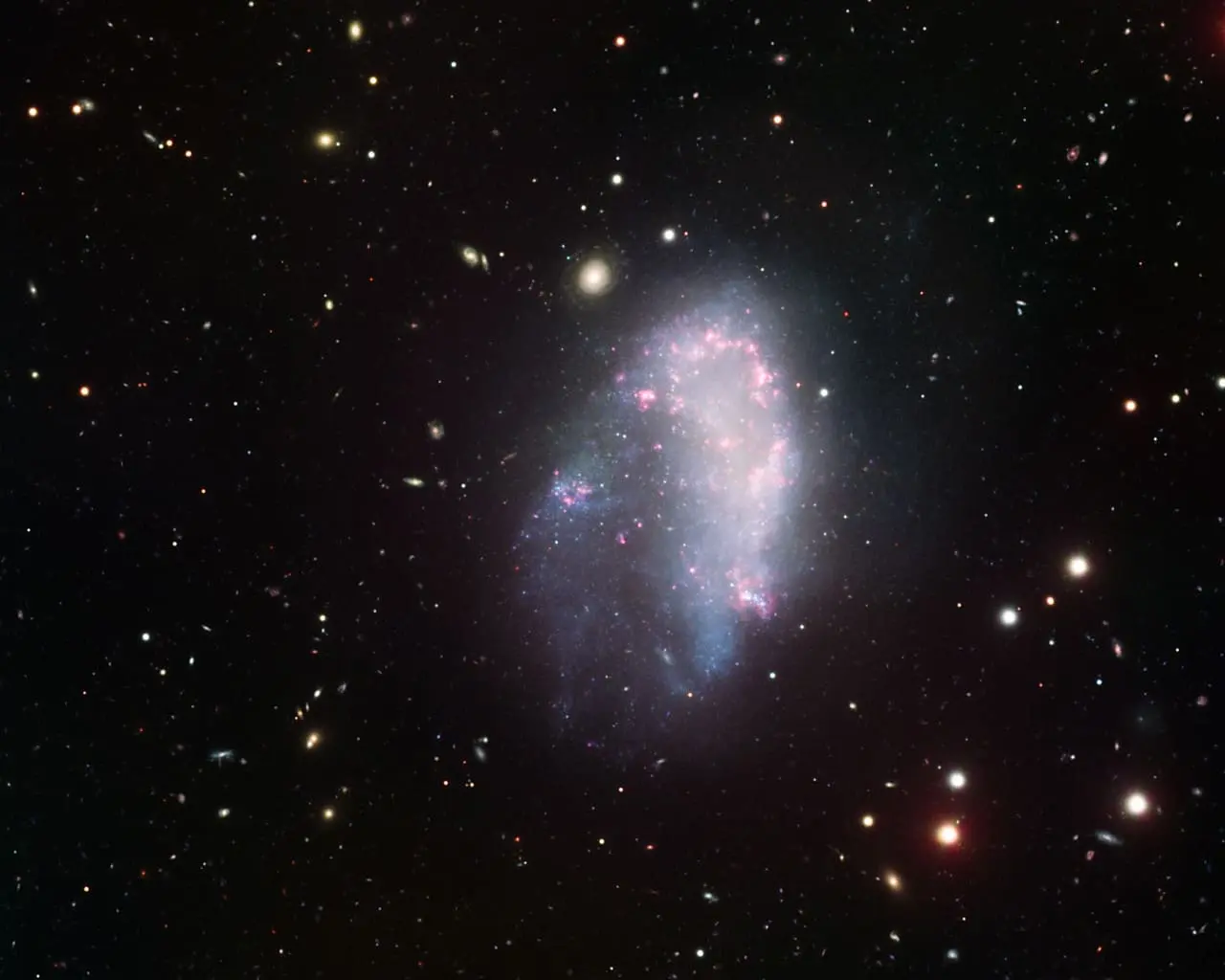 Publicado el: 19/10/2026Study led by CATA researchers solves a 30-year-old mystery about a dwarf galaxy
-
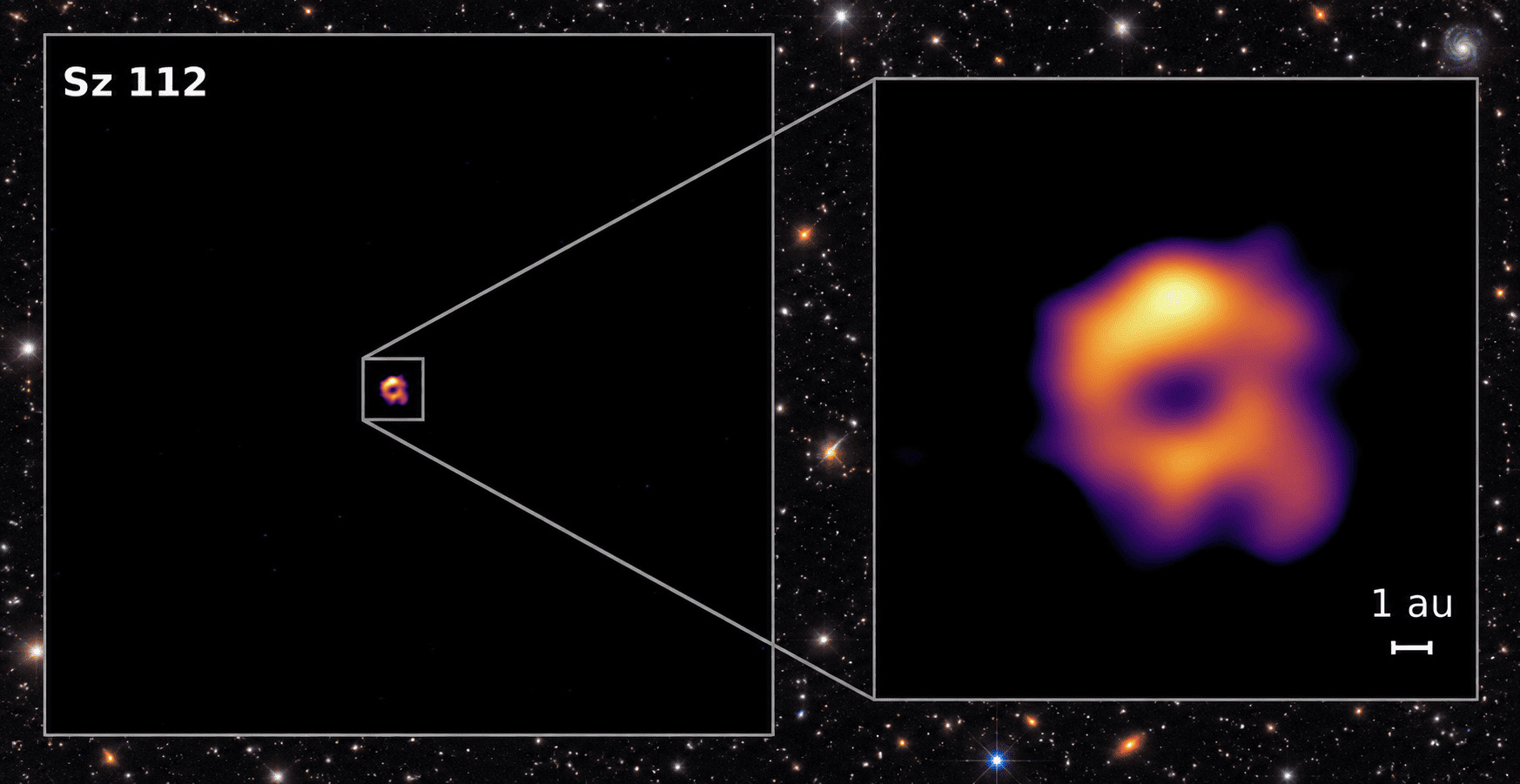 Publicado el: 15/10/2026Structures potentially associated with the formation of super-Earths and mini-Neptunes have been detected in compact disks
Categories list
- Acknowledgments 31
- Astrobiology 12
- AstroCluster 1
- Black holes 21
- Corporativo 74
- Cosmology 10
- Descubrimientos 30
- Disclosure 91
- Exoplanets 20
- Extension 14
- Galaxies 30
- Galaxies formation 12
- Inter y Transdisciplina 5
- Local Universe 22
- Publications 9
- Sin categorizar 34
- Solar System 30
- Stellar formation 13
- Technology 34
- Technology Transfer 34


