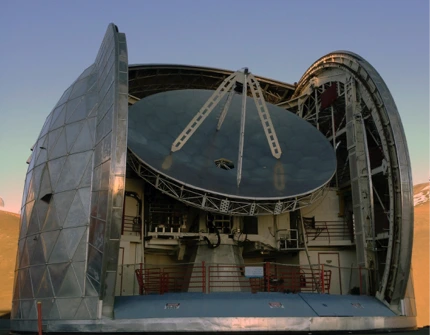
Leighton Chajnantor Telescope arrives in our country from Hawaii
The telescope is expected to begin operations for observations and research in 2028. After that, it will operate in our country for at least 10 to 15 years.
After a long wait, the first shipment for the Leighton Chajnantor Telescope (LCT) finally arrived in Chile on April 15 via the Port of Angamos in Antofagasta. The rest of the shipment is expected to arrive during the first week of May, after which it will be transported to ALMA’s Operations Support Facility (OSF) to begin the assembly process. As a member of the Center for Astrophysics and Associated Technologies – CATA (ANID Basal Center), the Department of Astronomy at the Universidad de Concepción (UdeC) was the institution responsible for coordinating the LCT’s arrival in the country.
The OSF, ALMA’s logistics center and the site where antenna maintenance is carried out, will serve as the headquarters for the assembly and subsequent operational testing of the LCT. It is currently anticipated that the telescope will remain at the observatory until mid-2027.
Rodrigo Reeves, a CATA Research Associate, director of the Center for Astronomical Instrumentation (CePIA), and faculty member in the Department of Astronomy at the Universidad of Concepción (UdeC), highlights the arrival of the LCT as a significant milestone for the entire country. “We will be able to serve as a gateway for other institutions to access training and development in advanced astronomy. Today we are happy and eager, focused on the technical work so that, once the telescope is assembled, we can integrate our instruments and move as quickly as possible toward first light,” he said.
The “first light” or first test of the telescope is an initial trial observation. Afterward, the telescope will be transported to its final location at the Atacama Astronomy Park (PAA), where it will also share space with the Simons Observatory and the Cosmology Large Angular Scale Surveyor (CLASS).
Following its installation, the final observational test will be conducted at the PAA. The LCT is scheduled to officially begin operations in 2028 and is expected to operate in our country for at least 10 to 15 years.
The Leighton Chajnantor Telescope is a 10.4-meter-diameter submillimeter radio telescope that formerly belonged to the Caltech Submillimeter Observatory (CSO) and was located on Mauna Kea, Hawaii. After operating on the island for nearly three decades, the LCT was dismantled in order to restore the site to its natural state.
During his time in Hawaii, he observed objects such as comets, protoplanetary disks around stars, and distant galaxies, among others. Now, his move to Chile marks a new chapter in its use for scientific and academic purposes.
This milestone marks a turning point for Chile’s educational community, as it provides a platform that will enable students to engage in cutting-edge scientific research. It also represents a significant advance for Chilean astronomy, as it grants Chile access to 10% of the LCT’s total observation time.
Patricia Tissera, Director of CATA, notes that this “reflects the Center’s commitment to strengthening astronomy in Chile, not only through research but also through the development of technological capabilities and the training of highly skilled personnel.” The arrival of the Leighton Chajnantor Telescope opens new opportunities for the national scientific community and consolidates the country’s role as a key player in international astronomy, while also promoting collaboration among institutions and access to world-class infrastructure.”
The Leighton Chajnantor Telescope promises to strengthen the development of astronomical research at the national and regional levels through the leadership and involvement of the UdeC Department of Astronomy—as part of CATA—in the operation and management of the telescope.
According to David Arroyo, project coordinator at CePIA, the arrival of the Leighton Chajnantor Telescope also opens up the possibility of carrying out academic and scientific projects more directly, through observations and visits. Furthermore, working with an instrument of this caliber will help drive the development of new technologies that will have an impact on both astronomy and other industries.
In this context, CePIA, a laboratory affiliated with CATA, has served as the lead agency for the project at the UdeC, overseeing both the disassembly and reassembly processes as well as transportation logistics and implementation, in coordination with the Center.
International institutions such as the California Institute of Technology (Caltech) in the United States and Shanghai Normal University (SHNU) in China are also participating in the project. This collaboration is responsible for the transport, refurbishment, and commissioning of the telescope in Chile.
“Today, in an international landscape marked by geopolitical tensions, it is even more important for institutions such as the California Institute of Technology and Shanghai Normal University to work together. Science, by its collaborative nature, allows us to build bridges where other fields encounter barriers, demonstrating that knowledge can serve as a common ground for countries,” said Rodrigo Reeves, Associate Researcher at CATA.
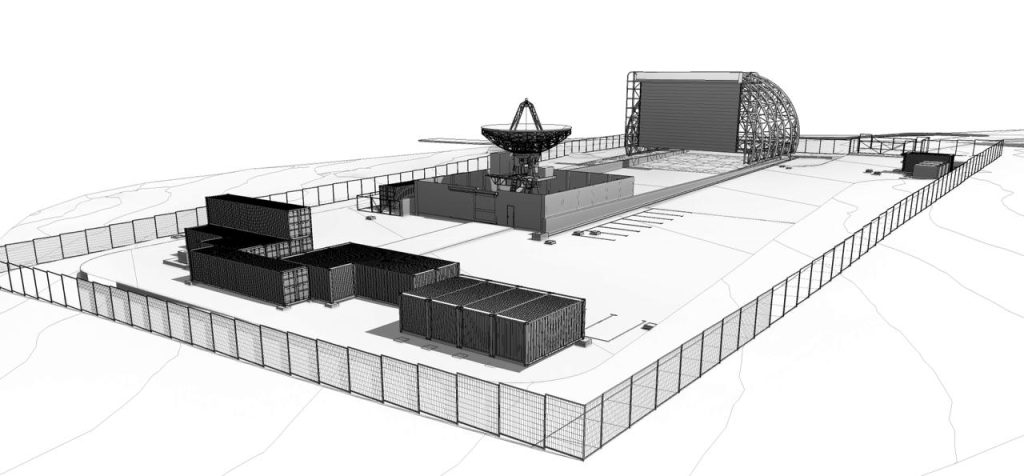
Outstanding news
Recent news
-
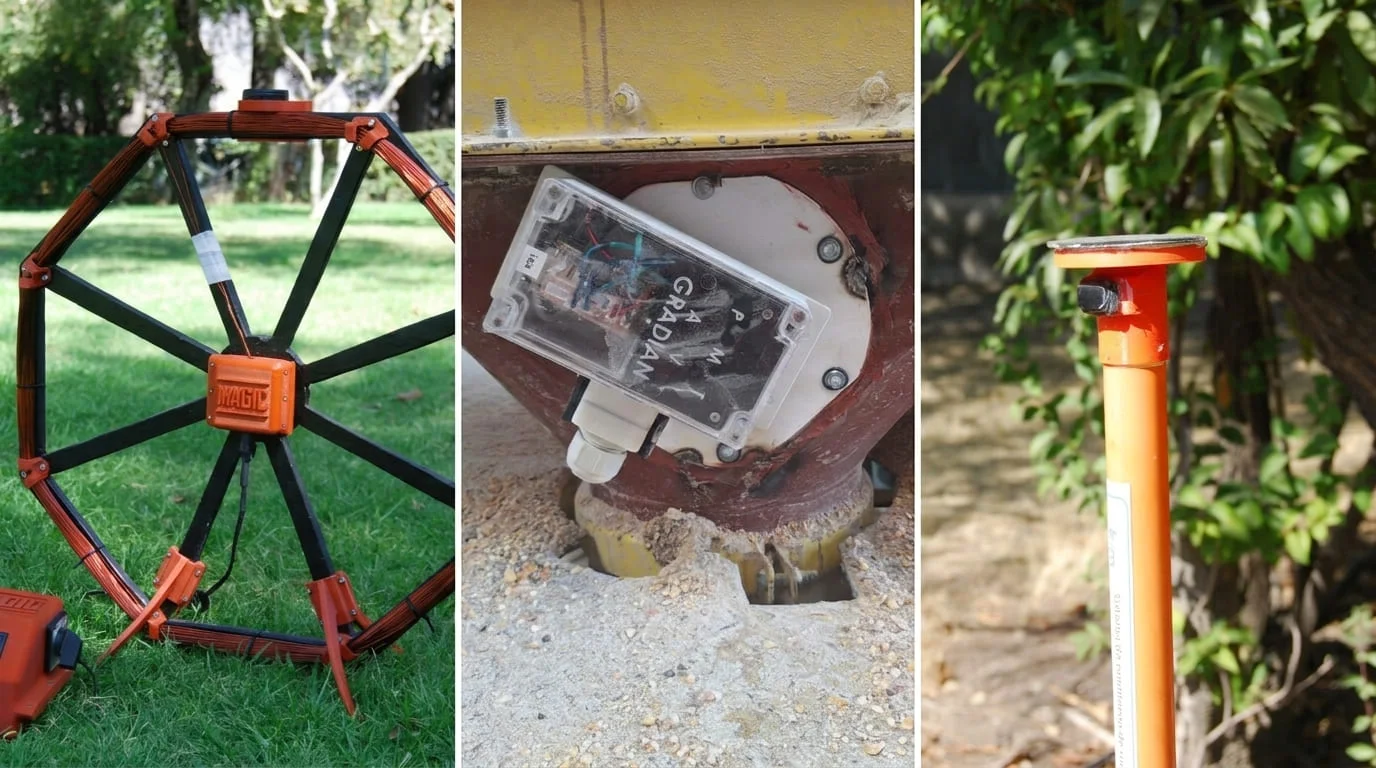 Publicado el: 09/10/2026From studying the universe to solving industry challenges: CATA’s technology transfer model in Nature Astronomy
 -
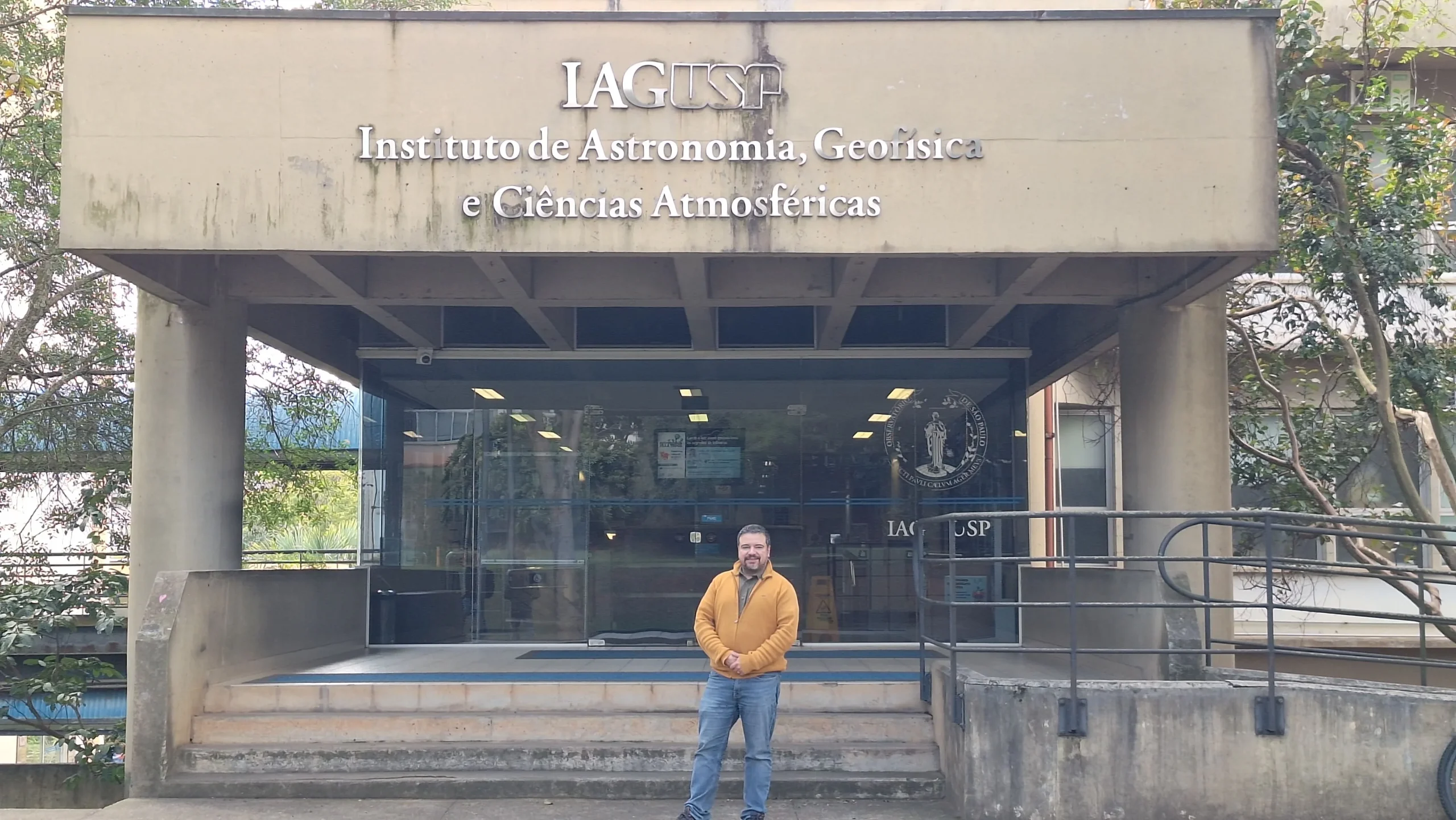 Publicado el: 01/10/2026CATA Associate Researcher concludes research stay at the University of São Paulo thanks to a Brazilian fellowship
 -
 Publicado el: 29/09/2026Chilean technology aims to improve the accuracy of telescopes studying the origin of the Universe
 -
 Publicado el: 25/09/2026CATA Associate Researcher named Director of the Las Campanas Observatory
 -
 Publicado el: 23/09/2026CATA’s General Manager presented the Center’s technology transfer model at an international meeting in Peru
Categories list
- Acknowledgments 29
- Astrobiology 12
- AstroCluster 1
- Black holes 21
- Corporativo 73
- Cosmology 10
- Descubrimientos 28
- Disclosure 91
- Exoplanets 18
- Extension 14
- Galaxies 28
- Galaxies formation 10
- Inter y Transdisciplina 5
- Local Universe 22
- Publications 9
- Sin categorizar 34
- Solar System 30
- Stellar formation 12
- Technology 33
- Technology Transfer 34