The launch of the Nancy Grace Roman Space Telescope, as experienced firsthand by a CATA astronomer involved in the mission
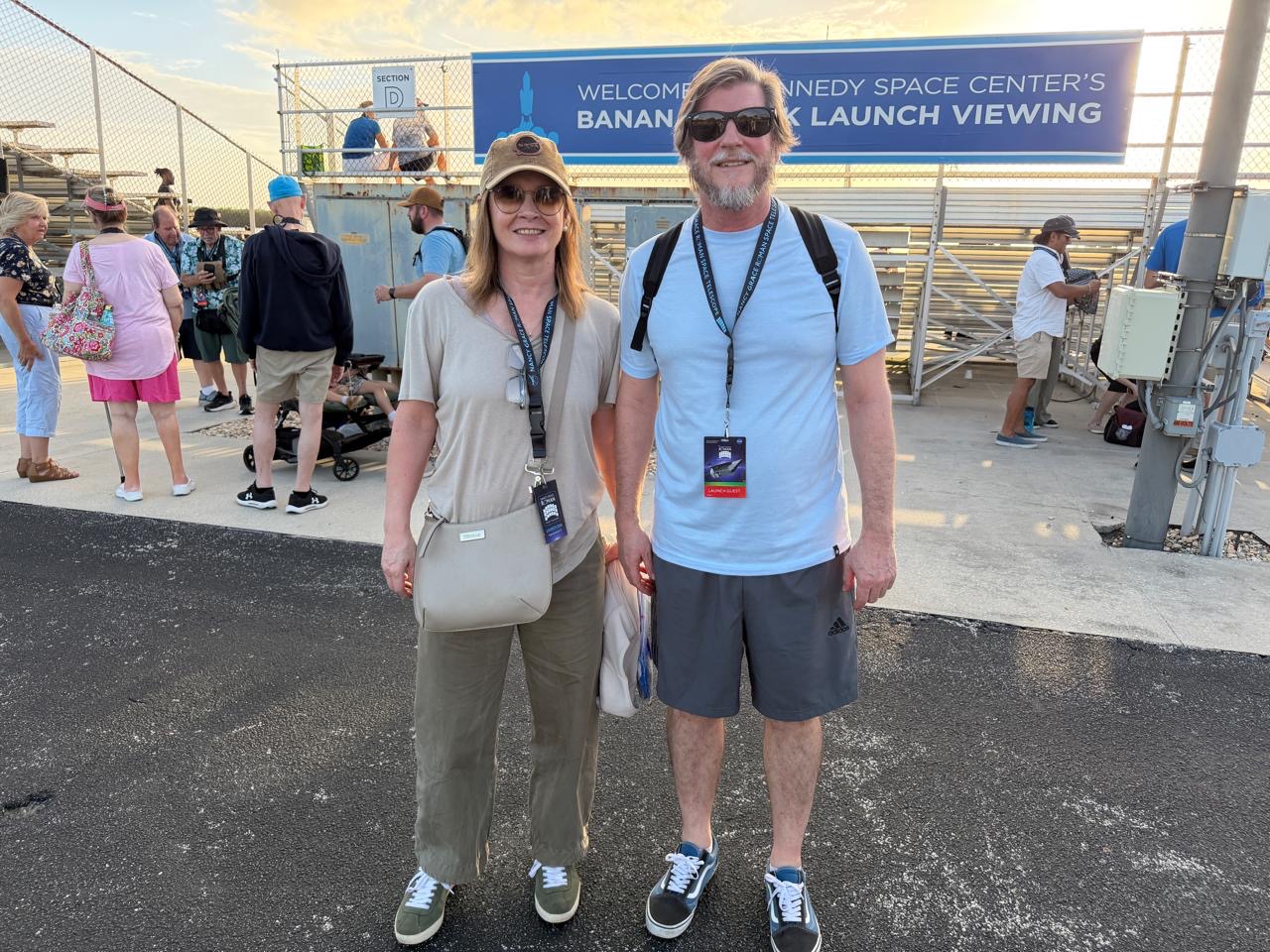
NASA's new instrument will usher in a new era for the study of modern astronomy. Dante Minniti, Principal Investigator at CATA and a professor at Universidad Andrés Bello, was present at its launch at the Kennedy Space Center in Florida.
A new milestone in space exploration began on August 30 with the launch of NASA’s Nancy Grace Roman Space Telescope from the Kennedy Space Center in Cape Canaveral, Florida. This instrument will make it possible to observe vast regions of the sky in great detail and address some of the major unanswered questions in modern astronomy.
Among those who have contributed to its scientific development is Dante Minniti, Principal Investigator at the Center for Astrophysics and Associated Technologies (CATA)—a project funded by ANID—and a faculty member at the Institute of Astrophysics at Universidad Andrés Bello (UNAB). The astronomer was part of the team involved in designing the Galactic Plane Survey, a program that aims to create one of the most comprehensive maps of the Milky Way ever produced.
“This is one of NASA’s largest telescopes, and the discoveries it will yield will be immeasurable. It’s the kind of observatory that makes it possible to conduct many different types of research, ranging from objects very close to us in our solar system to exoplanets, stars in our galaxy, and far beyond,” explains Minniti.
Roman was designed to combine a wide panoramic view of the sky with high-resolution infrared observations. Its main instrument, the Wide Field Instrument (WFI), is a 300-megapixel infrared camera capable of achieving an angular resolution similar to that of the Hubble Space Telescope, but covering a field of view at least 100 times larger with each observation. This capability will enable large-scale surveys of the Universe to be conducted much more quickly than in previous missions.
For the CATA researcher, that is precisely where one of its main strengths lies. While telescopes like Hubble or James Webb study relatively small regions of the sky in great detail, this telescope will make it possible to observe much larger areas, providing context and large samples of astronomical objects.
“Roman will make it possible to map large portions of the sky, and that will put everything into context and allow us to take statistically large samples and search for very rare objects,” the astronomer notes. Among them, he mentions supernovae and distant quasars, and even rogue planets—that is, worlds that have no sun or do not orbit a star.
During its first five years of operation, Roman will study everything from billions of galaxies to stars and planets in our own Milky Way. Its main scientific objectives include investigating dark matter and dark energy, gaining a better understanding of the evolution of structures in the universe, and expanding our knowledge of exoplanets. NASA projects that its observations could reveal around 100,000 new exoplanets using techniques such as gravitational microlensing, transits, and direct imaging.
Added to this is the possibility of conducting research that is still difficult to foresee today. “The Roman telescope is going to be very innovative in so many ways, so it’s very difficult to predict what the discoveries will be—which is why we’re all eagerly awaiting this telescope,” says Minniti.
A new map of the Milky Way
One aspect particularly relevant to the researcher’s work will be the Galactic Plane Survey, the first general astrophysics program selected for Roman. This project will make it possible to study the structure and contents of our galaxy in unprecedented detail, mapping up to 20 billion stars and exploring regions that remain poorly understood to date.
However, Dante Minniti’s involvement with the Roman telescope began about a decade ago, when he and other astronomers proposed to NASA that the telescope be equipped with the K filter—an additional infrared filter that would expand the possibilities for studying our galaxy.
“We suggested to NASA that they add this filter because it would open a new window onto the universe and our galaxy and allow for much more innovative studies than had been initially planned,” he says. The proposal was ultimately adopted.
Subsequently, the CATA researcher was selected to be part of a group of ten astronomers tasked with designing the galactic survey. For nearly three years, the team worked to determine which regions to observe, which filters to use, and how to efficiently organize a vast number of observations.
“We had to figure out what those observations would entail, which locations we would target, which regions we would map, which filters we would use, and what the observation plan would look like. To create such a large map, with such an enormous amount of data, you have to design the mapping strategy very carefully,” explains Minniti.
The Galactic Plane Survey will require only 29 days of observation spread out over the first two years of the mission. According to the astronomer, “Roman’s efficiency will make it possible to complete in a relatively short period of time work that would have taken decades with other instruments.”
The live launch
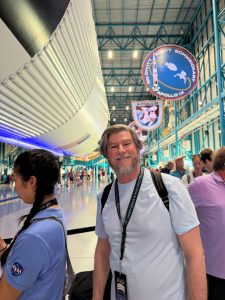
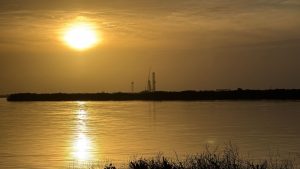
As a member of the team that designed this map, Dante Minniti was invited by NASA, along with his family, to witness the launch from the Kennedy Space Center in Cape Canaveral. He describes the experience as “incredible” and “indescribable.”
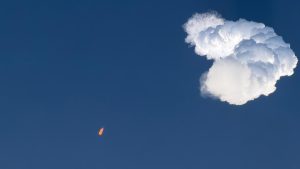
“You see the telescope being launched, then you hear the explosion, and finally, you feel the shockwave hit and make even the fence behind us shake. We were all on our cell phones trying to film this unique moment. I wanted to describe it, but I was speechless; the only thing I managed to say was, ‘And there went the Roman,’” the astronomer recounts.
The researcher also highlights the collective aspect of the moment. Nearly a thousand people connected in various ways to the mission were there with their families. “Everyone did their part, and that was the result of this work—which is now on its way to space. Whether it was a tiny piece of a camera, a tiny piece of a rocket, or some ideas for mapping the galaxy—all of that went aboard the Roman,” he notes.
What’s to come
Following its launch, the telescope began its journey to the second Lagrange point of the Sun-Earth system (L2), located approximately 1.6 million kilometers from our planet, where the James Webb Space Telescope also operates. Over the next few months, the telescope’s instruments will be deployed, calibrated, and tested before it begins its scientific observations in earnest.
NASA expects to release the first images captured by Roman in early 2027. From that point on, a five-year primary mission will begin, and the data from that mission will be made available to scientific teams around the world for use in new research.
Outstanding news
Recent news
-
Publicado el: 07/09/2026The launch of the Nancy Grace Roman Space Telescope, as experienced firsthand by a CATA astronomer involved in the mission
-
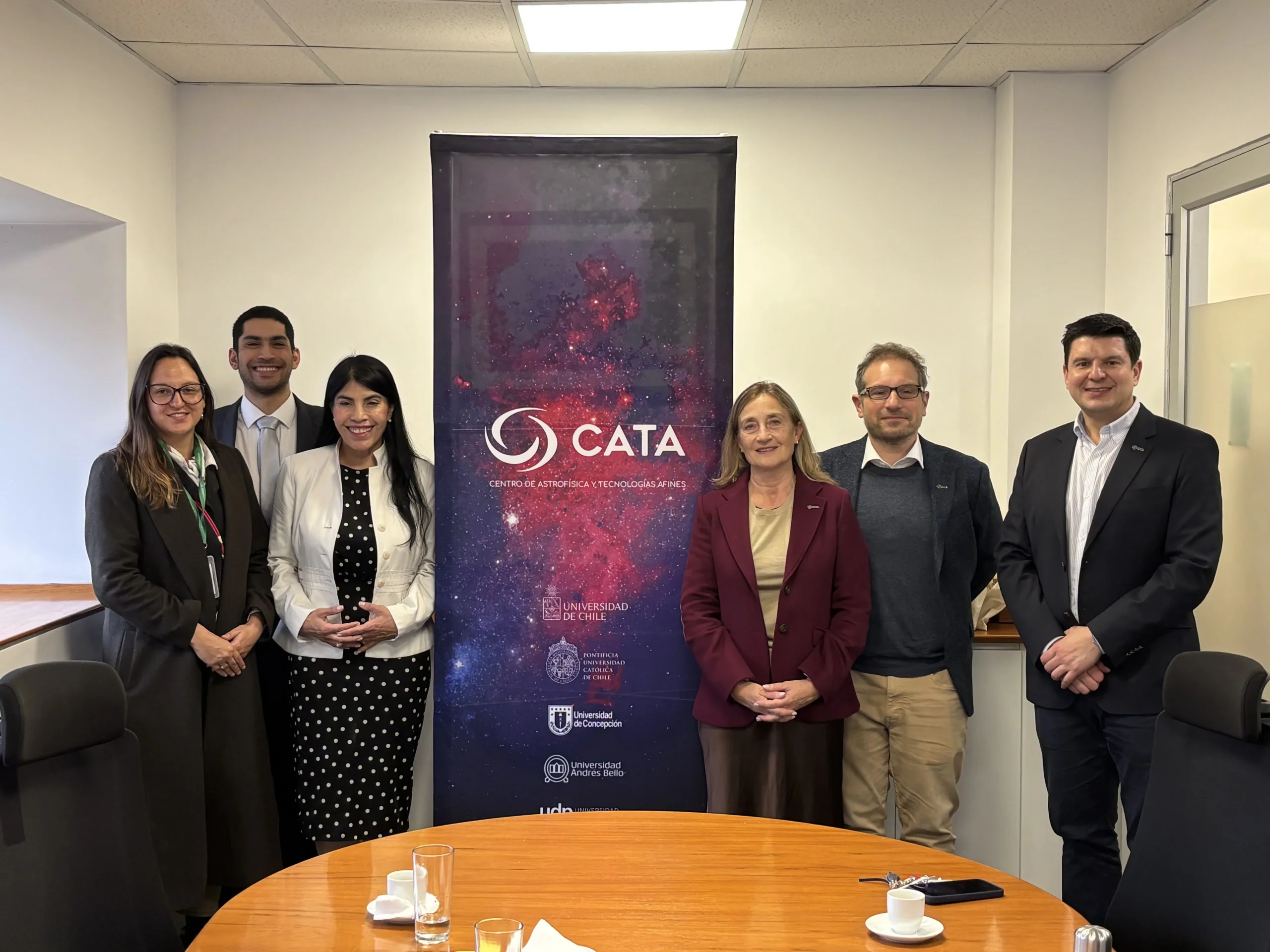 Publicado el: 31/08/2026Minister Ximena Lincolao meets CATA’s scientific and technological capabilities
 -
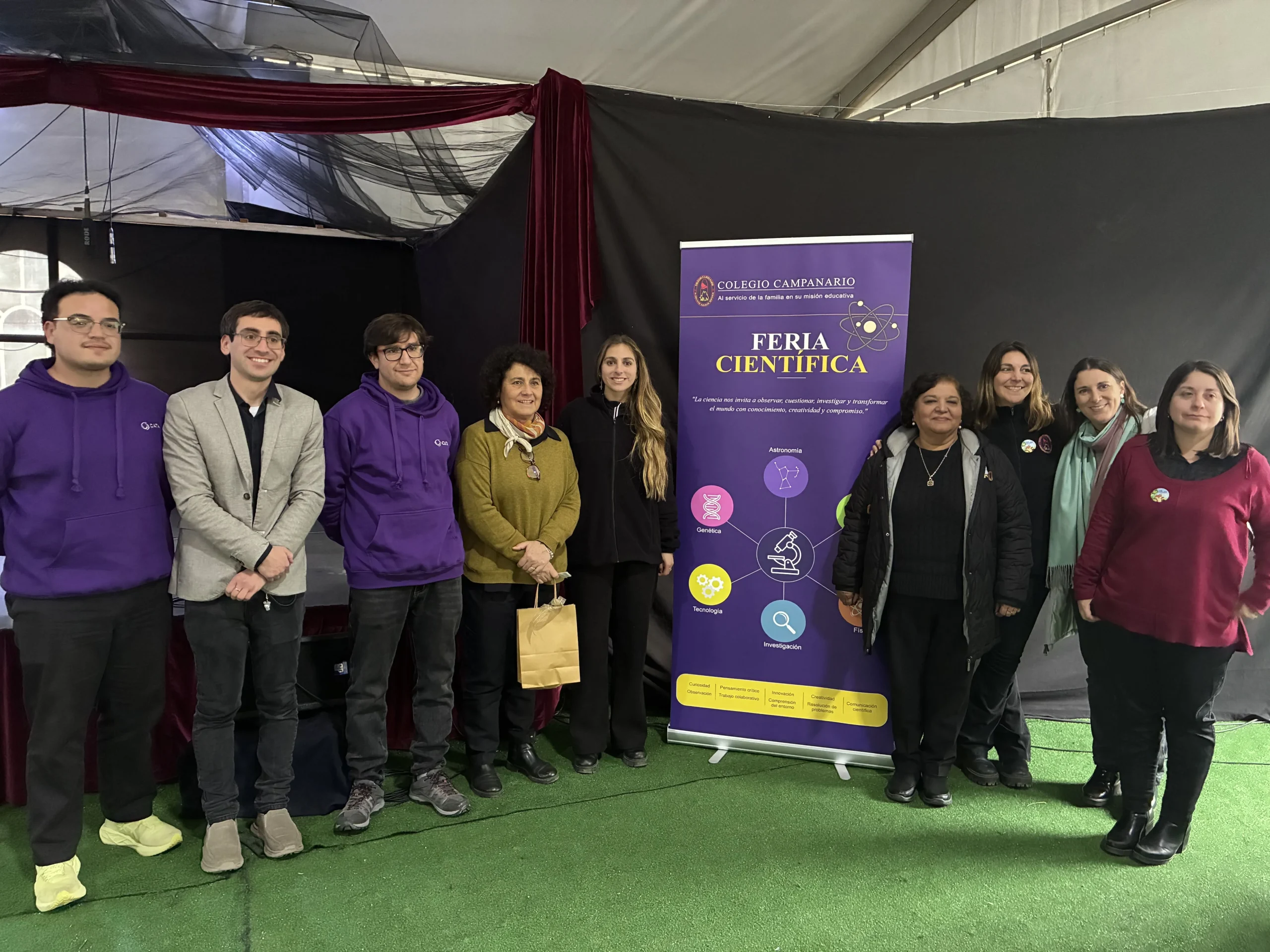 Publicado el: 19/08/2026CATA brings astronomy and technology to students at the 2026 Science Fair
 -
 Publicado el: 18/08/2026Silicate clouds discovered in the daytime atmosphere of the only ultra-hot Neptune
 -
 Publicado el: 12/08/2026CATA and PROVOCA announce call for applications for a mentoring program for students and postdocs
Categories list
- Acknowledgments 27
- Astrobiology 11
- AstroCluster 1
- Black holes 19
- Corporativo 73
- Cosmology 9
- Descubrimientos 27
- Disclosure 89
- Exoplanets 18
- Extension 13
- Galaxies 27
- Galaxies formation 9
- Inter y Transdisciplina 5
- Local Universe 21
- Publications 8
- Sin categorizar 34
- Solar System 29
- Stellar formation 11
- Technology 30
- Technology Transfer 32