

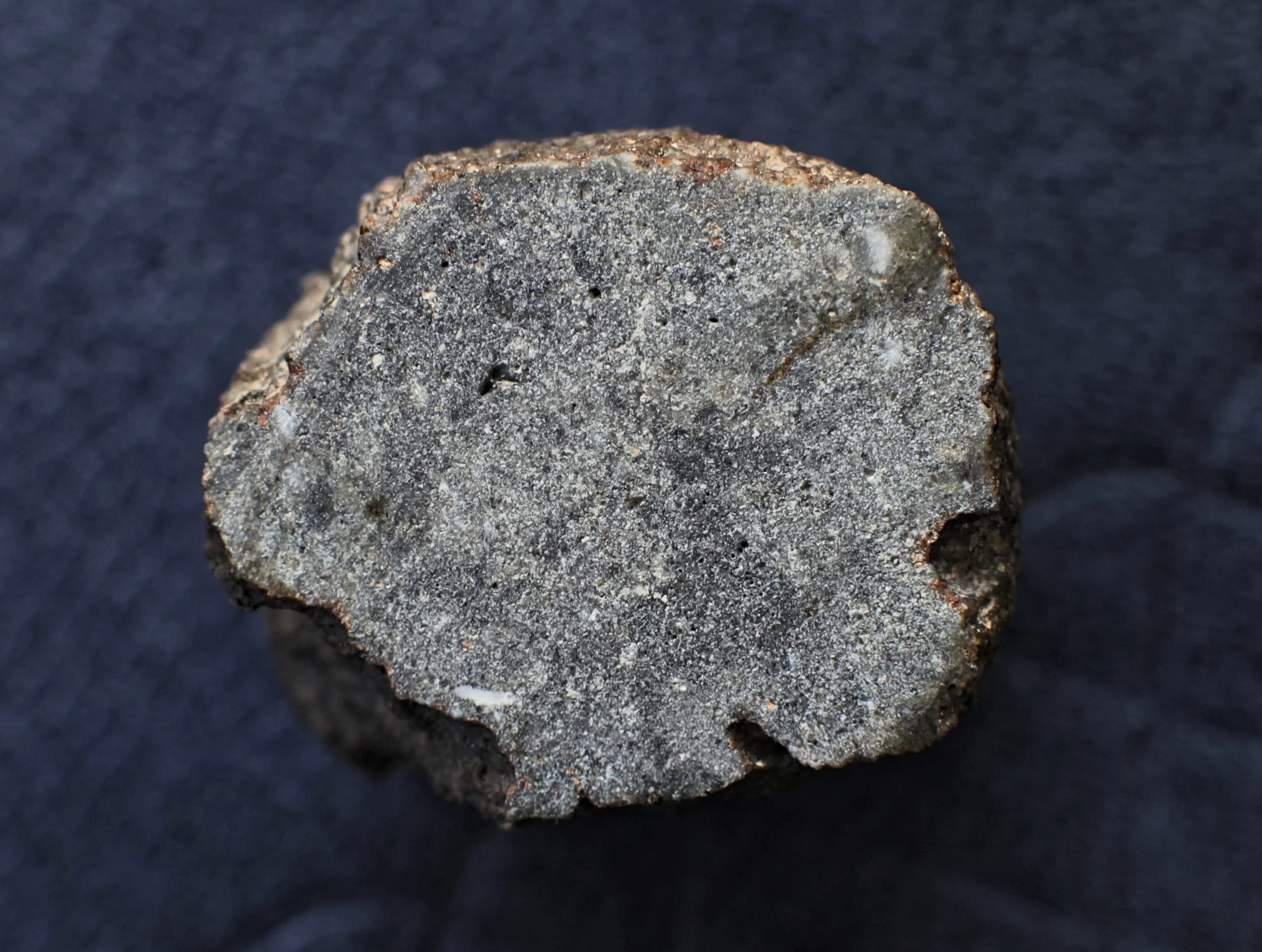
Discovery of the first lunar meteorite in South America confirmed: it was found in the Atacama Desert
The extraterrestrial rock, weighing just 12 grams, was discovered near Calama and recently received its official scientific classification. The discovery was made by private Russian collectors in May of this year, and while it is a major achievement that will deepen our understanding of the Moon’s geological history, it also sparks a discussion about the need to protect Chile’s meteorite heritage, highlighting the importance of strengthening mechanisms for the protection and conservation of these unique rocks found in Chile.
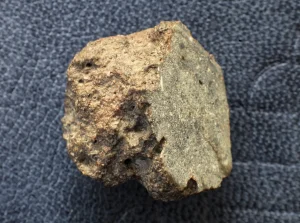
A small rock found in the Atacama Desert became the focus of an unprecedented scientific discovery for South America. It is Calama 957, the first meteorite of lunar origin found on the continent, whose classification was officially approved on November 3 by the Meteoritical Bulletin, the international database that records and recognizes these objects.
According to Millarca Valenzuela, Associate Researcher at the Center for Astrophysics and Associated Technologies – CATA (project financed by ANID), professor at the Universidad Católica del Norte (UCN), and geologist specializing in meteorites, the identification of this sample represents an exceptional milestone for planetary science and confirms the enormous potential of the Atacama Desert for the study of extraterrestrial materials.
The meteorite, weighing just 12 grams, was recovered on May 19, 2026, near Calama in the Antofagasta Region by Russian meteorite hunters Mikhail Nepomiluev and Ilya Kriachko during an expedition organized by Juan Pablo Pizarro, director of Atacama Petrolab, and Timur Kriachko. Its lunar origin was confirmed through scientific analyses conducted by specialists at the Vernadsky Institute in Russia.
The significance of the discovery lies in the extraordinary rarity of these materials. Unlike most meteorites that reach Earth—which come mainly from asteroids—those originating on the Moon account for only a tiny fraction of the space rocks recovered on our planet.
“It’s great news to find a meteorite from the Moon on Earth. When you put it in context, it’s even harder than finding a needle in a haystack. These objects account for less than 1% of the meteorites recovered on Earth,” the expert points out.
According to Valenzuela, there are currently 4,585 officially registered meteorites in Chile, the vast majority of which originated from asteroids. However, it took more than three decades of exploration in the desert before the first specimen of lunar origin was identified.
A rock that allows us to study the Moon’s past
Calama 957 was classified as a “feldspathic fusion breccia,” a type of rock formed from fragments of lunar material that were fractured, melted, and re-bonded as a result of massive impacts on the surface of our natural satellite. These processes, which have shaped the Moon’s history over billions of years, allow materials from different depths within its crust to be incorporated into a single rock, preserving information about its composition and geological evolution.
According to Valenzuela, this meteorite is associated with rocks from the lunar highlands—regions that contain materials from the oldest crust and are characterized by their brighter appearance due to the presence of light-colored minerals. His study is particularly significant because it complements the knowledge gained from samples collected by the Apollo missions, which come from specific areas and represent only certain types of rocks on the lunar surface.
“These types of fractures may contain fragments of deep crust generated by large impacts, giving us access to information that is difficult to obtain,” explains the researcher.
Thus, the analysis of Calama 957 offers new insights into how impacts from celestial bodies have shaped the Moon’s surface and what information the rocks may hold about the various stages of its formation.
Atacama Desert: natural meteorite laboratory
The discovery also reaffirms the Atacama Desert’s status as one of the world’s most important locations for the search for and recovery of meteorites. Its conditions of extreme aridity, sustained for millions of years, and the stability of its surfaces have allowed numerous extraterrestrial rocks to remain preserved for extraordinarily long periods of time.
Millarca explains that, while meteorites in other deserts can erode over a few tens of thousands of years, in certain areas of the Atacama Desert they have been preserved for more than three million years, facilitating their accumulation and subsequent recovery.
This potential began to be scientifically documented through various expeditions conducted in the Antofagasta Region, including research carried out by the geologist herself during her doctoral dissertation. Over time, international recognition of these areas attracted scientists, collectors, and meteorite hunters from various countries. However, the growing interest in these materials has also highlighted the challenges Chile faces in ensuring their conservation and scientific use.
Meteorite Protection: a pending challenge for Chile
Although the discovery of Calama 957 represents a significant advance in scientific knowledge, it also raises a concern that Chilean researchers have expressed in recent years: the transfer of meteorites found on Chilean territory to foreign collections and institutions.
The CATA researcher acknowledges that the participation of national and international researchers has contributed significantly to the increase in discoveries. However, she warns that the lack of effective regulations governing the extraction and export of these materials limits opportunities for conducting research in the country.
“Thanks to the hunters, we have tripled the number of discoveries in recent years, which is good in one respect: more meteorites and greater diversity. On the other hand, a large portion of them leaves Chile, and no national scientific research related to them is being conducted,” Valenzuela notes.
The academic points out that in recent years, more than four metric tons of meteorites found in Chile have reportedly left the country, a situation that highlights the need to strengthen national capabilities for their conservation and study. Compounding this problem is the shortage of specialists and laboratories dedicated to meteorite analysis, which makes it necessary to conduct much of the research through collaborations with foreign institutions.
Given this situation, Valenzuela emphasizes the importance of developing mechanisms to regulate the export of these rocks, promote international scientific collaboration projects, and ensure that a portion of the recovered materials remains available for research in Chile. He also considers it essential to strengthen the national scientific infrastructure, foster the training of new specialists, and promote educational initiatives that help people recognize the value of this heritage.
The discovery of Calama 957 thus presents an opportunity not only to deepen our understanding of the Moon, but also to reflect on the future of meteorite research in Chile and the importance of safeguarding the extraterrestrial materials found in the Atacama Desert, especially now that Antofagasta has been chosen as the host city for the 90th Meteoritical Society Meeting, to be held in 2028, in recognition of the region’s importance in preserving these significant extraterrestrial materials, which provide access to the record of various processes—from the formation of the Solar System and the evolution of its planets and other celestial bodies to the origin of life.
Outstanding news
Recent news
-
Publicado el: 16/11/2026Discovery of the first lunar meteorite in South America confirmed: it was found in the Atacama Desert
-
 Publicado el: 16/11/2026Leonids 2026: how to watch one of November’s most anticipated meteor showers from Chile
-
 Publicado el: 12/11/2026CATA researchers take top spots in “Thesis in Three Minutes” competitions
-
 Publicado el: 05/11/2026Juan Espinoza-Retamal wins the first CATA PhD Award for his research on planetary systems
-
 Publicado el: 02/11/2026ANID renews CATA’s basal finance for five years and envisions a new phase of scientific and technological development
Categories list
- Acknowledgments 32
- Astrobiology 12
- AstroCluster 1
- Black holes 21
- Corporativo 74
- Cosmology 10
- Descubrimientos 31
- Disclosure 92
- Exoplanets 20
- Extension 14
- Galaxies 31
- Galaxies formation 12
- Inter y Transdisciplina 5
- Local Universe 22
- Publications 9
- Sin categorizar 34
- Solar System 32
- Stellar formation 14
- Technology 34
- Technology Transfer 34


