Astronomy and bioengineering for security in food supply: CATA and the BIO-UAI Center form a partnership to develop a new system
The initiative, selected in the TRL's Level Up 2026 contest, will use GRADIAN as the basis for developing a new microbial detection project.
The Center for Astrophysics and Associated Technologies – CATA (ANID Basal Center) and the BIO Center at Universidad Adolfo Ibáñez (UAI) have joined capabilities to develop a hyperspectral system designed to detect and quantify pathogenic bacteria in food industry production lines.
The initiative, led by Dr. Juan Pablo Pavissich, a researcher at the BIO-UAI Center, was selected in the TRL’s Level Up 2026 competition organized by the Department of Innovation and Technological Entrepreneurship of the university’s School of Engineering and Sciences, with support from CATA’s Technology Transfer Unit.
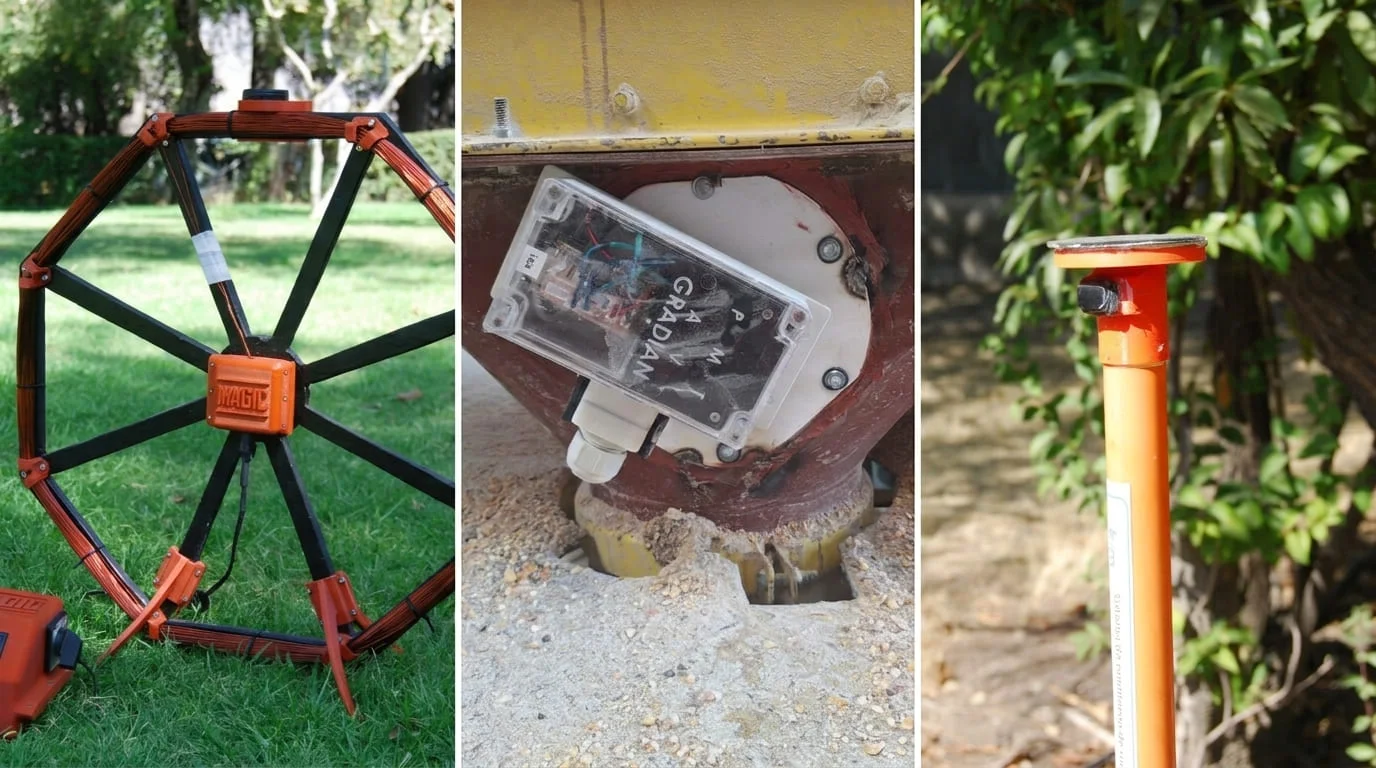
The new system will be based on GRADIAN, a device developed by the Center using optical spectroscopy, a fundamental technique in astronomical research. This technology operates using multispectral sensors that capture information with a resolution 256 times finer than that of a conventional camera; it was recognized as the winning initiative in the Explora II competition organized by Agrosuper and HUBTEC, an open innovation program for developing solutions in the food industry.
Based on this, the project aims to develop an independent system capable of detecting the presence of pathogenic microorganisms on production surfaces by analyzing their spectral signatures.
A challenge in the food industry
Bacterial contamination in the animal protein production chain poses a high-impact health risk. Conventional methods, based on microbial cultures, can take days to yield results and require expensive equipment, making them unsuitable for early detection in industrial settings. This initiative aims to significantly reduce these gaps, helping to strengthen traceability and food safety throughout the sector’s value chain.
With a duration of eight months, the project will progress from TRL-2 to TRL-4—that is, from conceptual formulation to laboratory validation—including the development of classification algorithms and the spectral measurement of real samples.
Juan Pablo Pavissich highlighted GRADIAN’s potential as a starting point. “It is a sensor that can potentially detect components of the spectral signature of pathogenic bacteria, and its implementation has already been validated on a full-scale basis in industry, so we found it very appealing to use it as a reference for the project.”
Regarding the interdisciplinary value, the researcher added that this collaboration demonstrates “that the detection of biological signals on microscopic scales can benefit from developments designed for astronomy, where the physical scales are much larger.”
For Santiago Prat, General Manager of CATA, the project reflects the coming together of both disciplines to strengthen the country’s scientific and technological ecosystem. “The fact that this synergy between institutions is focused on an industry challenge speaks to the potential of science when it embraces collaborative and interdisciplinary work. For our Center, this partnership reflects what we aim to achieve through technology transfer: that the knowledge generated through astronomical research and instrumentation finds new, concrete, and high-impact applications that transcend the boundaries of astrophysics.”
For his part, Álvaro Morales, an engineer at the Millimeter Wave Laboratory (MWL) at the Universidad de Chile, explained the team’s technical contribution. “The experience we’ve gained in developing GRADIAN allowed us to adapt to the requirements of the industrial environment, which is the foundation upon which this project is built. Continuing the development of spectral sensors—now incorporating a biological component—represents a major challenge both scientifically and technically, and is a line of research that opens up new possibilities for the instrumentation we develop at CATA.”
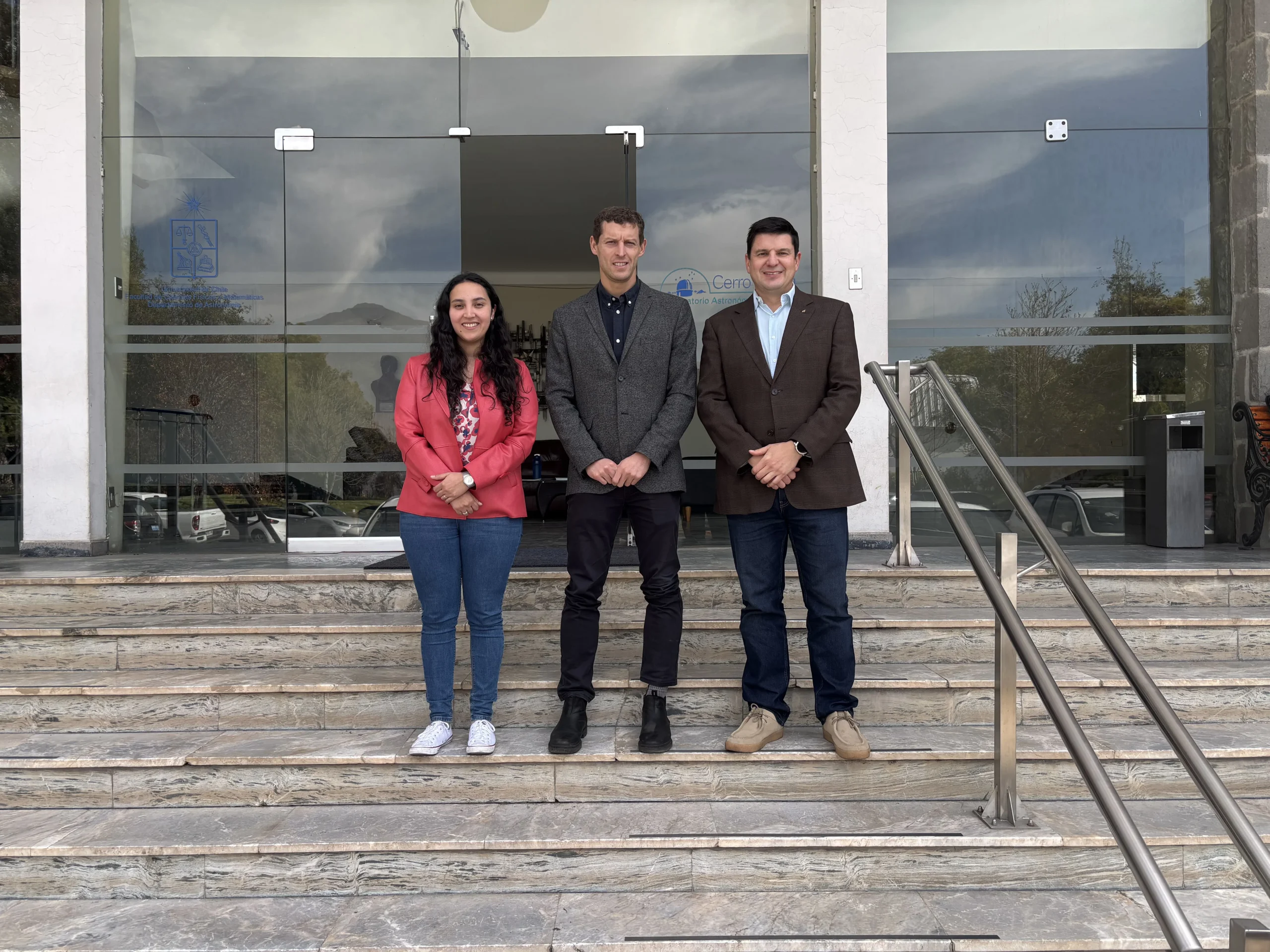
This collaborative effort will bring together professionals from both institutions in complementary roles. Representing the BIO-UAI Center will be Dr. Juan Pablo Pavissich as principal investigator, Dr. Thomas Ledger as associate researcher and specialist in applied microbiology, and Constanza Valenzuela as an undergraduate thesis student. From CATA, Claudia San Martín—the Center’s Innovation Leader and an electrical engineer—Juan Riquelme, a mechanical engineer at MWL, and Álvaro Morales round out the team, contributing their expertise in astronomical instrumentation and the management of technology transfer initiatives.
The combination of these capabilities opens up a new avenue of exploration, demonstrating that astronomical technology and bioengineering can provide solutions for sectors such as the food industry and public health. With this in mind, both institutions are working toward developing solutions that will have a tangible impact on Chile.
Outstanding news
Recent news
-
 Publicado el: 19/10/2026CATA will contribute to data processing for a major international astronomy project
 -
 Publicado el: 19/10/2026Study led by CATA researchers solves a 30-year-old mystery about a dwarf galaxy
 -
 Publicado el: 15/10/2026Structures potentially associated with the formation of super-Earths and mini-Neptunes have been detected in compact disks
 -
 Publicado el: 09/10/2026From studying the universe to solving industry challenges: CATA’s technology transfer model in Nature Astronomy
 -
 Publicado el: 01/10/2026CATA Associate Researcher concludes research stay at the University of São Paulo thanks to a Brazilian fellowship
Categories list
- Acknowledgments 29
- Astrobiology 12
- AstroCluster 1
- Black holes 21
- Corporativo 73
- Cosmology 10
- Descubrimientos 30
- Disclosure 91
- Exoplanets 19
- Extension 14
- Galaxies 29
- Galaxies formation 12
- Inter y Transdisciplina 5
- Local Universe 22
- Publications 9
- Sin categorizar 34
- Solar System 30
- Stellar formation 13
- Technology 34
- Technology Transfer 34