Talks and hands-on activities related to astronomy were part of the “Congreso Futuro en tu Comuna” event in Arica
More than 1,500 students participated in the event, which featured talks on the Moon and black holes, as well as workshops and virtual reality experiences organized by CATA’s Outreach Team.
The Center for Astrophysics and Associated Technologies – CATA (project financed by ANID) participated in a new edition of the “Congreso Futuro en tu Comuna” event, held at the Liceo Bicentenario Artístico in Arica. The event, organized by the Senate’s Commission on Future Challenges, the Universidad de Tarapacá (UTA), and the Chinchorro Local Public Education Service (SLEP), brought together more than 1,500 participating students for various science-related activities.
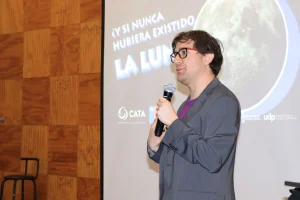
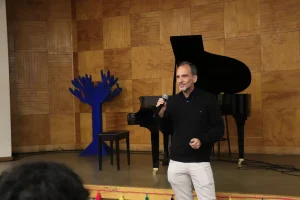
CATA’s participation began with the talk “What If the Moon Had Never Existed?”, presented by José Utreras, Ph.D. in Astronomy and CATA’s Outreach and Content Coordinator, who invited attendees to imagine what our planet would be like without its natural satellite and to learn about the influence the Moon has had on aspects such as the passage of time, the seasons, and the history of humanity.
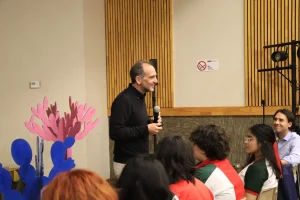
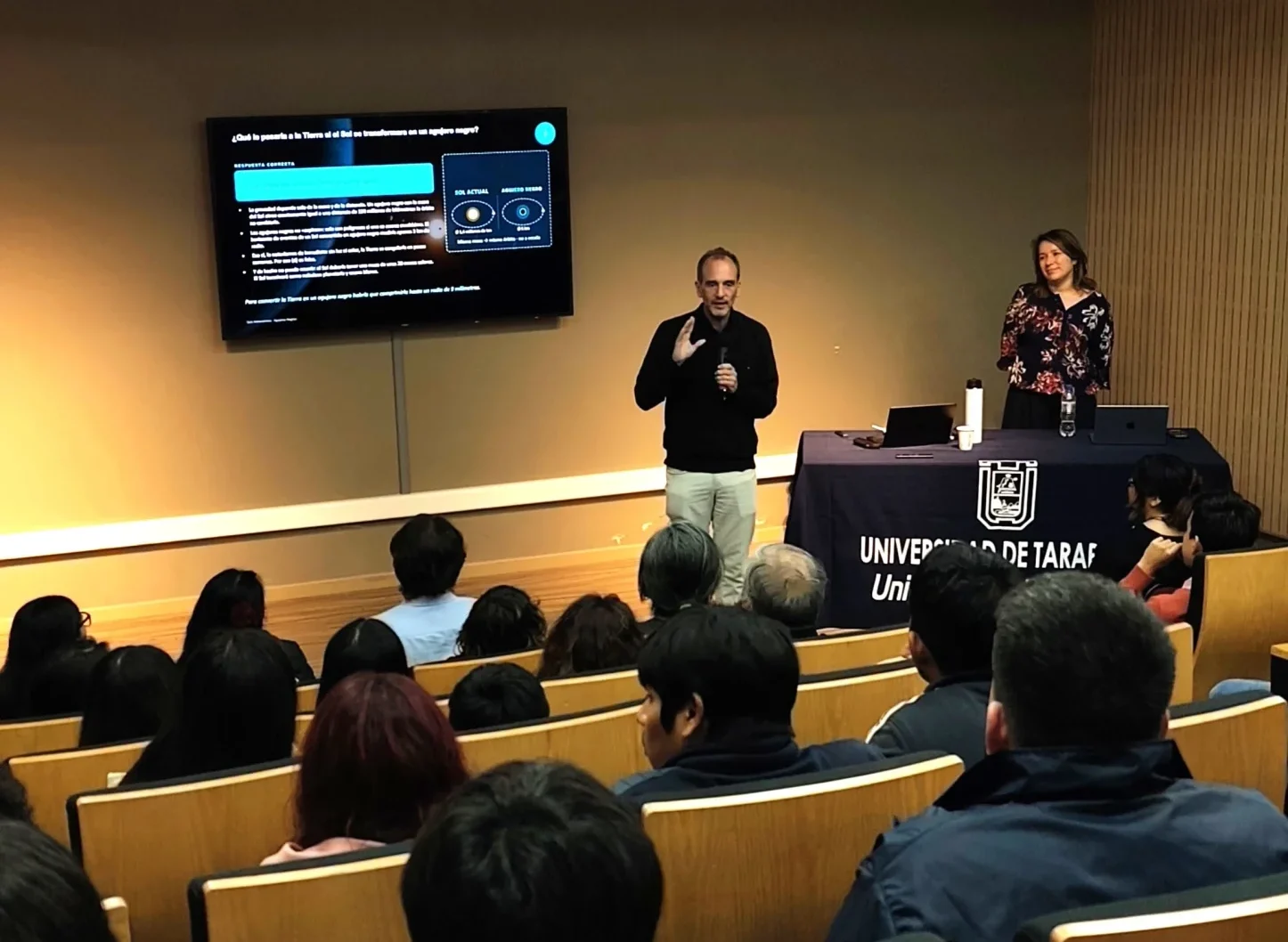
Next, Ezequiel Treister, Principal Investigator at the Center and a professor at UTA, gave a talk titled “Black Holes in the Universe,” discussing the different types of black holes, the extreme conditions that exist in these regions, and some of the tools used by astronomers to study them from Earth.
Treister particularly highlighted the students’ participation throughout the event and the interest their presentation generated. “It was, without a doubt, a fantastic experience. We had talks, booths, interactive activities, dancing, choirs, and extraordinary local musicians. The students who participated in the talk on black holes seemed very motivated and engaged.”
“The challenge for me was to move forward with the material I had prepared while also answering the many questions that kept coming up. It was certainly a wonderful challenge, and I hope I handled it well,” the researcher added.
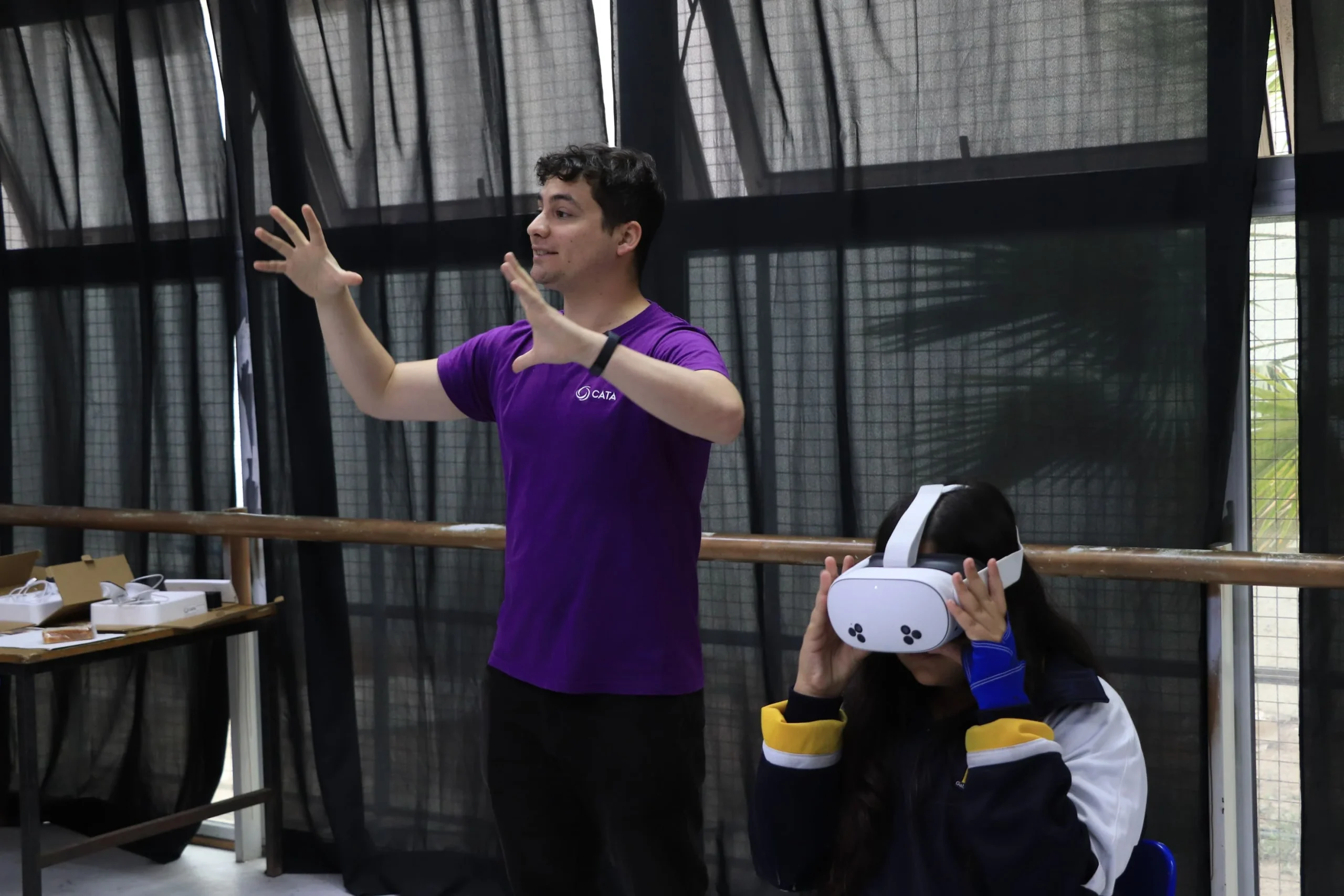
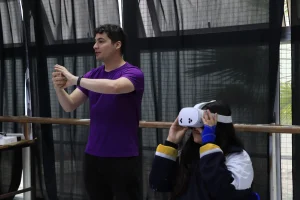
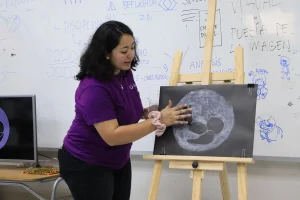
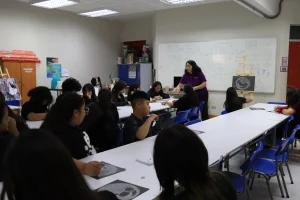
Along with these presentations, CATA’s Outreach Team organized various activities to introduce students to astronomy in a hands-on way. Astronomer Bárbara Riquelme led the workshop “Let’s Draw the Moon!”, where participants learned about some of the Moon’s main characteristics and then depicted them through drawing. Meanwhile, astronomer Silvio Ulloa conducted virtual reality experiences using images of the universe, explaining the various phenomena of the cosmos.
“We wanted the students to experience astronomy from different perspectives. The talks got them thinking and asking questions. And through virtual reality and the workshop, they were able to see the Moon up close and then recreate it with their own hands, making what they had seen their own. Each experience brings astronomy closer to them and sparks new questions,” said José Utreras.
As a result, the Center’s participation in the “Congreso Futuro en tu Comuna” event made it possible to combine scientific talks, workshops, and interactive experiences, introducing students and the public in Arica to a variety of topics in astronomy.
Outstanding news
Recent news
-
 Publicado el: 19/10/2026CATA will contribute to data processing for a major international astronomy project
 -
 Publicado el: 19/10/2026Study led by CATA researchers solves a 30-year-old mystery about a dwarf galaxy
 -
 Publicado el: 15/10/2026Structures potentially associated with the formation of super-Earths and mini-Neptunes have been detected in compact disks
 -
 Publicado el: 09/10/2026From studying the universe to solving industry challenges: CATA’s technology transfer model in Nature Astronomy
 -
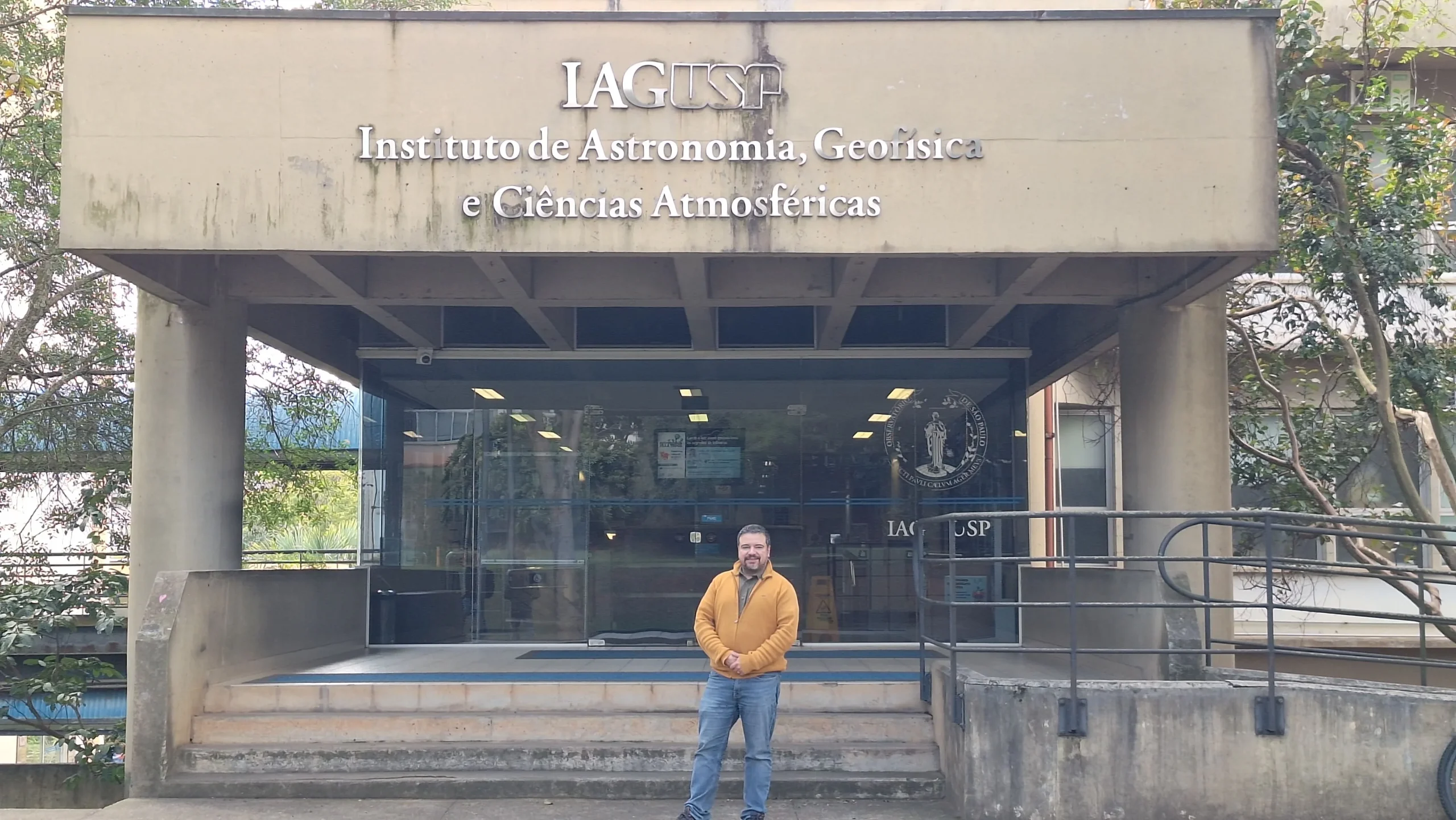 Publicado el: 01/10/2026CATA Associate Researcher concludes research stay at the University of São Paulo thanks to a Brazilian fellowship
Categories list
- Acknowledgments 29
- Astrobiology 12
- AstroCluster 1
- Black holes 21
- Corporativo 73
- Cosmology 10
- Descubrimientos 30
- Disclosure 91
- Exoplanets 19
- Extension 14
- Galaxies 29
- Galaxies formation 12
- Inter y Transdisciplina 5
- Local Universe 22
- Publications 9
- Sin categorizar 34
- Solar System 30
- Stellar formation 13
- Technology 34
- Technology Transfer 34