CATA brings astronomy and technology to students at the 2026 Science Fair
Virtual reality, optical spectroscopy, and technologies developed for industry were part of the Center’s presentation at the 2026 Science Fair, held at Colegio Campanario in Buin.
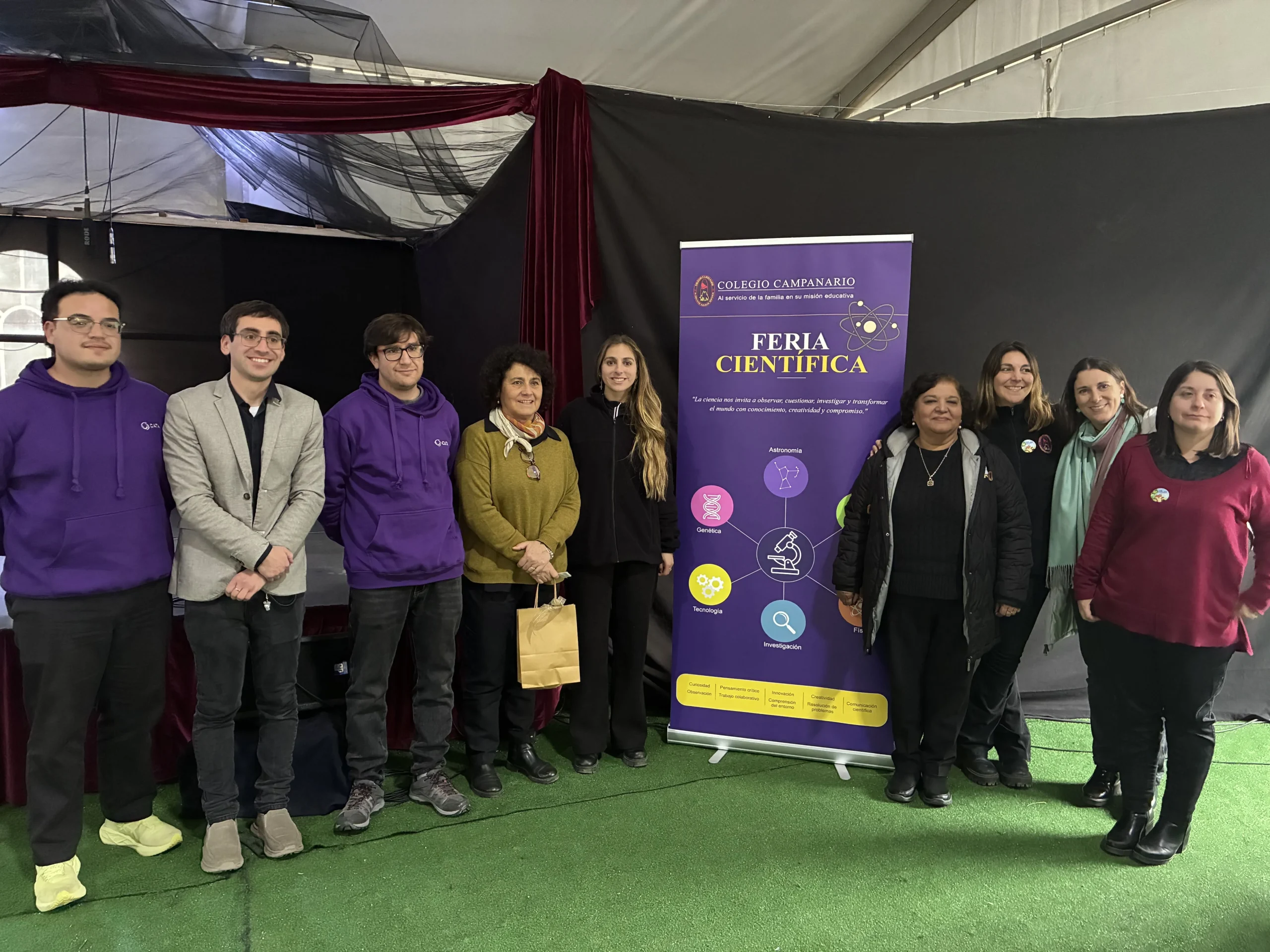
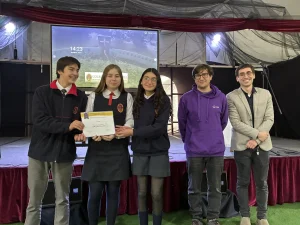
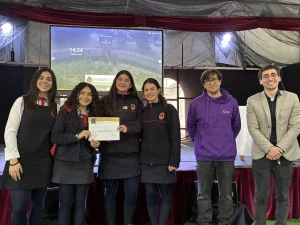
The Center for Astrophysics and Associated Technologies – CATA (project financed by ANID) participated in the 2026 Science Fair at Campanario School in Buin, an event that brought together students, teachers, and the entire school community to explore science, research, and experimentation.
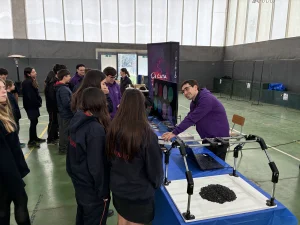
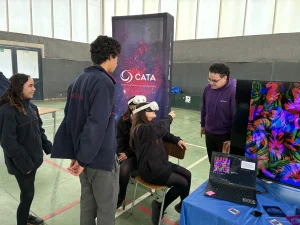
The Center’s participation included various activities designed to introduce students to astronomy and its technologies. Using virtual reality headsets, attendees enjoyed an immersive experience observing the Moon, gaining a new perspective on one of the most well-known and studied celestial objects in astronomy.
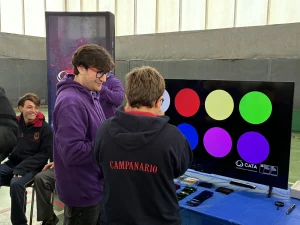
The event also featured a filter exhibit, where students explored the use of colors and learned about the principles of optical spectroscopy, gaining an understanding of how analyzing light provides information about different objects. This experience also demonstrated how tools and knowledge developed in astronomy can be applied to specific uses in other fields.
One example of this is GRADIAN, a sensor based on optical spectroscopy that enables the classification of different types of grains in the food industry by accurately detecting their color, with a resolution capable of distinguishing more than 65,000 colors. The technology was developed by CATA in collaboration with Agrosuper as part of its Explora II program.
The students also learned about FRAMES, a technology developed by CATA engineers at the University of Chile’s Millimeter Wave Laboratory. Based on open-source photogrammetry algorithms, the system allows users to estimate the volume of an object using images captured from different angles and aerial positions. These images are used to generate a three-dimensional point cloud, which enables the construction of an approximate model of the object. Like GRADIAN, FRAMES was developed in collaboration with Agrosuper through the Explora program.
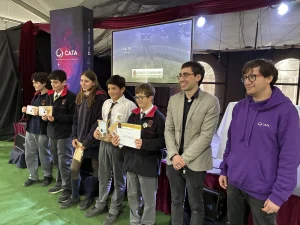
In addition to their outreach activities, CATA professionals José Utreras, Outreach and Content Coordinator, and Franco Curotto, Senior Engineer, served as members of the Science Fair jury, supporting the students as they presented their projects and contributing their scientific and technological expertise from the Center.
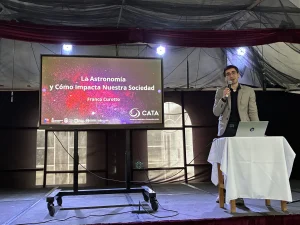
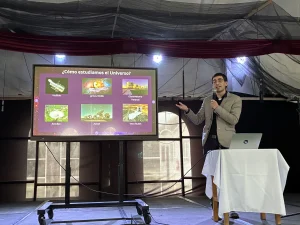
Finally, as part of the program, Franco Curotto gave a talk titled “Astronomy and How It Impacts Our Society,” aimed at the entire school community. The presentation broadened participants’ perspective on astronomy and demonstrated how the knowledge developed to study the universe can lead to applications and solutions that directly impact our society.
Participation in the Campanario School of Buin Science Fair provided an opportunity to show students different ways to engage with science, from exploring the sky through virtual reality to discovering how the analysis of light can be transformed into solutions for industry. It was an experience that connected the research, technologies, and applications that are now part of the work of CATA’s scientists and engineers.
Outstanding news
Recent news
-
 Publicado el: 19/10/2026CATA will contribute to data processing for a major international astronomy project
 -
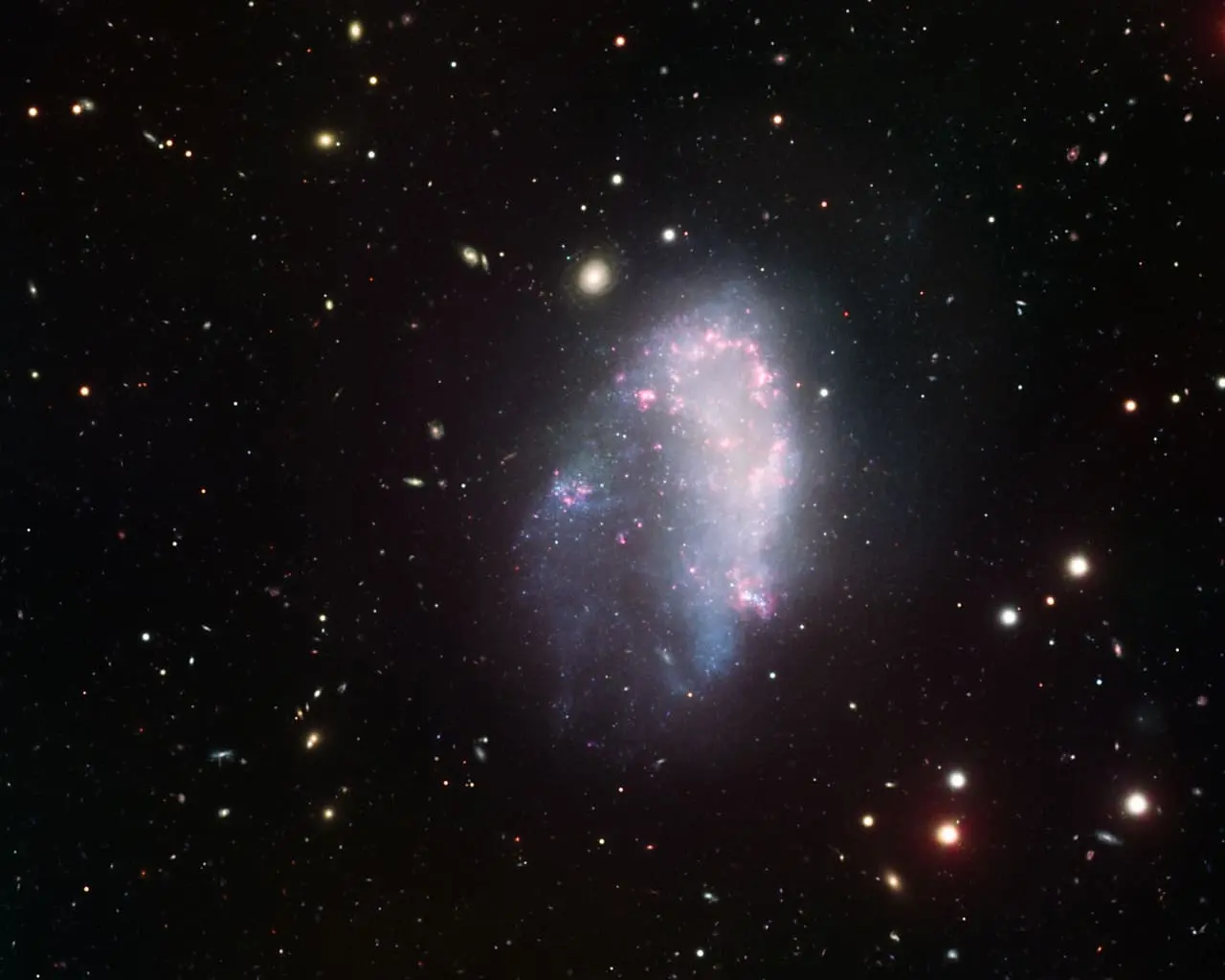 Publicado el: 19/10/2026Study led by CATA researchers solves a 30-year-old mystery about a dwarf galaxy
 -
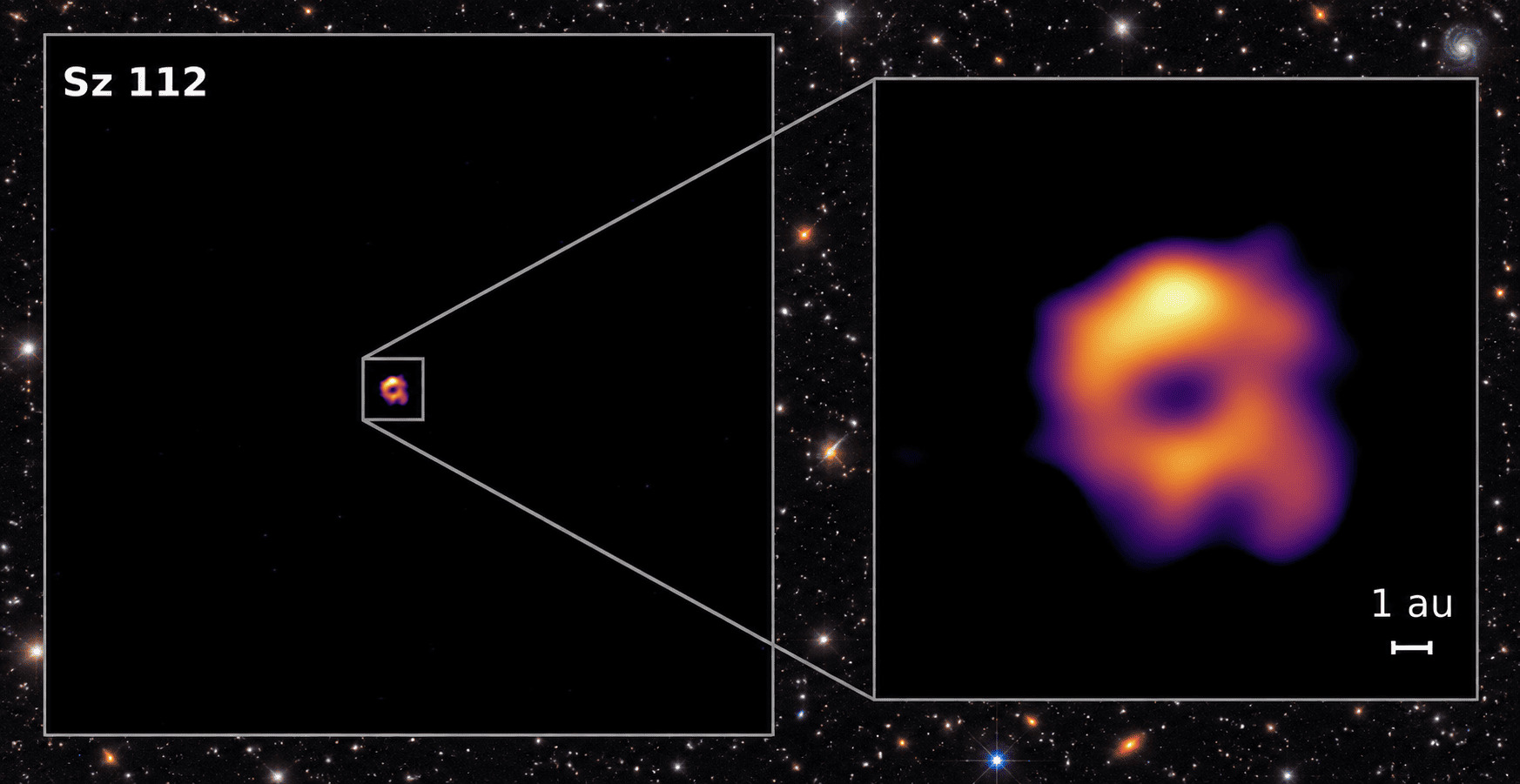 Publicado el: 15/10/2026Structures potentially associated with the formation of super-Earths and mini-Neptunes have been detected in compact disks
 -
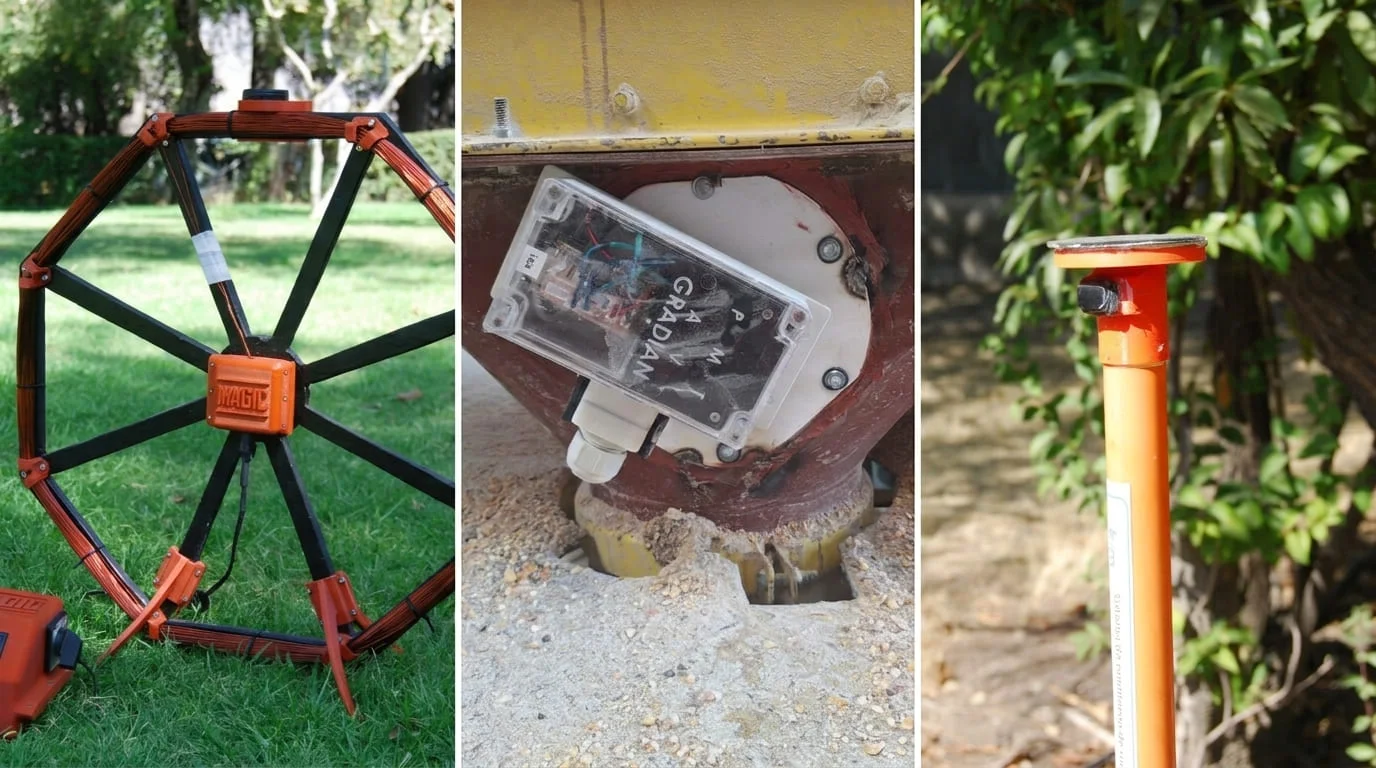 Publicado el: 09/10/2026From studying the universe to solving industry challenges: CATA’s technology transfer model in Nature Astronomy
 -
 Publicado el: 01/10/2026CATA Associate Researcher concludes research stay at the University of São Paulo thanks to a Brazilian fellowship
Categories list
- Acknowledgments 29
- Astrobiology 12
- AstroCluster 1
- Black holes 21
- Corporativo 73
- Cosmology 10
- Descubrimientos 30
- Disclosure 91
- Exoplanets 19
- Extension 14
- Galaxies 29
- Galaxies formation 12
- Inter y Transdisciplina 5
- Local Universe 22
- Publications 9
- Sin categorizar 34
- Solar System 30
- Stellar formation 13
- Technology 34
- Technology Transfer 34