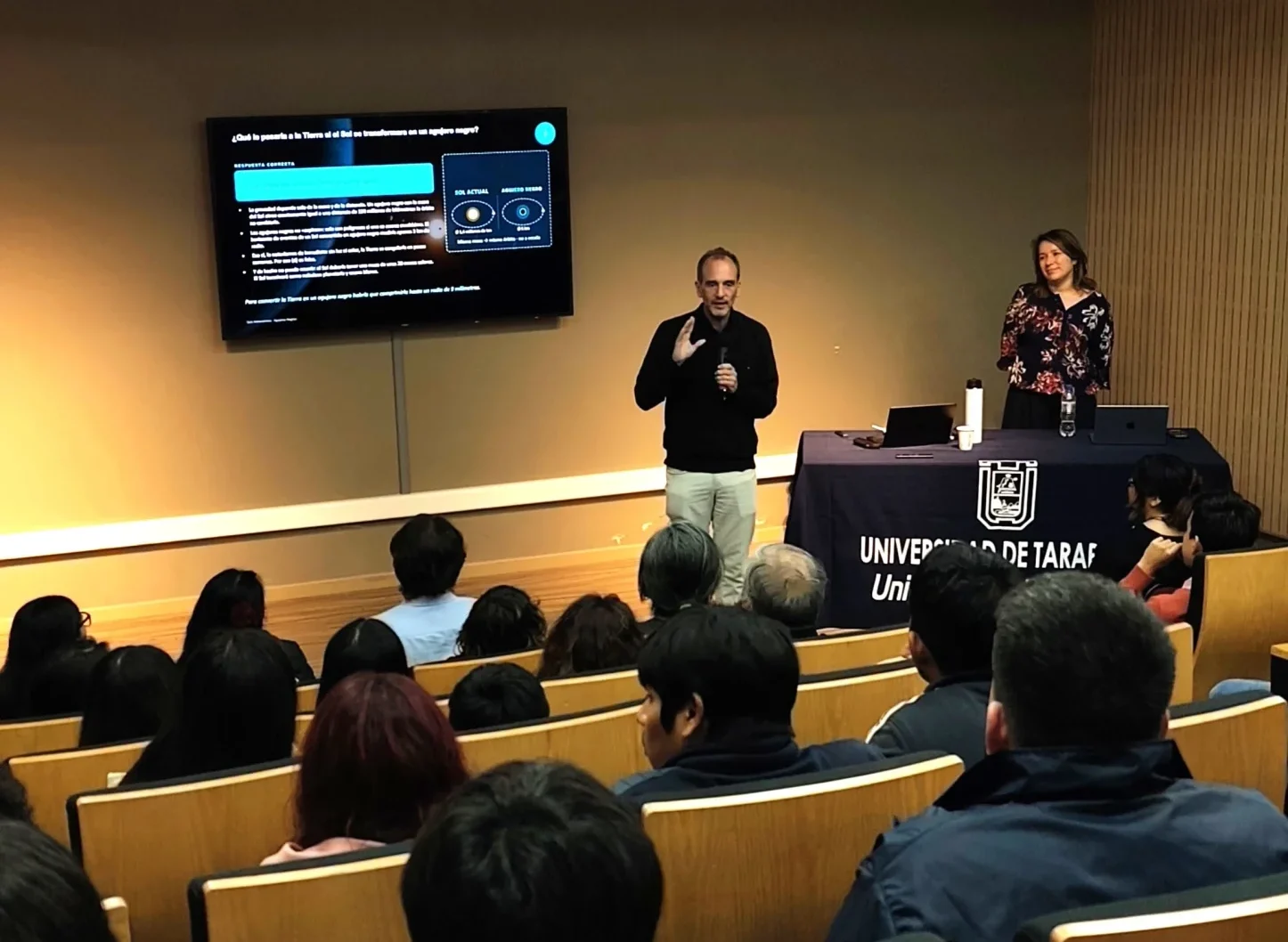
Astronomical trivia drew a large crowd at the Universidad de Tarapacá
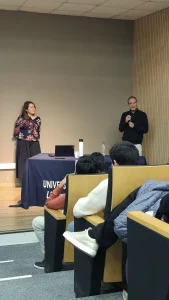
Ezequiel Treister and Bárbara Rojas-Ayala, researchers at CATA and professors at UTA, led the event “How Much Do You Know About the Universe?,” which combined questions, answers, and discussion on some of the main topics in astronomy.
With the Ricardo Salas Auditorium at the Universidad de Tarapacá (UTA) completely full, the participatory discussion “How Much Do You Know About the Universe?” took place—an innovative science outreach initiative led by Ezequiel Treister, Principal Researcher at the Center for Astrophysics and Related Technologies —CATA (a Project financed by ANID)—and Bárbara Rojas-Ayala, Associate Researcher; both are faculty members at the university.
Unlike a traditional talk, the event took a different approach, featuring a trivia game in which attendees used their cell phones to answer various questions; the results then served as a starting point for the researchers to explain the phenomena discussed to the audience.
This event was presented by Senator Vlado Mirosevic, who kicked off a day that drew an audience of all ages and families interested in learning more about the universe.
During his presentation, Ezequiel Treister focused his questions primarily on black holes, addressing questions such as what these objects are, how they can be detected despite not emitting light directly, how they form, and what happens to the matter that falls into them. The discussion also covered supermassive black holes at the centers of galaxies and the processes that occur when two of these objects merge.
For the researcher, the approach used made it possible to maintain constant interaction with those who attended the event. “It was an excellent and innovative experience. We used cell phones to interact directly with the participants, organizing a fun, interactive activity in which we asked questions that many people have about astronomy,” Treister explained.
The event lasted about an hour and a half. As the astronomer pointed out, one of the main indications of the format’s success was the audience’s own response when asked if they wanted to continue with more questions. Added to this was a turnout that exceeded the capacity initially planned for the event.
“We were assigned an auditorium that seats 70 people, which was completely full even minutes before the event began and ended up with more participants spilling into the hallways. We were undoubtedly very motivated and committed to repeating this and other similar experiences soon,” said the astronomer.
In addition, Bárbara Rojas-Ayala addressed questions related to stars, brown dwarfs, red dwarfs, and exoplanets. Among the topics covered were the characteristics and differences among stars, the methods and tools used to detect worlds outside the Solar System, and the concept of habitability.
The conversation also provided an opportunity to discuss how astronomy searches for possible signs of life on other planets and to clarify some concepts related to the existence of potentially habitable worlds.
For the astronomer, these types of events take on special significance when held in the Arica and Parinacota Region, as they help foster a closer relationship between science and the people of the region. “Realities vary across the different regions of our country, but we’re all under the same sky, and we’re all curious. As astronomers, we’re fortunate to have the support of our communities,” Rojas-Ayala noted.
The astronomer also emphasized that these events provide an opportunity to highlight the importance of the dark skies of northern Chile for scientific knowledge and, at the same time, to give the public insight into how that knowledge is developed.
“These events are essential for fostering critical thinking in people and for raising awareness about how science works,” the researcher noted, adding that questions from the audience provide an opportunity to explain the role that evidence plays in confirming or rejecting hypotheses, as well as to clarify concepts in a more relaxed setting than a classroom.
Through a unique approach, “How Much Do You Know About the Universe?” addressed some of the main topics in astronomy using an interactive format based on direct participation, transforming trivia questions into opportunities for conversation, learning, and bringing scientific work closer to the community.
Outstanding news
Recent news
-
 Publicado el: 08/09/2026The wedding dance of massive stars: Astronomer from CATA and the Universidad de Chile contributes to historic discovery
 -
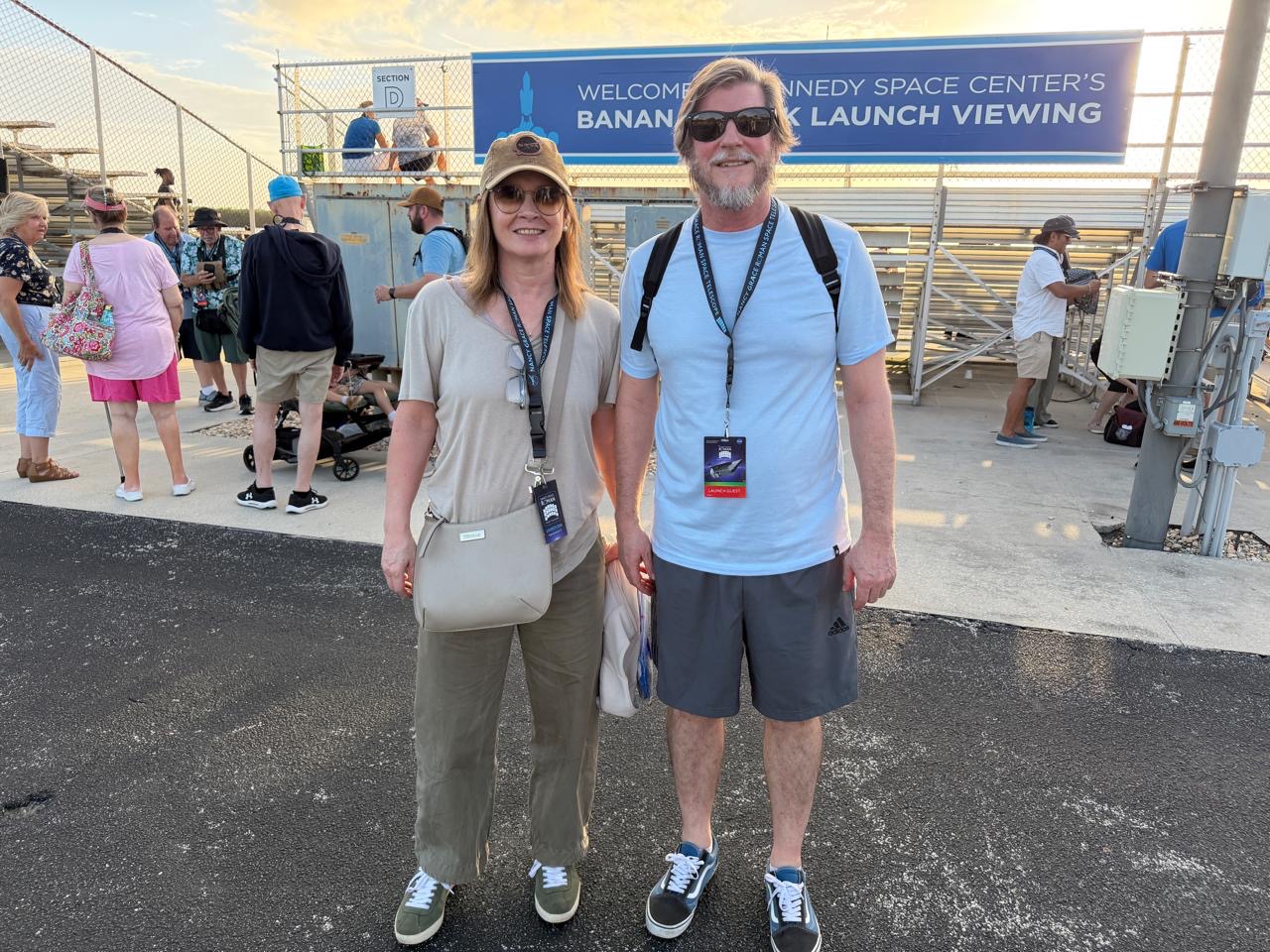 Publicado el: 07/09/2026The launch of the Nancy Grace Roman Space Telescope, as experienced firsthand by a CATA astronomer involved in the mission
 -
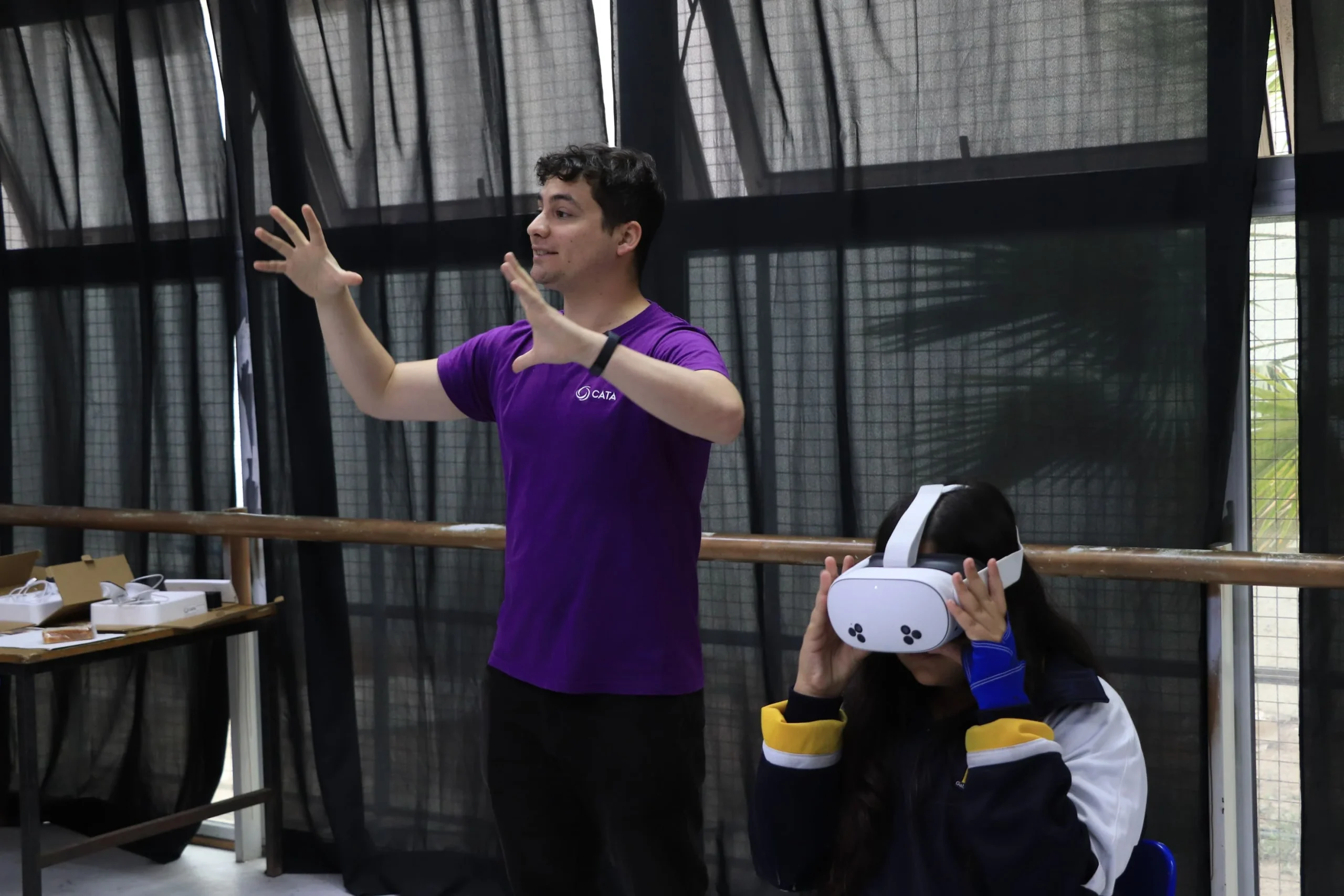 Publicado el: 29/08/2026Talks and hands-on activities related to astronomy were part of the “Congreso Futuro en tu Comuna” event in Arica
 -
Publicado el: 28/08/2026Astronomical trivia drew a large crowd at the Universidad de Tarapacá
-
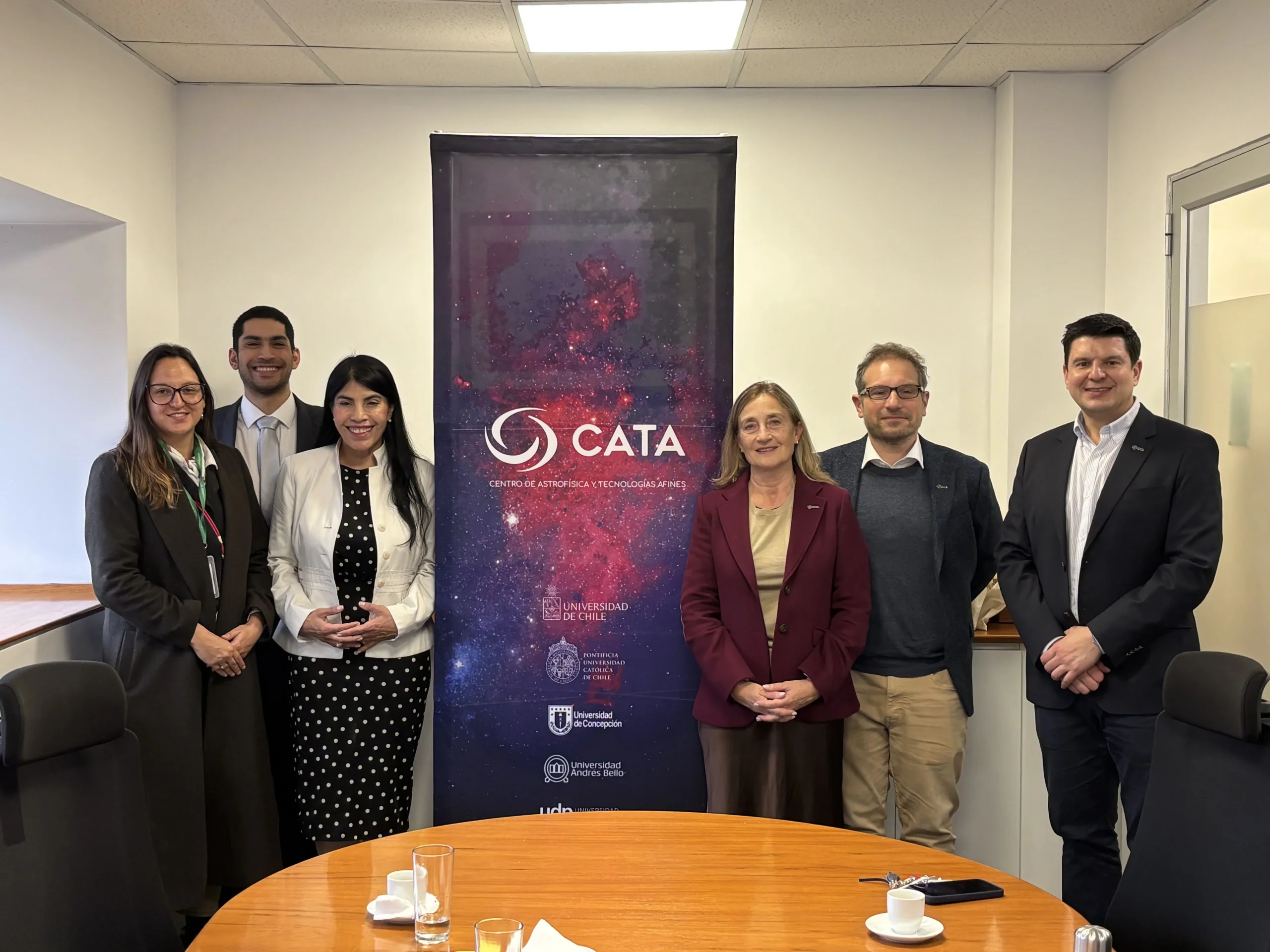 Publicado el: 31/08/2026Minister Ximena Lincolao meets CATA’s scientific and technological capabilities
Categories list
- Acknowledgments 27
- Astrobiology 12
- AstroCluster 1
- Black holes 21
- Corporativo 73
- Cosmology 9
- Descubrimientos 28
- Disclosure 91
- Exoplanets 18
- Extension 13
- Galaxies 27
- Galaxies formation 9
- Inter y Transdisciplina 5
- Local Universe 22
- Publications 9
- Sin categorizar 34
- Solar System 30
- Stellar formation 12
- Technology 30
- Technology Transfer 32